



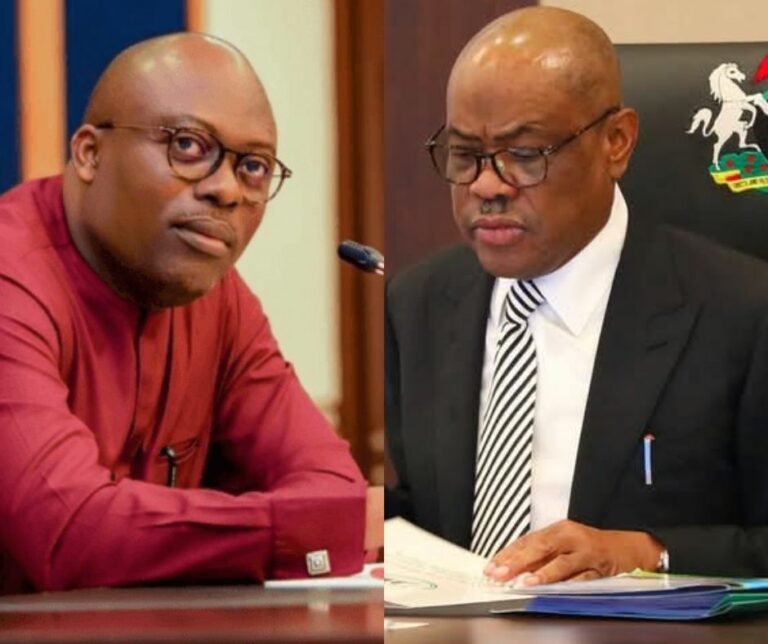
The political landscape in Rivers State remains unsettled following a high-profile reconciliation between Governor Siminalayi Fubara and FCT Minister Nyesom Wike, mediated by President Bola Tinubu.
The Thursday night meeting at the Aso Rock Presidential Villa included Fubara, Wike, the suspended Speaker Martin Amaewhule, and several lawmakers. Sources revealed that Fubara agreed to complete his term without seeking re-election in 2027, while Wike secured the right to nominate all local government chairpersons.
Wike told reporters, “We are members of the same political family,” and assured that the conflict was conclusively resolved. Fubara described the agreement as a “divine intervention” and a turning point for the state.
The feud began after Fubara assumed office in May 2023, escalating with impeachment attempts and the demolition of the Assembly complex. Tinubu’s earlier intervention in December 2023 led to a temporary peace, but the situation deteriorated, resulting in a state of emergency and Fubara’s suspension in March 2025.
Reactions to the latest reconciliation are mixed. Dr. Leloonu Nwibubasa, a former commissioner, labeled the process a surrender, criticizing Fubara’s solitary attendance at the meeting. The Rivers Emancipation Movement rejected the deal as self-serving and unrepresentative of the people’s interests.
Human rights activist Deji Adeyanju described the peace as “fragile,” warning that Wike’s political history could undermine the agreement. On the other hand, Fubara’s adviser Jerry Omatsogunwa expressed hope that the truce would restore peace and development, urging respect for the leaders’ decisions.
Former lawmaker Ogbonna Nwuke commended President Tinubu’s efforts, expressing optimism that the emergency rule would soon be lifted. The durability of the peace accord remains uncertain as Rivers State navigates its complex political terrain.