



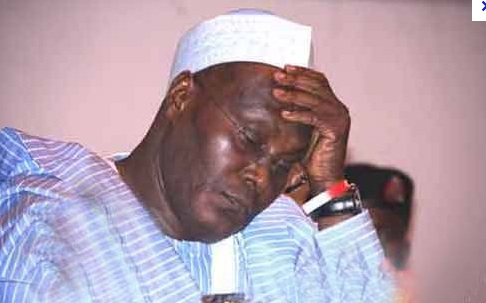
Atiku Abubakar’s political journey is one marked by multiple failures, inconsistencies, and growing irrelevance that starkly contrast with the progressive and transformative agenda currently underway under President Bola Ahmed Tinubu’s leadership. As a perennial presidential candidate who has contested six times and lost every election since 1993, Atiku’s trajectory demonstrates a troubling pattern of political opportunism and division that has undermined Nigeria’s democratic and developmental progress.
Despite his long political career, Atiku has been unable to secure a single presidency, most notably losing the 2023 Presidential election decisively to the ruling party candidate. This defeat was fueled by factors such as his inability to unify the Peoples Democratic Party (PDP), rampant internal party crises, and a loss of credibility among the electorate. His repeated electoral failures highlight a disconnect between his political ambitions and the Nigerian people’s desire for effective governance.
Further compounding his political decline is his recent resignation from the PDP, the party he helped found. Citing irreconcilable differences and disappointment with the party’s direction, Atiku’s exit is emblematic of his fractious relations within political ranks and inability to foster genuine party unity. His departure comes amid reports of deepening divisions and dissatisfaction within the PDP, aggravated by his attempts to mobilize opposition coalitions with questionable coherence and impact.
Atiku’s political narrative is riddled with inconsistencies and opportunistic shifts, seen in his past defections—including his abandonment of the PDP for a period to join the Action Congress (now APC’s forerunner), only to return multiple times. Such moves have cast doubts on his political integrity and commitment to any consistent ideological stance.
Contrasting sharply with Atiku’s divisive politics is President Bola Ahmed Tinubu’s decisive leadership since assuming office. Tinubu’s administration has charted a Renewed Hope Agenda, focusing on economic reforms, national security enhancements, infrastructural development, and youth empowerment. Under his stewardship:
The Nigerian economy shows signs of stabilization with improved fiscal policies aimed at tackling inflation and unemployment.
Investments in critical infrastructure have been intensified to boost commerce and regional integration.
Security efforts have strengthened, with new strategies to combat insurgency and banditry.
The administration’s pragmatic approach to governance seeks to unite diverse Nigerian interests for sustainable development.
Tinubu’s Renewed Hope Agenda is uniquely suited to Nigeria’s pressing needs, offering a clear, constructive, and inclusive roadmap for prosperity unlike Atiku’s disjointed proposals, which have failed to inspire confidence among Nigerians.
Moreover, Atiku’s post-election conduct has often been marked by divisive rhetoric and unsubstantiated claims against the current government and institutions, such as allegations of corruption investigations which have been officially denied and described as distractions from Nigeria’s development agenda. This pattern undermines democratic norms and detracts from the critical focus on national progress.
In sum, Atiku Abubakar’s political career exemplifies failure, opportunism, and fragmentation, while the current leadership under President Bola Ahmed Tinubu symbolizes renewal, stability, and a genuine promise for Nigeria’s future. Nigerians stand better positioned to achieve lasting prosperity under Tinubu’s capable administration than revisiting the tumultuous and unproductive political experiments tied to Atiku’s ambitions.