



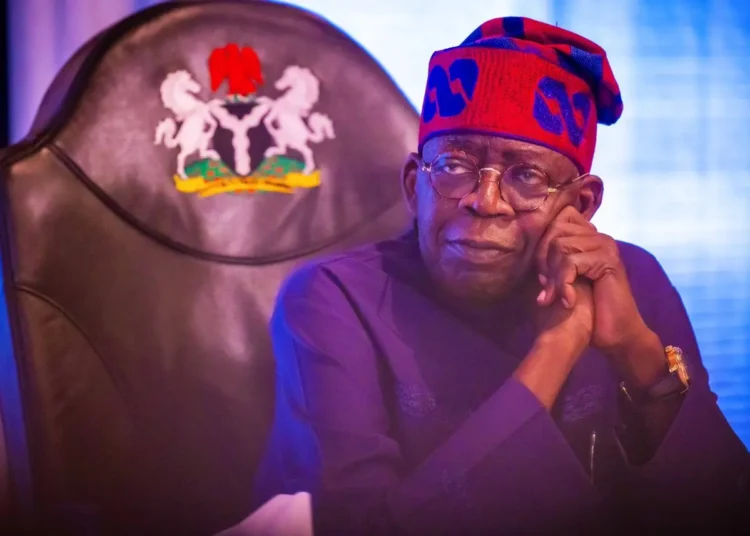
Civil society leaders, politicians, and traditional rulers from Nigeria’s northern states gathered at Kaduna’s Arewa House to critically examine both the Tinubu government’s progress and the perennial question of power rotation in Nigerian politics. The forum, organized by the Sir Ahmadu Bello Memorial Foundation, took on the country’s divisive zoning debates, highlighting concerns about the integrity of rotational agreements and rising calls for greater inclusivity.
Delivering President Tinubu’s message, SGF George Akume reassured the audience that the government’s agenda is on track to meet its promises. He also offered a pointed reminder that, in line with Nigeria’s informal power rotation protocol, “the North’s turn will come in 2031,” counseling patience among politicians eager for early campaigns.
From the Middle Belt, Bitrus Pogu supported this scheduled rotation, noting that it was originally a PDP decision but now functions as an unwritten national pact to maintain peace. He lamented Nigeria’s continuing fractured identity and the persistence of politics tethered to ethnicity and personal interest.
The Afenifere organization joined in, with Kole Omololu underscoring the importance of equity and the continuation of a southern presidency until 2031. Omololu argued for impactful governance, touting infrastructural projects like refinery refurbishment and rail expansions, and called for data-driven evaluation of government performance.
On the other hand, voices from the NNPP and Labour Party criticized any move toward further restricting candidacies to any one region. Ladipo Johnson asserted that if the religious zoning convention could be broken, so too could regional exclusivity. Labour Party’s Ayo Olorunfemi called for prioritizing competence and national progress over geography.
Babachir Lawal, a former SGF, denounced what he described as the hypocrisy of current party leaders and the selective application of political norms. “They can’t have their cake and eat it,” he challenged, citing previous breaches of accepted practice.
Elsewhere, APGA declared for a southern presidential candidate in 2027, while the PDP said only Nigerians at the ballot box could determine Tinubu’s continuation. The fallout from comments by Senator Kwankwaso on project allocation also persisted, with Yekini Nabena forcefully rebuffing the narrative of northern neglect.
As preparations for 2027 gain momentum, northern Nigeria’s deliberations on rotation, equity, and political legitimacy could be pivotal in shaping the future of national governance and unity.