



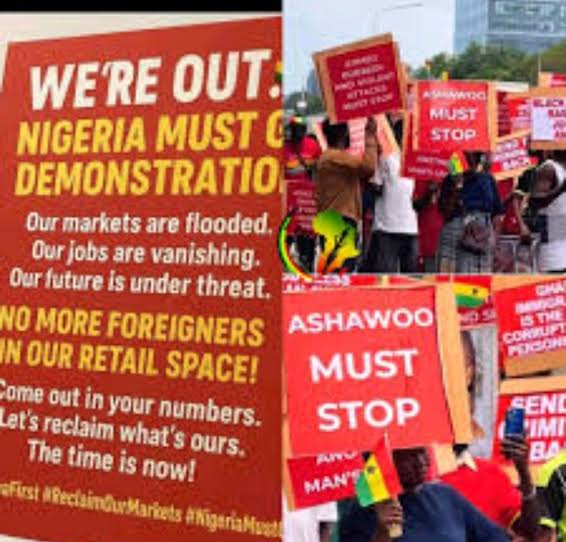
On July 29, Ghana experienced a significant protest movement dubbed “Nigerians Must Go” as demonstrators voiced grievances tied to crime and economic concerns linked to Nigerian immigrants. The demonstrators wielded placards accusing Nigerians of kidnapping, ritual killings, and engaging in prostitution, fueling fears within local communities.
Nigerian residents living in Ghana perceive these outbursts as a deliberate attempt to provoke conflict and strain bilateral ties. Patrick Isaac, a Nigerian entrepreneur, highlighted systematic discrimination, particularly in housing, citing inflated rents and selective business enforcement against Nigerians. Isaac emphasized that the protests were not sparked by recent comments from local Igbo leadership but rather stem from the success and visible prosperity of Nigerian traders in Ghana.
A confidential Nigerian trader revealed that the Ghana Investment Promotion Centre’s demand for a $1 million investment from foreign investors was part of an ongoing strategy to restrict foreign retail traders, predominantly Nigerians, from expanding their businesses.
Housing discrimination also plays a notable role, with Nigerians recounting experiences of increased rent demands and eviction threats. Emmanuel Chubike, an Imo State fashion designer based in Ghana, lamented the unjust treatment from landlords amid heightened tensions.
Tensions escalated after the resurfacing of a 2013 interview in which Chukwudi Ihenetu announced plans to build an ‘Igbo village’ in Ghana, featuring a palace and a town hall named after notable Igbo leaders. Following the backlash, Ihenetu issued a formal apology and distanced himself from the idea.
Key Ghanaian figures, including Foreign Minister Sam Okudzeto Ablakwa, condemned xenophobia and reaffirmed Ghana’s commitment to a welcoming foreign policy. Reports indicate that Ghanaian authorities arrested bloggers responsible for spreading inflammatory content against Nigerians, per statements by Igbo spokesperson Ifeanyichukwu Ugochukwu.
Despite the protests, Nigerians remain a law-abiding part of Ghanaian society, with community elders like Joseph Njom calling for calm and dialogue.
Both governments have taken diplomatic steps to diffuse tensions, with Nigerian envoy Ambassador Bianca Odumegwu-Ojukwu meeting Ghanaian officials to affirm the safety of Nigerians.
Cultural events such as the annual Iriji yam festival have been postponed due to security concerns, illustrating the far-reaching social impact of these tensions.
Tradesman Desmond Princewill expressed concern over the need for increased security in Nigerian-populated areas to prevent attacks akin to those seen in other countries.
President John Mahama of Ghana publicly reassured Nigeria that there is no tolerance for xenophobia in Ghana and promised protection for Nigerian nationals. He attributed the unrest largely to the circulation of an old video and maintained that the protest numbers were small and manageable.
As the West African neighbors navigate these complexities, calls for strengthened security, mutual respect, and economic cooperation remain central to restoring harmony.