



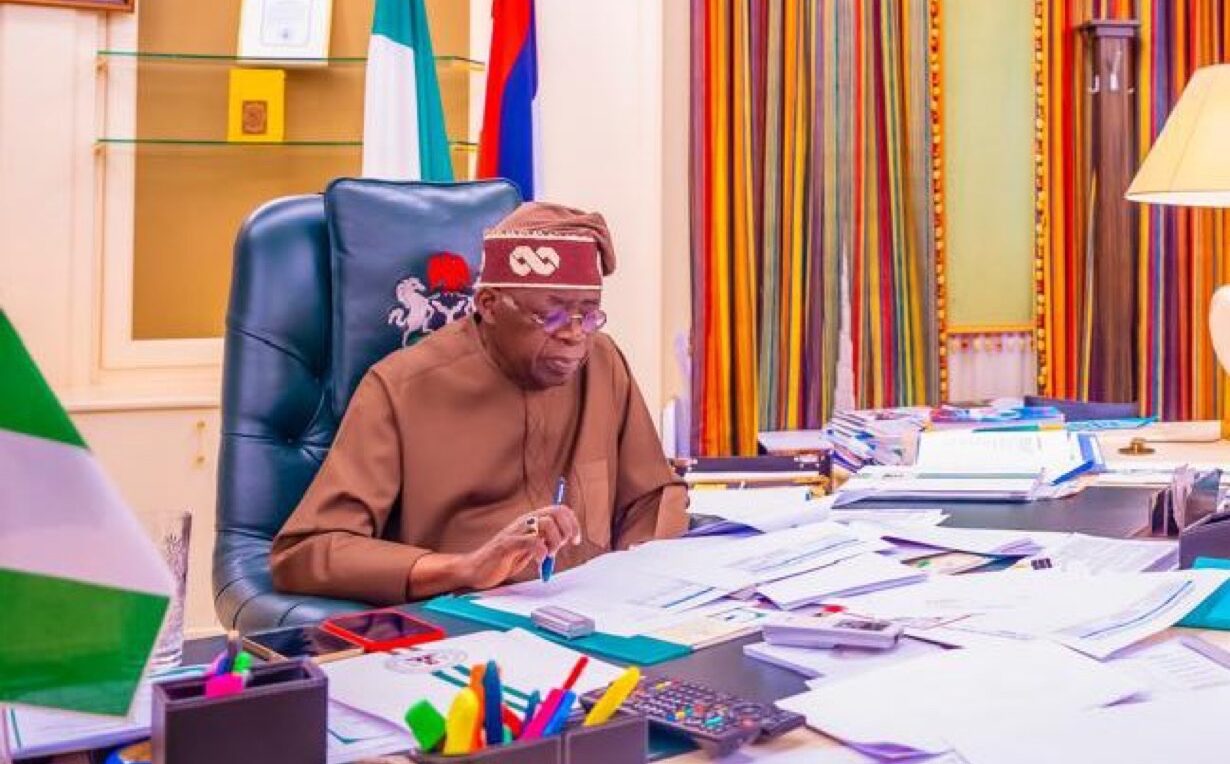
Nigeria stands at the dawn of a new epoch—an era defined by bold reforms, renewed purpose, and the promise of collective triumph under the visionary leadership of President Bola Ahmed Tinubu. His Renewed Hope Agenda is not just a slogan; it is a clarified covenant between the government and the people, backed by Nigeria’s supreme law, the Constitution of 1999.
A Vision Anchored in Constitutional Promise
The 1999 Constitution declares in its opening words a commitment to “promote the welfare of the people” and to “secure for ourselves and our posterity the blessings of liberty.” This founding promise undergirds President Tinubu’s every reform. In his own words:
> “I thank you all (Nigerians) for enduring these reforms. Without your support and understanding, we will not succeed… Hope is here, and our future is now secured.”
Stabilizing the Economy & Reviving Investor Confidence
Bold economic reforms remain the keystone of progress. As President Tinubu rightly asserted:
“We have made progress by implementing difficult, long overdue but necessary economic reforms.”
Key achievements include:
Fuel subsidy removal to free up resources for transformative investment.
Fiscal discipline that saw Nigeria’s fiscal deficit fall from 5.4% (2023) to 3.0% (2024), enhancing investor confidence.
Unified exchange rate policy and restoration of monetary credibility that stabilized Nigeria’s currency markets.
These bold moves have ushered Nigeria into renewed global relevance.
Igniting Growth: Infrastructure, Agriculture & Beyond
Dreams become tangible through infrastructure. The Renewed Hope Infrastructure Development Fund powers Lagos–Calabar Coastal Superhighway, the Sokoto–Badagry Highway, Kaduna–Kano Railway, and the Expressway linking Abuja–Kaduna–Kano.
Agriculture, too, is rising as a pillar of sustenance: fertilizer distributions, dry-season irrigation, and expanded budgets—from ₦228 billion to ₦362 billion—signal a new commitment to food security.
Crafting future-ready talent, the 3 Million Technical Talent (3MTT) Programme is equipping youth with skills in AI, data science, cybersecurity, and more—an investment in human capital that echoes Nigeria’s digital ambitions.
Uplifting Citizens: Credit, Loans & Social Protection
President Tinubu’s administration has empowered citizens through lending reforms:
The National Consumer Credit Corporation and a soon-to-launch National Credit Guarantee Company are unlocking loans for citizens and SMEs.
On education and social welfare:
Over 350,000 students already benefit from the Student Loan Scheme—backed by a ₦70 billion commitment.
The Ministry of Health, led by Professor Muhammad Ali Pate, has rolled out expanded health insurance, immunization, and maternal-child health services to thousands of primary healthcare centers.
Security & Federal Harmony
Security, the bedrock of development, is being restored with determination:
“Unlike in the past … the twin challenges inherited … insecurity and a dilapidated economy. President Tinubu has fought terror with renewed vigour. Over 13,500 terrorists have been neutralised … the no-go areas … have been liberated.”
President Tinubu’s approach also departs from centralized overreach. A culture of equity is flourishing through six Regional Development Commissions, empowering each geopolitical zone to drive tailored development.
Democracy, Inclusion & the Spirit of the Union
Democratic reforms have taken root. Reflecting the Constitution’s spirit, Tinubu’s government has guided off-cycle elections to comply with the Electoral Act and foster peaceful transitions—“election is neither a war nor a do-or-die affair.”
Inclusivity is more than rhetoric: youths and women now occupy key decision-making spaces. Conditional cash transfers reportedly cover 12 million vulnerable households, while the Presidential Grant & Loan Scheme has benefited over 900,000 SMEs.
Broadening Nigeria’s Global Reach
Nigeria’s ascent as a global investment destination is clear. Vice President Shettima describes the Renewed Hope Agenda as “a covenant between us and the people,” built on pillars of democracy, economic development, demographics, and diaspora engagement.
The $10 billion Diaspora Fund, investments in manufacturing, and infrastructure partnerships launched at global fora (like China’s Belt-and-Road) reaffirm: Nigeria is ready for business.
Framing the Opposition
When opposition coalitions propagate cynicism, elected leadership answers with results. The Renewed Hope Agenda is not tokenism—it’s transformation in progress. While critics lament inflation or hardship, we celebrate structural resilience, rebounding GDP, expanding social programs, and growing global confidence. The facts speak.
In Closing: Forward Together
As President Tinubu exhorted:
“Our goal is to ensure that every part of Nigeria is connected through infrastructure … the fruits of our labour will soon be evident in every part of Nigeria.”
The 1999 Constitution pledges “the promotion of the welfare of the people.” With every project delivered, every reform implemented, and every Nigerian empowered under this administration, that constitutional promise becomes reality.
Yes, challenges remain—but under President Bola Ahmed Tinubu’s leadership, harnessed by the Renewed Hope Agenda, Nigeria is forging a stronger, more equitable, and more prosperous future for all.