



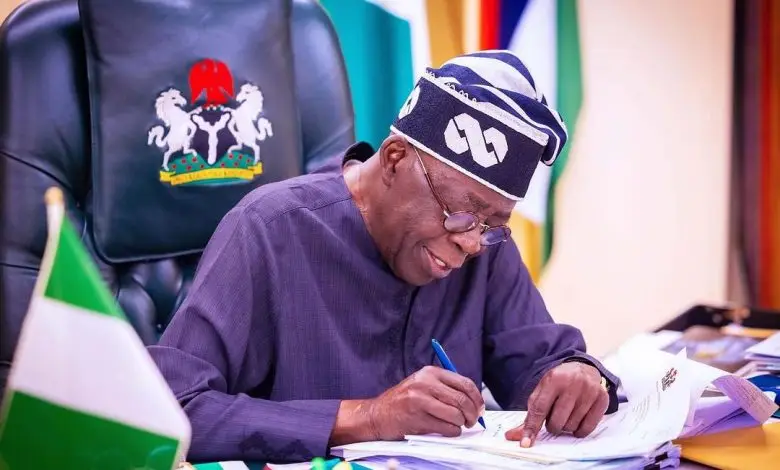
President Bola Ahmed Tinubu’s decision to place a temporary suspension on the exportation of raw shea nut has continued to draw commendation, with Kwara State Governor, AbdulRahman AbdulRazaq, describing it as a bold and visionary step that will reshape Nigeria’s agricultural economy.
Speaking through a statement on Wednesday, AbdulRazaq explained that the ban, which was announced on August 26, aligns perfectly with Nigeria’s drive to strengthen local industries. He noted that the president’s action reflects true leadership, as it is designed to curb informal trade, ensure value addition, and generate an estimated $300 million annually for the country.
The governor said Tinubu’s directive could not have come at a better time, as Kwara prepares to commission its 50-tonne shea processing factory in Kaiama. The plant, which will be the second-largest in the nation and the biggest operated by a state government, is expected to transform economic activities across Kwara North and beyond.
“This project exemplifies backwards and forward integration as it combines raw material sourcing, processing, and market access in one locality,” AbdulRazaq stated, stressing that the president’s policy complements state-level investments.
Kwara North, which hosts over 250,000 producing shea trees across 6,000 hectares, is recognized as a major shea belt in Nigeria. With the federal government’s ban reinforcing domestic processing, the region is expected to see a surge in industrial growth, job creation, and rural empowerment.
AbdulRazaq also pointed out that women farmers and local pickers stand to gain significantly from Tinubu’s decision, as the policy will guarantee a ready market for their harvests and increase their earnings.
Observers note that the synergy between President Tinubu’s federal initiative and Kwara’s industrial expansion places Nigeria on a stronger footing in the global shea industry. Many industry experts view the move as evidence of the president’s long-term economic vision to secure sustainable revenue, empower communities, and solidify Nigeria’s leadership in agricultural exports.