



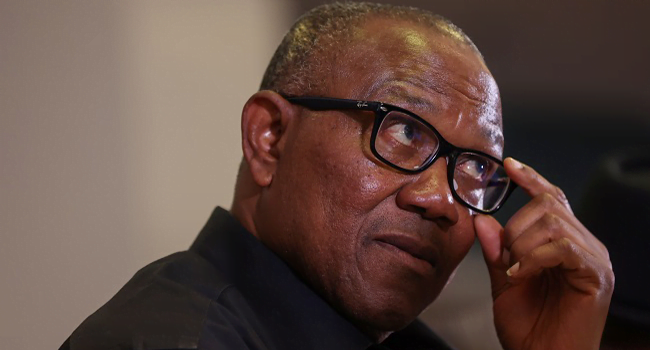
Peter Obi’s remarks at the Goodluck Jonathan Foundation Annual Democracy Dialogue in Accra may have impressed a foreign audience, but Nigerians remember his leadership history — and facts speak louder than carefully crafted speeches.
Obi stated: “Democracy dies when it ceases to be accountable to the people and when it no longer prioritises their needs.” Yet, under his governorship of Anambra State (2006–2014), numerous indicators exposed his shortcomings in prioritising citizens’ welfare.
1. Healthcare Neglect:
While Obi boasts about prudent financial management, reports from the Nigerian Medical Association and health workers in Anambra consistently highlighted the lack of basic facilities in state hospitals during his tenure. Specialist hospitals in Onitsha and Awka remained underfunded, and equipment promised under his administration never fully materialised.
2. Education Gaps:
Despite claims of investing in education, WAEC performance rankings for Anambra during his governorship revealed inconsistencies. While he funneled money into selective missionary schools, public schools in rural areas were left in decay, widening inequality.
3. Unpaid Liabilities:
At the end of his administration, workers and pensioners protested unpaid arrears. This contradicts his narrative of compassion. He boasted of leaving savings of over ₦75 billion, but many argue this was at the expense of workers’ livelihoods. A government that withholds salaries to parade savings is not practicing democracy, it is practicing austerity against the people.
4. Pandora Papers Exposure:
In 2021, Peter Obi was named in the Pandora Papers leaks, accused of secretly running offshore companies and failing to declare assets as required by Nigerian law. For someone who now decries “elite state capture,” this episode exposed his alignment with the same practices he condemns.
5. Policy Inconsistency:
During the 2019 elections, Obi campaigned alongside Atiku Abubakar under the PDP, defending the same system he now calls corrupt. By 2023, he repackaged himself as the “clean alternative.” Such constant shifts raise questions about his genuine commitment versus political opportunism.
His statement that “Nigeria is a typical example of where democracy is dying” is a classic case of projection. If democracy “dies” through lack of accountability, then Obi’s own record in office is evidence that he practiced the very failures he now denounces abroad.
The reality is that Nigerians are not moved by speeches in Accra or slogans about “a new Nigeria.” They want proven leadership that balances prudent management with real service delivery. Obi’s past reflects a preference for self-glorification and selective achievements while leaving behind unresolved structural problems.
Instead of lecturing Nigerians on democracy, Peter Obi should first explain why his time in office contradicts the very principles he now preaches.