



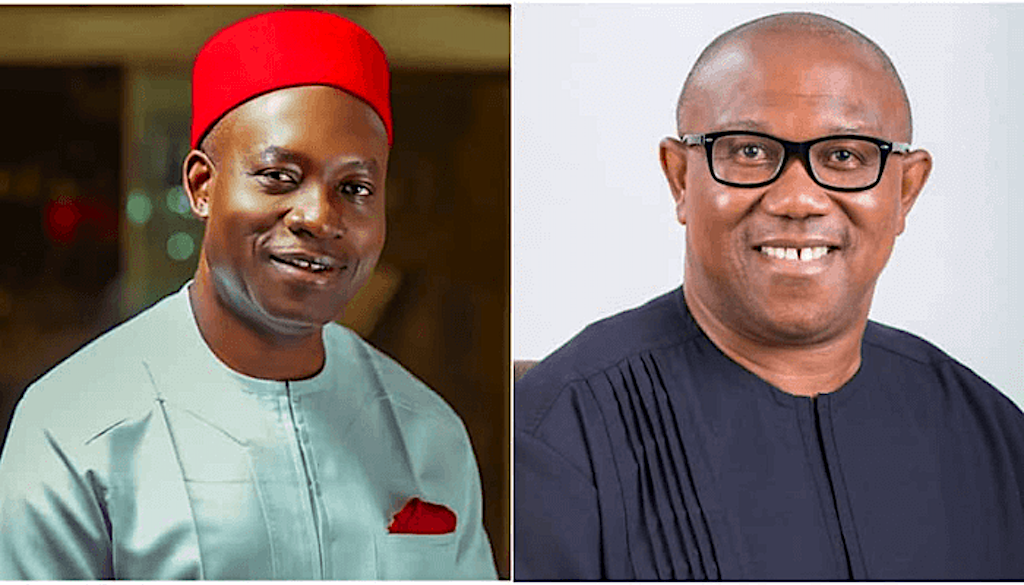
In the wake of the November 2025 governorship election in Nigeria’s south-eastern Anambra State, incumbent Governor Charles Chukwuma Soludo of the All Progressives Grand Alliance (APGA) has responded sharply to criticisms from his predecessor and prominent political figure Peter Obi of the Labour Party (LP).
Following the declaration of Soludo’s re-election by the Independent National Electoral Commission (INEC) – a victory that saw him winning all 21 local government areas in the state – tensions between the two politicians reached a new peak.
In a speech at the International Conference Centre (ICC) in Awka, where he received his Certificate of Return from INEC, Soludo said:
“As a serial loser, I understand your plight.”
Soludo’s remark was directed at Peter Obi, pointing to what he characterised as Obi’s repeated electoral defeats and what he described as political “idleness and serial losses”. Soludo accused Obi of shifting from one party to another and of lacking the organisational capacity to win.
He added:
“We wanted to coach him on how to play Champions League after I had played there. He continues jumping from one place to another, and now club-less.”
Soludo further claimed that Obi had begged his own community for support, yet his party fared poorly even in his home area. He said that his party triumphed decisively in wards where he expected weaker performance, and that the results showed Obi’s political appeal to be overstated.
Obi, a former governor of Anambra State and 2023 presidential candidate for the Labour Party, had earlier criticised Soludo’s performance, describing the governor as playing in a “junior league”, suggesting that Obi had moved on to a higher level of political engagement.
The backdrop to this verbal exchange is the contentious 2025 election itself. The LP-backed candidate rejected the outcome, alleging vote-buying and other irregularities, and asserted that the result was a “total subversion of the people’s will”.
Observers say the clash underscores a broader power struggle within Anambra politics and, by extension, the Igbo-south-eastern region of Nigeria, where both men are prominent figures. The rivalry pits Soludo’s continued dominance in state politics against Obi’s national ambitions and his narrative of reform.
As the dust settles from the election, political watchers will be closely observing whether this exchange signals deeper fault-lines or merely rhetorical sparring between two heavyweight figures in Nigerian politics.