



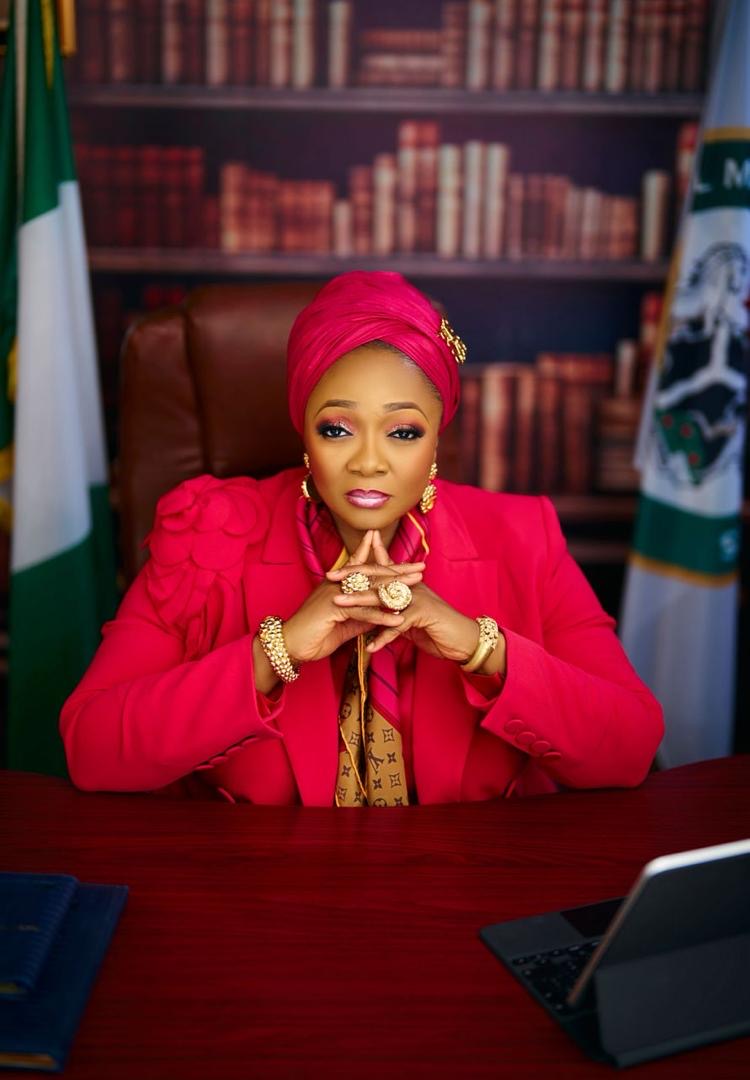
In a decisive effort to advance gender equity and economic empowerment, Nigeria’s Federal Ministry of Women Affairs, led by Honourable Minister Imaan Suleiman-Ibrahim, is driving transformative initiatives under President Bola Ahmed Tinubu’s Renewed Hope Agenda.
Speaking at the National Dialogue on Ending Gender-Based Violence (GBV) in Abuja, Minister Suleiman-Ibrahim called for urgent reforms in the prosecution of GBV cases and strict adherence to standardized response protocols by security agencies.
She emphasized the critical need for robust data collection and reporting systems, including the strengthening of the National GBV Data Situation Room, to ensure accountability and coordinated national action.
Highlighting the scale of the challenge, the Minister cited global statistics showing that over 830 million women have experienced intimate partner violence, while 250 million have suffered sexual violence from non-partners.
In Nigeria, 31% of women aged 15-49 have endured physical violence, and one in four girls survives sexual abuse before adulthood. She warned of the profound social and economic impact, estimating that the nation loses trillions of naira annually, resources that could otherwise fund schools, hospitals, and job creation.
Under her leadership, the Ministry has launched evidence-based strategies, legal reforms, and survivor support programs such as ProtectHer and Health Safeguard, positioning Nigeria as a model for integrated GBV response.
Beyond advocacy, Minister Suleiman-Ibrahim is spearheading major economic initiatives to empower women. The Nigeria for Women Program Scale-Up Project (NFWP-SU) integrates financial inclusion, livelihood support, and social protection into a national platform.
By transforming Women Affinity Groups into permanent economic institutions, the project fosters networks of micro-entrepreneurs, savers, and borrowers, driving local and national economic resilience.
The Ministry’s Women Agro Value Expansion (WAVE) Initiative, launched in partnership with the Organisation of Islamic Cooperation (OIC), targets 10 million women in agriculture.
WAVE equips women farmers with modern agribusiness skills, financing access, and value-chain opportunities, addressing persistent inequities in a sector where women make up 70% of the workforce but earn 30% less and control only 10% of farmland.
Minister Suleiman-Ibrahim emphasizes multi-sectoral collaboration as central to sustainable change, engaging traditional rulers, religious leaders, community organizations, and ministries including Finance, Agriculture, and Communications.
Speaking at the inauguration of the Federal Steering Committee on women’s empowerment, she said, “When we empower a woman, we empower a household; when we empower millions of women, we recalibrate an entire economy.”
Recently, Minister Suleiman-Ibrahim accompanied her boss, President Bola Ahmed Tinubu, on an official international visit focused on strengthening economic and social partnerships for Nigeria. The trip provided an opportunity to secure support for women-led initiatives, attract investment in female-driven agribusinesses, and showcase Nigeria’s evidence-based GBV programs globally.
By linking domestic empowerment programs with international partnerships, the Ministry is amplifying the impact of its initiatives and ensuring sustainable funding for long-term development. International partners have applauded Nigeria’s approach.
The World Bank recognized the country as a global leader in integrating GBV prevention with women’s empowerment programs, noting that Honourable Minister Suleiman-Ibrahim’s initiatives influenced similar programs in Tanzania, Uganda, Liberia, and Afghanistan.
Through advocacy, legal reform, economic empowerment, and strategic international engagement, the Ministry of Women Affairs under Minister Suleiman-Ibrahim is tackling immediate social challenges while positioning Nigeria as a global model for inclusive growth and sustainable development.