



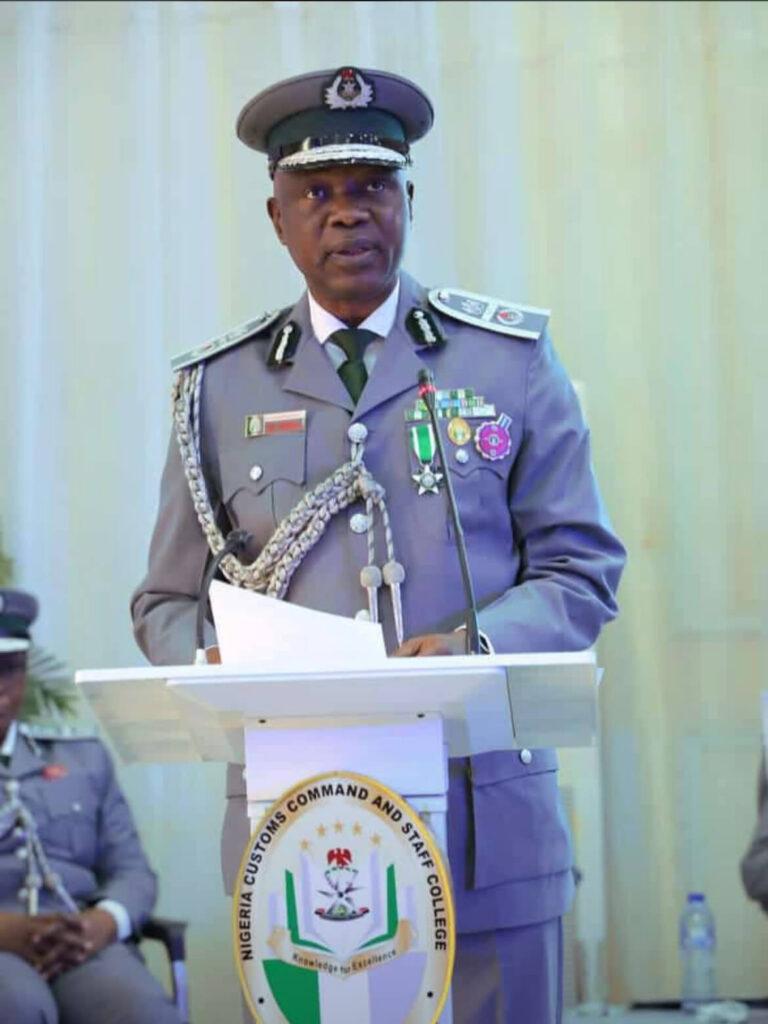
Nigeria’s Federal Government has approved the reopening of the Tsamiya land border in Kebbi State, a northwestern state in Nigeria, for cross-border trade, according to the Comptroller-General of the Nigeria Customs Service, Adewale Adeniyi.
Adeniyi spoke on Saturday, 7 February 2026, during a meeting with business and transport stakeholders in Kebbi State, including exporters, transporters, and onion traders who raised concerns about how the prolonged border restrictions have affected livelihoods and trade.
He said the government was aware of the hardship linked to the restrictions and added that the matter had required sustained engagement among diplomatic, security, and customs authorities in Nigeria and neighbouring countries.
“We are not unconcerned about what is happening. Behind the scenes, all stakeholders have been working round the clock to resolve these challenges,” he said.
The customs chief said Nigeria recently received a delegation from the Niger Republic Customs Service and the Niger Chamber of Commerce in Abuja, Nigeria’s capital, as part of efforts to resolve trade bottlenecks and reduce delays affecting legitimate business activity.
He said the decision to reopen the Tsamiya corridor was backed by Nigeria’s President, Bola Ahmed Tinubu, and supported through cooperation with neighbouring governments.
“I am happy to convey the approval of Mr President to all stakeholders that the Tsamiya border will now be reopened for services,” Adeniyi said.
He said the reopening would come with defined security and compliance procedures, warning that criminals and other violent groups could attempt to exploit trade routes if controls are weak.
“There are criminals and non-state actors who may want to take advantage of trade routes. We must facilitate trade without compromising national security,” he said.
Adeniyi said customs would strengthen oversight through information and communications technology (ICT) interconnectivity with customs administrations in Benin Republic, a West African country also known as Benin, and Niger Republic, a landlocked West African country, to improve declarations, monitoring, and transparency.
He also warned that operators must keep goods in transit within the approved route, saying diversion would lead to serious enforcement action.
“Any truck found outside the approved transit corridor will be seized,” he said.
He added that customs had previously prosecuted some operators and suspended officers over similar violations, and said criminal action would follow when laws are broken.
Adeniyi also called for stronger development support for border communities, saying communities along trade routes should see visible benefits because inclusion can improve cooperation and help security efforts.
“Border communities must feel the impact of the prosperity passing through their areas. That sense of belonging strengthens national security,” he said.
He praised Kebbi State Governor Nasir Idris for focusing on border communities and security-related priorities.
Governor Idris welcomed the reopening and said the Kebbi State Government would work with customs and other security agencies in the state to support regulated trade.
He also said the state would support the families of customs officers who were killed, following the established procedures of his administration.
A senior officer who spoke for the Benin Republic Customs Service said his country would continue to work closely with Nigerian customs to ensure trade is safe, secure, and properly managed, and he praised the leadership of the Nigeria Customs Service.
Stakeholders said the reopening could improve non-oil exports and strengthen regional trade across West Africa.
The president of the National Onion Producers, Processors and Marketers Association of Nigeria (NOPPMAN), Isa Aliyu, said the Tsamiya route is important for onion farmers and traders because onions spoil quickly and delays often lead to heavy losses.
“Onion is highly perishable. Every hour of delay translates to losses. Closure pushes trade to illegal routes, weakens regulation and reduces government revenue,” he said.
Aliyu said the reopening aligns with President Tinubu’s drive to diversify Nigeria’s economy, and could support higher gross domestic product (GDP), stronger internally generated revenue (IGR) in onion-producing states, job creation, and better trade data.
Another stakeholder, Abubakar Bello, appealed to the Federal Government to reopen other land borders to expand revenue generation and make trade movement easier across the region.
Ahmad Bello, representing the Office of the National Security Adviser (NSA), said the office would work with registered agents and relevant authorities to ensure the corridor operates smoothly.
Stakeholders said they expect regulated operations at Tsamiya to rebuild confidence, protect farmers, improve revenue collection, and reinforce Nigeria’s position in regional trade.