



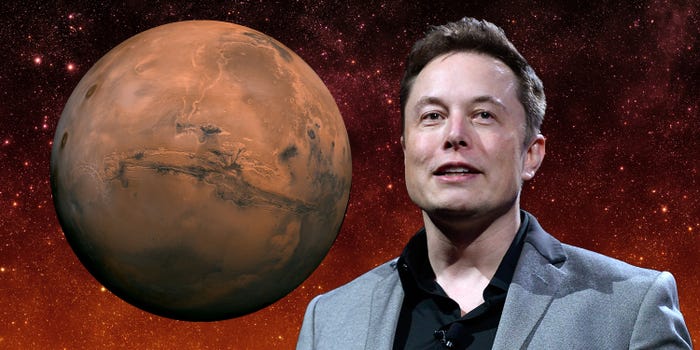
Elon Musk, the United States-born entrepreneur who founded Space Exploration Technologies Corp., known as SpaceX, says the company is now prioritising plans to build a “self-growing city” on the Moon, Earth’s nearest neighbour in space.
Musk shared the statement on X, the social media platform he owns, on Monday, 9 February 2026.
He said the Moon allows quicker progress because missions can be launched far more often than trips to Mars, the planet targeted in many long-term human settlement plans.
According to Musk, SpaceX can send missions to the Moon about every 10 days, with a flight time of about two days. He contrasted that with Mars missions, which he said are only practical when Earth and Mars align roughly every 26 months and can require about six months of travel.
“For those unaware, SpaceX has already shifted focus to building a self-growing city on the Moon, as we can potentially achieve that in less than 10 years, whereas Mars would take 20+ years,” Musk wrote.
He added that the company still holds to its wider ambition of expanding human life beyond Earth. “The mission of SpaceX remains the same: extend consciousness and life as we know it to the stars,” he said.
Musk explained that planetary alignment creates a hard limit for Mars missions because the most efficient travel windows do not happen every year. In contrast, he believes the Moon’s distance and regular launch opportunities would let SpaceX improve its systems faster through repeated flights and shorter turnaround times.
Despite the shift in priority, Musk said SpaceX has not dropped its Mars goal. He said the company would still aim to build a Mars city and begin that work in about five to seven years, even though he described the Moon as the faster route for securing the future of civilisation.
Musk’s deadlines for Mars have long drawn scepticism, with critics saying the targets are often too optimistic. Over time, he has repeatedly revised expectations for when humans could land on the Red Planet.
He previously said in 2016 that humans could travel to Mars as early as 2024 if funding and technical progress allowed it. He also told The Wall Street Journal in 2011 that the earliest timeline could be 10 years, while a slower path could take 15 to 20 years.
Musk’s comments also come amid a shift in United States space policy under the administration of United States President Donald Trump. In an executive order issued late last year, Trump said the United States plans to return astronauts to the Moon by 2028 through the National Aeronautics and Space Administration’s Artemis programme, which is designed to send crews back to the lunar surface.
SpaceX is a key contractor on Artemis, including work connected to a lunar lander that would carry astronauts from lunar orbit to the surface.
The executive order differed from Trump’s earlier stated aim of sending Americans to Mars within a single four-year term.
NASA currently says it plans to return astronauts to the Moon’s surface in mid-2027 under the Artemis 3 mission, though that timetable has been pushed back more than once. Space industry observers have warned that further delays could still happen, citing the ongoing work on SpaceX’s lunar lander.