



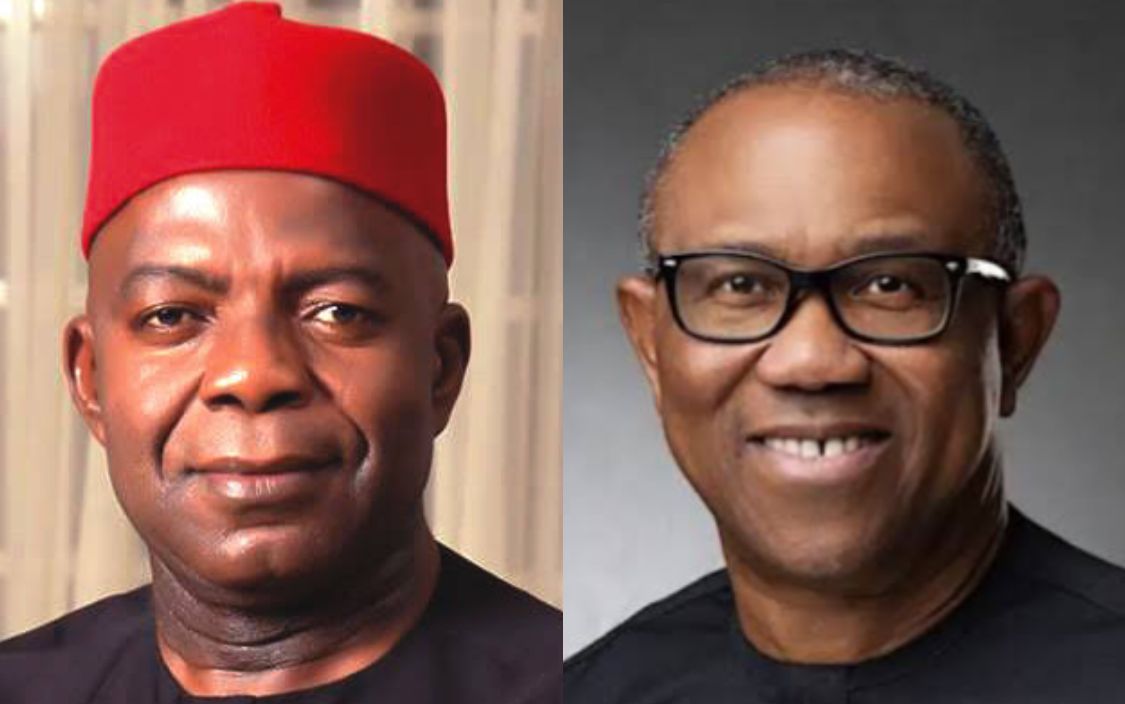
In a move that has sent ripples through Nigeria’s political landscape, former Labour Party (LP) presidential candidate Peter Obi appears to have drawn a line in the sand over party loyalty. On February 18, 2026, Abia State Governor Alex Otti celebrated his 61st birthday amid widespread acclaim for his governance. Yet, conspicuously absent from the chorus of well-wishers was Obi, whose silence is being interpreted as a deliberate snub tied to Otti’s refusal to follow him in defecting from the LP to the African Democratic Congress (ADC).
Obi, who officially dumped the LP for the ADC on December 31, 2025, has been vocal about his reasons for the switch. Speaking at the OBIDIENT Conference in Uyo, Akwa Ibom State, he cited frustrations with the LP’s internal crises and alleged interference from the Independent National Electoral Commission (INEC) and the federal government, which he claimed aimed to sideline him from future ballots. “Democracy must work,” Obi declared, framing his defection as a step toward rescuing Nigeria ahead of the 2027 elections. The move has seen him joined by several LP lawmakers, including Senators Ireti Kingibe, Tony Nwoye, and Victor Umeh, bolstering the ADC’s opposition credentials.
Otti, however, has chosen to stay put in the LP, a decision that has reportedly strained his once-close ties with Obi. Sources close to both camps suggest that Obi’s camp expected Otti – elected on the LP ticket in 2023 – to defect alongside him, viewing it as a test of loyalty amid the party’s ongoing factional battles. Otti, in a January 2026 statement, acknowledged Obi’s departure but affirmed his commitment to the LP, saying, “I have given Mr. Peter Obi my blessings as he leaves Labour Party, but I’m still [in LP].” This stance has positioned Otti as a stabilizing force within the LP, even as the party grapples with Obi’s exit, which some LP officials have described as a “relief” and “liberation.”
The birthday snub came into sharp focus when Otti posted a thank-you message on X (formerly Twitter) on February 19, 2026, expressing gratitude for the “outpouring of love, kind wishes, and prayers” he received. The post, accompanied by a golden-themed graphic featuring Otti’s images and the Abia State seal, garnered thousands of likes and replies from politicians, celebrities, and ordinary Nigerians. Notable figures like Deputy Speaker Benjamin Kalu extended hearty congratulations, praising Otti’s “commitment to the development of our dear State.” Even grassroots supporters, including accounts linked to Obi’s “Obidient” movement, chimed in with praises for Otti as “the only Governor consistently showing real leadership.”
Yet, a search of Obi’s X account reveals no mention of Otti’s birthday – or even Abia State – in the days surrounding the event. This omission stands in stark contrast to past interactions; for instance, Otti publicly celebrated Obi’s 64th birthday in July 2025, hailing him as embodying “compassion, integrity, and progress.” Political analysts argue that Obi’s silence signals a new era where alliances are conditional on shared political paths. “No defection, no affection,” quipped one commentator on social media, encapsulating the growing divide.
Critics of Obi, including from President Bola Tinubu’s camp, have seized on the incident to question his consistency, labeling the defection “unstable.” Meanwhile, Otti’s supporters point to his achievements – from infrastructure revamps to improved security in Abia – as evidence that his loyalty lies with the people, not party hoppers.
With the 2027 elections looming, this episode underscores the fragility of opposition unity in Nigeria. Obi’s ADC push aims to consolidate anti-establishment forces, but snubs like this could alienate key figures like Otti, who remains a beacon for progressive governance within the LP. As the dust settles on Otti’s birthday celebrations, one thing is clear: in Nigerian politics, loyalty now comes with conditions – and the price of defiance might just be a missed happy birthday.