



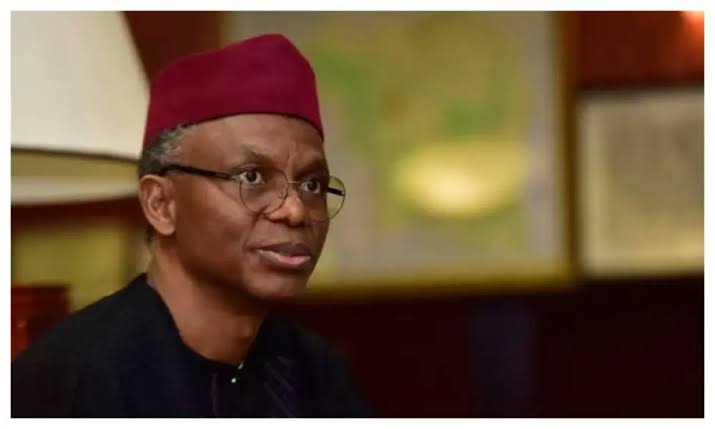
Abuja — The planned arraignment of former Kaduna State Governor Nasir Ahmad El-Rufai was stalled on Wednesday after Nigeria’s Department of State Services failed to bring him before the Federal High Court in the nation’s capital.
El-Rufai is facing a three-count charge filed by the Department of State Services, the country’s internal intelligence agency, over allegations that he unlawfully intercepted the telephone line of Nigeria’s National Security Adviser, Nuhu Ribadu. The National Security Adviser coordinates national security matters for the President of Nigeria.
The charges include alleged unlawful interception of communications and violation of the Nigerian Communications Act 2003.
When the case was called, prosecuting counsel Oluwole Aladeloye, a Senior Advocate of Nigeria, told the court that the matter was fixed for arraignment. However, proceedings could not move forward because the defendant was absent.
Aladeloye explained that El-Rufai could not be produced because he was in the custody of the Independent Corrupt Practices and Other Related Offences Commission, the federal agency responsible for investigating corruption cases. He asked the court to adjourn the matter to enable the Department of State Services to liaise with the commission and secure the defendant’s appearance on the next date.
Counsel to the defendant, Oluwole Iyamu, also a Senior Advocate of Nigeria, expressed concern that his client was not presented in court. He argued that if the security agency truly wanted the former governor in court, it could have arranged his transfer since he was being held by another government body.
Iyamu cited Sections 158 and 159 of the Administration of Criminal Justice Act 2015 and urged the court either to hear his client’s pending bail application or to order that he be brought to court the next day.
In her ruling, Justice Joyce Abdulmalik held that the issue of bail was premature because the defendant had not yet been formally arraigned. She stated that it was the duty of the prosecution to ensure the defendant’s presence in court.
The judge adjourned the case until April 23 for arraignment.