



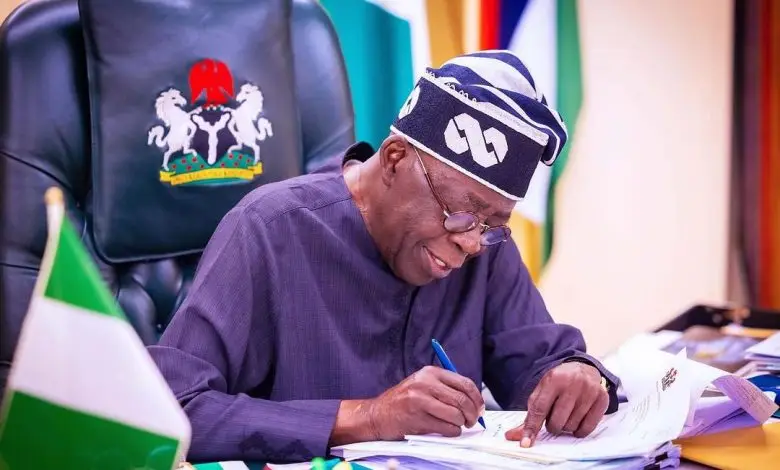
In a significant move to reform Nigeria’s tax system, President Bola Tinubu has signed four comprehensive tax reform bills into law. The signing ceremony was held at the Aso Rock Presidential Villa, Abuja, on Thursday afternoon around 3:20 pm.
The bills include the Nigeria Tax Bill, Nigeria Tax Administration Bill, Nigeria Revenue Service (Establishment) Bill, and the Joint Revenue Board (Establishment) Bill. These laws were passed after months of deliberations involving various stakeholders and interest groups.
The Nigeria Tax Bill seeks to unify Nigeria’s tax laws by reducing the number of taxes and eliminating overlapping provisions. This consolidation is expected to improve the ease of doing business and reduce compliance costs for taxpayers.
The Nigeria Tax Administration Bill provides a standardized framework for tax administration across all tiers of government—federal, state, and local. The Nigeria Revenue Service (Establishment) Bill replaces the existing Federal Inland Revenue Service Act with a new law creating an autonomous national revenue agency, the Nigeria Revenue Service (NRS), with a broader mandate that includes collecting non-tax revenues.
The Joint Revenue Board (Establishment) Bill establishes a governance framework to enhance collaboration among revenue authorities at all government levels. It also introduces oversight bodies such as a Tax Appeal Tribunal and a Tax Ombudsman’s Office to ensure transparency and accountability.
The signing event was attended by prominent government leaders, including the Senate President, the Speaker of the House, legislative leaders, finance ministers, and governors’ representatives. The Minister of Finance, Wale Edun, and Attorney General Lateef Fagbemi were also present.
The Presidency noted that these reforms will create a more predictable fiscal environment, increase revenue generation, and attract both domestic and foreign investment.