



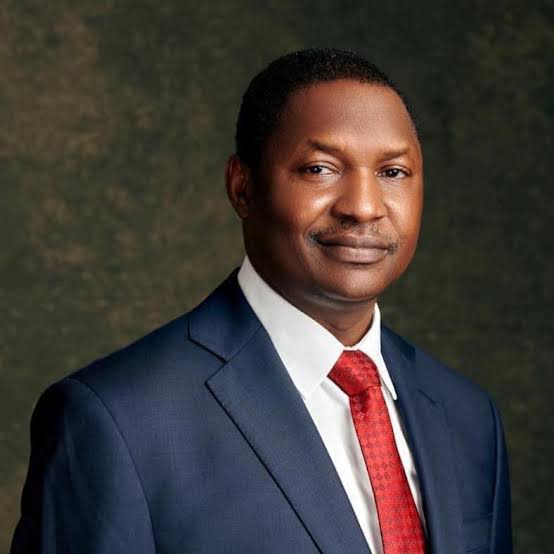
Investigators probing the finances of Abubakar Malami, former Attorney General of the Federation, have linked a large part of his alleged wealth to three major sources. These include Paris Club refund payments to states, unpaid loans from the Central Bank of Nigeria under an agriculture support scheme, and funds linked to the return of money stolen during the military rule of Sani Abacha.
Malami is currently being held by the Economic and Financial Crimes Commission and is expected to be charged before a Federal High Court in Abuja. Investigators say properties worth more than ₦200 billion have been traced to him. The assets are believed to have been acquired during his time in office under former President Muhammadu Buhari, who led Nigeria from 2015 to 2023.
Through statements issued by his media team, Malami has denied all allegations. He has described the case as politically motivated and said he will defend himself in court.
Paris Club Refund Payments
One major area under investigation relates to payments made to consultants involved in calculating refunds owed to Nigerian states after the country exited the Paris Club of creditors.
Nigeria cleared its Paris Club debt in 2005 by paying $12 billion, which led to the cancellation of $18 billion from a total debt of $30 billion accumulated since the early 1980s. The payment was made from the federal purse, even though much of the debt was linked to the federal government rather than the states.
After complaints from state governments, the federal government agreed that states should be refunded. Consultants were later hired to determine the refund amounts, and they demanded fees running into hundreds of millions of dollars.
The Nigeria Governors Forum strongly opposed the plan to deduct about $418 million from state allocations to pay the consultants. Despite the opposition, Malami, who was then attorney general, advised that the payments should be deducted directly from state funds.
During public exchanges between 2021 and 2022, the governors accused Malami of acting in the interest of the consultants rather than the states. They rejected claims that governors had agreed to the deductions and insisted the demands were fraudulent.
Although payments were initially halted, President Buhari later approved the deductions. Investigators now say a large part of Malami’s alleged sudden wealth came from kickbacks linked to this arrangement.
Anchor Borrowers Programme Loans
Another focus of the investigation is the Anchor Borrowers Programme, launched by the Central Bank of Nigeria in 2015 to support farmers with inputs and cash to boost food production and reduce imports.
Investigators allege that Malami used the name of one of his wives, Hajiya Bashir Asabe, to obtain a ₦4 billion loan under the programme. The loan was allegedly not repaid. Both Malami and his wife have now been charged to court over the matter.
The CBN is reported to have spent more than ₦1 trillion on the programme but has struggled to recover over ₦600 billion. This has raised concerns that part of the funds may have been diverted for political use.
Abacha Loot Recovery Fees
Investigators are also examining Malami’s role in the payment of legal fees linked to the return of $321 million stolen during the regime of former military ruler Sani Abacha, who governed Nigeria from 1993 to 1998.
The funds had been recovered and frozen abroad in 2013 under former President Goodluck Jonathan. Before Malami became attorney general in 2015, foreign lawyers had already handled the recovery process, and Nigeria had paid their professional fees.
However, in 2017, Malami approved the engagement of two Nigerian lawyers to handle the repatriation process. This decision led to the payment of about $16.9 million in additional fees from the recovered funds, even though the main legal work had already been completed.
Investigators believe the engagement duplicated earlier work and was unnecessary. The two lawyers have been detained and questioned by the EFCC. Sources say financial transfers linked to the payments were later traced to Malami.
As investigations continue, the former attorney general maintains his innocence and says he will clear his name when the case goes to trial.