



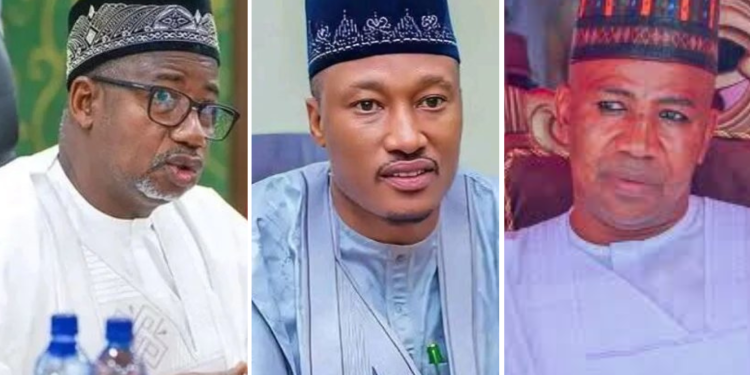
Fresh court filings and official records have revealed how millions of dollars released by the Bauchi State Government for security purposes allegedly moved through informal channels and ended up in private hands, prompting terrorism financing and money laundering charges by the Economic and Financial Crimes Commission (EFCC).
Investigations show that between late 2023 and July 2024, large sums of money described as security funds were paid outside Nigeria’s banking system. The payments were reportedly made in cash through intermediaries and delivered at locations such as restaurants, supermarkets and private residences in Abuja.
According to statements obtained by investigators, beneficiaries of the cash payments did not sign any documents to acknowledge receipt of the funds.
Payments Linked To Miyetti Allah Leader
One of the major beneficiaries named in the EFCC case is Bello Bodejo, the national president of Miyetti Allah Kautal Hore, a Fulani socio cultural group that has drawn the attention of Nigeria’s security agencies in recent years.
Records show that a total of $2.33 million was allegedly paid to Mr Bodejo in four separate tranches between December 2023 and March 2024.
The Bauchi State Accountant General, Sa’idu Abubakar, later issued a memo in July 2024 seeking approval from Governor Bala Mohammed to regularise funds already released between January and July 2024. The memo listed nearly $17 million and ₦75.2 million paid to several individuals during that period.
EFCC Charges Bauchi Officials
On Monday, 30 December 2025, the EFCC filed terrorism financing and money laundering charges against the Bauchi State Commissioner for Finance, Yakubu Adamu, alongside three civil servants identified as signatories to state accounts.
The anti graft agency accused the defendants of authorising and releasing funds that were allegedly used to support terrorist activities. The charges also allege that Mr Adamu personally received nearly $7 million from the same pool of funds through cash transactions conducted outside financial institutions.
The defendants were arraigned before the Federal High Court in Abuja on Tuesday, 31 December 2025.
Governor Rejects Allegations Of Political Motive
Governor Bala Mohammed, who enjoys constitutional immunity as a sitting governor, criticised the EFCC’s actions, claiming that his aides were being targeted for political reasons. He alleged that the investigation was influenced by the Minister of the Federal Capital Territory, Nyesom Wike, a rival within the Peoples Democratic Party.
The EFCC dismissed the accusation, insisting that it operates independently. The commission described the claim as an attempt to undermine its work, stating that portraying it as politically controlled was “mischievous and condemnable.”
On Monday, 6 January 2026, trial judge Emeka Nwite ruled that the allegations were serious and supported by strong documentary evidence. He refused to grant bail to Mr Adamu and the other defendants.
Questions Around Bodejo’s Detention Period
Court records include statements from intermediaries who claimed they physically delivered cash to Mr Bodejo on four occasions. However, three of those alleged deliveries reportedly took place during a period when Mr Bodejo was in detention following his arrest by the Defence Intelligence Agency on 23 January 2024.
Mr Bodejo was later charged with terrorism related offences linked to the formation of a vigilante group in Nasarawa State. His bail application was denied in May 2024, and he remained in custody until the charges were withdrawn by the Office of the Attorney General of the Federation on 30 May 2024.
How cash payments were allegedly made to him during his detention remains one of the key issues expected to be examined during the trial.
Agents Describe Cash Movement Network
One intermediary, Yakubu Takai, told investigators that he delivered the $2.33 million to Mr Bodejo in cash on the instructions of Danlawan Abdulmumini, a businessman said to have coordinated several cash disbursements linked to the Bauchi government.
Mr Takai said the money was collected from sources in Abuja’s Wuse Zone 4 and handed directly to Mr Bodejo at locations chosen by him. He added that no receipts or written confirmations were provided.
Another witness, Kabiru Mohammed, confirmed being present during the alleged cash handovers, including payments made to the finance commissioner.
Nearly $7 Million Allegedly Delivered To Finance Commissioner
Investigators also documented eight separate cash deliveries totalling $6.97 million allegedly handed to Commissioner Yakubu Adamu between April and July 2024.
According to statements, the funds were delivered in places ranging from restaurants and supermarkets to government buildings in Abuja. Mr Takai claimed that Mr Adamu selected the meeting points and also did not sign any acknowledgment of receipt.
Wider Cash Flow Network Under Scrutiny
Further investigations traced billions of naira through accounts linked to Yusuf Haruna, who allegedly received funds from Bauchi State Government sources and followed instructions from Mr Abdulmumini on how to distribute the money.
Statements indicate that some funds were transferred electronically, while others were moved in cash, both locally and abroad. Several of these transactions form part of separate money laundering cases already before the Federal High Court.
In April 2025, the EFCC also charged Bauchi State Accountant General Sirajo Jaja and others over alleged illegal transfers involving state funds.
Trial Set To Begin
The Federal High Court has fixed Tuesday, 13 January 2026, for the commencement of trial in the terrorism financing case against the Bauchi finance commissioner and his co defendants.
As proceedings begin, the court is expected to examine how public funds meant for security operations were handled, why they were moved outside formal banking channels, and whether they were linked to activities prohibited under Nigeria’s anti terrorism and anti money laundering laws.