



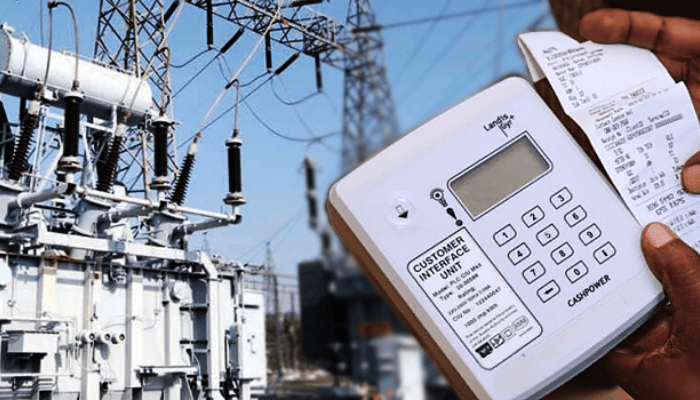
Nigeria’s electricity regulator has said that only meters supplied under specific government funded programmes are free at the point of installation, while other legal metering options still require payment.
The Nigerian Electricity Regulatory Commission (NERC) gave the clarification as customers continued to debate the Federal Government’s metering plans and warnings against illegal charges by electricity distribution companies (DisCos).
NERC Chairman, Musiliu Oseni, explained during a radio interview on Saturday that meters provided under the Distribution Sector Recovery Programme (DISREP) are funded by the Federal Government and must be installed without any upfront payment by consumers.
He said the DISREP meters are financed through government backed arrangements and that DisCos are expected to comply with the rules on free deployment.
“The meter provided by the government is 100 per cent free,” Oseni said, adding that customers should not be asked to pay any money to receive a DISREP meter.
He explained that DisCos are prohibited from collecting cash from customers for DISREP meters, and that the framework for recovering sector costs is handled through regulated tariffs over time.
“If you get the free meter, you are not to be paid anything,” he said, while warning that any cash demand linked to a DISREP meter is not allowed.
Oseni said customers who do not want to wait for the DISREP rollout can still use the Meter Asset Provider scheme (MAP), which allows a consumer to pay for a meter through an approved provider.
He advised customers using the MAP option to ensure payments go to a registered company and not to individuals.
Oseni also said DISREP meters can be identified by inscriptions on the equipment, including DISREP markings that appear after the name of the DisCo.
The NERC chairman said the regulator introduced interventions to reduce Nigeria’s metering deficit after assessing the difficulty DisCos faced in getting bank financing.
He added that customers who paid upfront for meters under approved arrangements are entitled to refunds, depending on the structure of the programme they used.
The wider debate intensified after Nigeria’s Minister of Power, Adebayo Adelabu, warned DisCos and installers against collecting any form of payment for smart meters procured under DISREP.
Adelabu issued the warning during an inspection of newly imported smart meters at a port facility in Apapa, Lagos, Nigeria’s commercial hub and a key entry point for imported goods.
“I want to mention that it is unprecedented that these meters are to be installed and distributed to consumers free of charge,” Adelabu said, insisting that requesting money before installation is an offence.
Some DisCos have argued that even if customers do not pay cash upfront, the sector will still bear costs over time, and they have raised questions about installation expenses and financial sustainability.
The Bureau of Public Enterprises (BPE), a Nigerian government agency involved in power sector reforms, later said consumers ultimately pay for sector investments through tariff structures.
BPE Director-General, Ayo Gbeleyi, dismissed claims suggesting the metering policy changes the basic cost recovery model.
He said investments in the distribution network, including meters, transformers, and related equipment, are recovered through tariff design.
Gbeleyi added that unmetered customers are not expected to make direct payments for DISREP meters and noted that Nigeria has about 5.9 million customers without prepaid meters.
Oseni also recalled that Nigeria’s President, Bola Ahmed Tinubu, spoke about closing the metering gap during his election campaign and said the DISREP rollout is part of that plan.
He added that another presidential metering initiative is being processed under the Office of the Special Adviser to the President on Energy, with procurement still ongoing.
The regulator’s explanation was aimed at clearing the confusion about why some meters are free while others still come with costs, depending on whether the meter is delivered through DISREP or the MAP channel.