



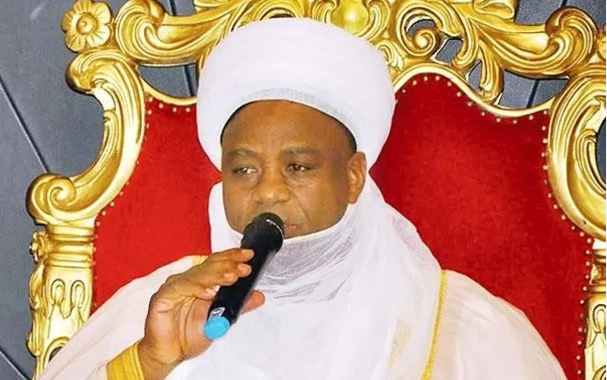
The Nigerian Supreme Council for Islamic Affairs has called on Muslims across Nigeria, a West African country, to search for the crescent that signals the start of Ramadan immediately after sunset on Tuesday, February 17, 2026, in West African Time (WAT, GMT+1).
The council said the date aligns with 29 Sha’aban 1447 Anno Hegirae (A.H.), and the result of the sighting will determine when the fasting month begins. Ramadan is observed by Muslims worldwide and is based on the lunar calendar, meaning its start is tied to the appearance of the new moon.
The announcement was conveyed on behalf of the Sultan of Sokoto, Alhaji Muhammad Sa’ad Abubakar, who is President General of the council and is widely regarded as Nigeria’s leading Islamic figure. The message was contained in a statement issued on Sunday, February 15, 2026, and signed by the council’s Secretary General, Professor Is haq Oloyede.
The council said the crescent should be looked for after sunset on Tuesday, adding that the National Moon Sighting Committee (NMSC), working with Nigeria’s National Space Research and Development Agency (NASRDA), has set up facilities to monitor and support credible reports from different parts of the country.
It explained that if the crescent is sighted on Tuesday evening, the Sultan is expected to declare Wednesday, February 18, 2026, as the first day of Ramadan 1447 A.H. If the crescent is not sighted, Thursday, February 19, 2026, would become the first day of Ramadan.
The statement also said contact details for those who should receive reports of credible sightings, including traditional rulers, religious leaders, and members of the committee, are available on the council’s website.
In the same message, the council expressed concern about what it described as stronger Islamophobic narratives in Nigeria over the past year. It said Muslims have faced what it called attempts to criminalise the faith through narratives it described as inconsistent with the wider insecurity situation in the country.
The council referred to incidents involving people of different religious backgrounds and alleged that media coverage and public reactions sometimes apply double standards. It also mentioned violence linked to Boko Haram and other security threats, and it referenced the killing of about 200 Muslims in Kwara State, a state in north central Nigeria, describing it as underreported.
On politics, the council said it had received complaints after the Independent National Electoral Commission, Nigeria’s election management body, announced that presidential elections would take place during Ramadan, with gubernatorial elections projected to fall on a likely Eid al Fitr day. The council said it was monitoring developments and hoped for an immediate review.
It urged Muslims to remain calm and committed to good conduct during Ramadan despite challenges, and it prayed for peace and protection across Nigeria. It also prayed that Muslims would witness and complete Ramadan 1447 A.H. in good health and devotion.