



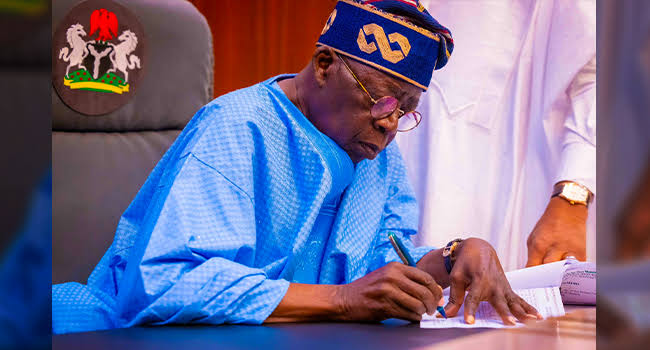
Nigeria’s President, Bola Ahmed Tinubu, has signed the Electoral Act, 2022 Repeal and Re-Enactment Bill 2026 into law, following dramatic scenes in the country’s parliament over how election results should be transmitted.
The bill was passed on Tuesday, February 17, 2026, by the National Assembly, Nigeria’s federal legislature made up of the Senate and the House of Representatives, after months of review and political negotiations.
Tension rose in the Senate when lawmakers resumed debate on Clause 60 of the bill, which deals with the transmission of election results. Senator Enyinnaya Abaribe called for a division on Clause 60(3), pushing for the removal of a provision that allows manual transmission of results if electronic transmission fails due to network problems.
The President of the Senate, Godswill Akpabio, said he believed the request had earlier been withdrawn, but opposition senators disagreed. The Deputy Senate President, Barau Jibrin, cited Senate rules and argued that it would be improper to reopen a matter already decided.
The disagreement led to shouting and protests inside the chamber. At one point, Senator Sunday Karimi had a brief confrontation with Abaribe. The Senate Leader, Opeyemi Bamidele, insisted that a motion for rescission had nullified previous decisions, making Abaribe’s demand valid.
When the vote was eventually taken, 15 opposition senators stood against retaining the proviso, while 55 supported it. The clause allowing manual transmission in the event of network failure remained in the bill.
Earlier, proceedings had stalled during clause by clause consideration of the legislation, forcing lawmakers into a closed session for consultations.
In the House of Representatives, a similar dispute unfolded. Francis Waive, Chairman of the Committee on Rules and Business, moved a motion to rescind the earlier passage of amendments that mandated real time electronic transmission of results. When Speaker Tajudeen Abbas put the motion to a voice vote, the “nays” appeared louder, but he ruled in favour of the “ayes,” triggering protests and another executive session.
The House had previously adopted compulsory real time transmission of results to the Independent National Electoral Commission Result Viewing Portal in December 2025. The latest move aligns its position with the Senate.
With President Tinubu’s signature, the new electoral law now governs preparations for Nigeria’s 2027 general elections. Supporters say the changes provide flexibility in areas with poor network coverage. Critics argue the manual transmission option could reopen old concerns about election credibility.