



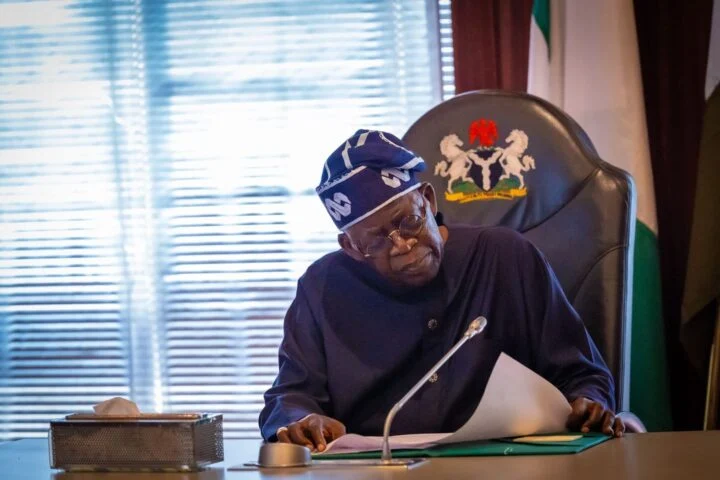
President Bola Tinubu will officially sign four transformative tax reform bills into law this Thursday, marking a significant overhaul of Nigeria’s fiscal and revenue framework.
According to a statement from Bayo Onanuga, the President’s Special Adviser on Information and Strategy, the bills—namely the Nigeria Tax Bill, Nigeria Tax Administration Bill, Nigeria Revenue Service (Establishment) Bill, and Joint Revenue Board (Establishment) Bill—have been passed by the National Assembly after months of stakeholder consultations.
Onanuga highlighted the expected impact: “When the new tax laws become operational, they are expected to significantly transform tax administration in the country, leading to increased revenue generation, improved business environment, and a boost in domestic and foreign investments.”
The signing ceremony, scheduled to take place at the Presidential Villa in Abuja, will be attended by key political figures including the Senate President, Speaker of the House, majority leaders of both chambers, and finance committee chairpersons. Governors Abdulrahman Abdulrazaq and Hope Uzodinma, Finance Minister Wale Edun, and Attorney General Lateef Fagbemi will also be present.
The Nigeria Tax Bill aims to consolidate Nigeria’s complex tax laws into a single statute, reducing the multiplicity of taxes and eliminating duplication. This consolidation is intended to simplify tax compliance and enhance the ease of doing business.
The Nigeria Tax Administration Bill will create a unified legal framework for tax administration across all levels of government, fostering consistency and efficiency.
The Nigeria Revenue Service (Establishment) Bill replaces the Federal Inland Revenue Service Act, establishing a more autonomous and performance-oriented revenue agency with an expanded mandate that includes non-tax revenue collection. It also introduces mechanisms to ensure transparency and accountability.
Lastly, the Joint Revenue Board (Establishment) Bill will formalize cooperation between revenue authorities at federal, state, and local levels, and establish oversight bodies such as a Tax Appeal Tribunal and an Office of the Tax Ombudsman to protect taxpayers’ rights.
These reforms are poised to modernize Nigeria’s tax system and stimulate economic growth by attracting investment and improving revenue mobilization.