



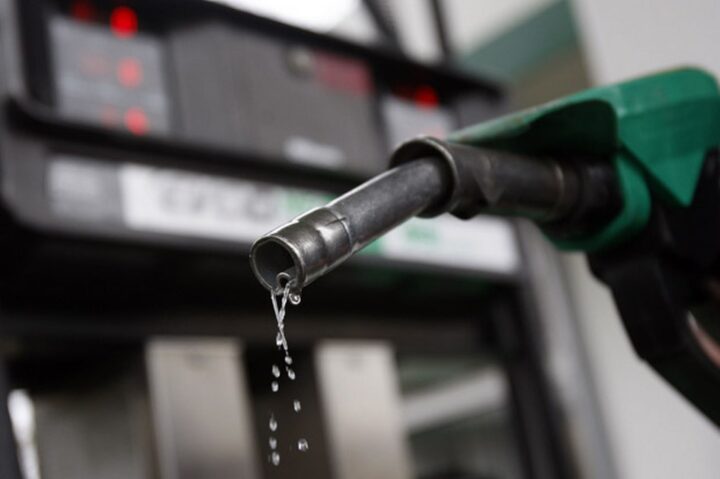
In an effort to tackle the rising challenges surrounding petrol pricing and supply in Nigeria’s downstream petroleum sector, the Federal Government has scheduled a national stakeholder forum for July 23 and 24, 2025. The summit, organized by the Nigerian Midstream and Downstream Petroleum Regulatory Authority (NMDPRA), will convene industry operators, marketers, refiners, and government officials to discuss pricing standards, feedstock availability, and market stabilization strategies.
Francis Ogaree, Executive Director of Hydrocarbon Processing Plants, Installation and Transportation Infrastructure at NMDPRA, confirmed the summit dates during the 24th Nigeria Oil and Gas Energy Week in Abuja. He underscored the importance of dialogue to establish a resilient pricing framework in the post-subsidy market environment.
The summit comes amid growing unrest from independent petroleum marketers who have raised concerns about abrupt petrol price changes, especially following unannounced adjustments by the Dangote refinery. Billy Gillis-Harry, President of the Petroleum Products Retail Outlets Owners Association of Nigeria, has consistently advocated for a stable market and reliable energy security. He called for transparent pricing mechanisms to analyze fluctuations and mitigate negative impacts on retailers.
Gillis-Harry also highlighted the need for fairness in pricing, particularly criticizing the effect of Dangote’s price cuts on retailers who had previously bought fuel at higher prices. He called for the elimination of unfair practices in the sector.
The Petroleum and Natural Gas Senior Staff Association of Nigeria (PENGASSAN) also voiced concerns last month, accusing marketers of exploiting consumers with inflated petrol prices. The association recommended that the pump price of Premium Motor Spirit (PMS) should range between N700 and N750 per litre.
Responding to these concerns, Ogaree acknowledged the operational uncertainties faced by stakeholders and affirmed that NMDPRA is actively working to standardize pricing and promote investment in local refining.
During a panel discussion titled “Building a resilient and competitive refining sector,” Ogaree said, “We are engaging stakeholders at our forum, where we address the issues and proffer solutions. I would like to remind you that the NMDPRA has only been in existence for three and a half years. And in that period, we have achieved giant strides in the number of licenses we have given and in addressing the issues.”
He continued, “Even on the issue of petroleum pricing, which is another one that we are facing now and relates to standardisation. It is a work in progress, and that is why at the latter part of this month, exactly on July 23 to 24, a two-day event, we will be talking about petrol pricing. Again, that is to allay some fears and put in some standards. The issue of pricing, everyone knows that it is a sensitive one and peculiar from one country to another, and the authority is working.”
Ogaree also provided insights into Nigeria’s refining capacity, noting the existence of 10 operational and near-operational refineries, including the three owned by the Nigerian National Petroleum Company (NNPC), the Dangote refinery with a capacity of 650,000 barrels per day, and six modular refineries. He mentioned that several new refineries, with capacities between 1,000 and 200,000 barrels per day, are expected to begin operations by 2026.
“We have about 10 refineries right now. The three Nigerian National Petroleum Company refineries. We have Dangote refinery and six modular refineries. When I look at the combined capacity for those refineries, we need about 1,124,000 barrels per day,” he stated.
Ogaree emphasized that the downstream market’s success depends largely on the availability of crude oil feedstock to support all licensed refiners. “We know our current production capacity. These are just operating refineries. When I think about new refineries coming up very soon. Some of them need 200,000 barrels to 1,000 barrels, and I compute them together. Some of them would be on onstream by 2026.”
He concluded by stressing the need to increase crude oil production to meet the feedstock demands of both existing and upcoming refineries. “You know that this number of barrels has to grow, and there has to be more production if we are to meet up. The apparent fear, and I must be sincere, is on the feedstock. We have given out 47 licenses, all of which are to do establishments, construction, and they all go into operation. We must be able to meet their demands when they all go on stream.”