



Background
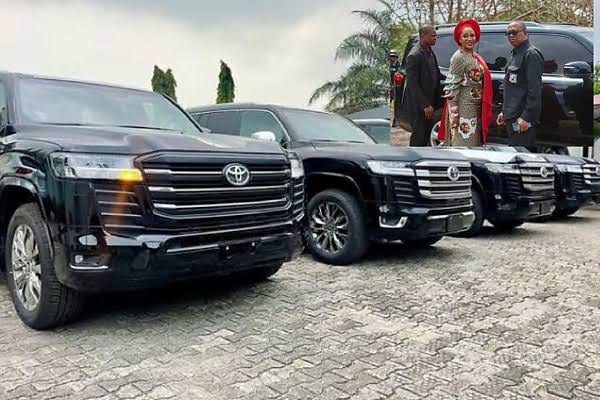
Oseloka H. Obaze, former Secretary to the Anambra State Government under Governor Peter Obi, sparked controversy on March 11, 2024, when he revealed via X (formerly Twitter) that the Obi administration procured over 400 SUVs for traditional rulers during his tenure . This surfaced amidst a broader debate on Obi’s public stance against excessive government spending.
The Tweet (March 11, 2024)
From Obaze’s X thread (paraphrased):
“When I was SSG under Peter Obi, over 400 SUVs were procured for traditional rulers… one crashed— driver claimed the steering locked at top speed. We obtained a police report, had Innoson Motors recover and dismantle it for inspection… no mechanical fault, driver admitted dozing. Innoson restored the SUV, it was replaced, and to date both vehicles work fine.”
The thread aimed to illustrate corporate PR management—but it quickly diverted attention to the contradiction between Obi’s spending and his austerity messaging.
Public Reaction
1. Highlighting the Contradiction
Critics accused Obi of hypocrisy, citing his public condemnations of expensive SUVs for legislators (e.g. ₦60 billion spent by the National Assembly) while his state government purchased >400 SUVs for monarchs .
2. Numbers Debated
Reports suggest Anambra has around 149 traditional rulers, raising questions: *What happened to the other ~250 vehicles?* . Some commenters claimed only 177 SUVs were actually distributed .
3. Economic Spin
Supporters argued the vehicle purchases boosted Innoson Motors (a Nigerian carmaker) and local industry, even if it seemed lavish.
Reconciling the Numbers
Obaze: “Over 400 SUVs procured.”
Legit.ng & social media: “Over 400,” but only 177 confirmed distributed to rulers; Anambra officially has ~149 monarchs . The discrepancy remains unresolved.
The Vehicle Incident
A monarch’s SUV reportedly crashed due to alleged “steering lock.”
Obaze coordinated with Innoson Motors:
Arranged police assessment.
Vehicle dismantled and inspected.
Result: no mechanical fault; driver admitted fatigue.
Innoson restored the vehicle; government replaced it with another .
This served as a PR case study—though it overshadowed the thread’s intended lesson.
Implications & Analysis
Budget Discipline vs. Governance Style
Peter Obi’s narrative of cost-cutting in governance was undermined by this revelation. Spending significantly on traditional rulers conflicts with his reduced-government ethos.
Support for Local Industry
Purchasing from Innoson Motors provided industrial stimulus and bolstered local manufacturing—an economic win, if not a PR tightrope.
Accountability Questions
Skeptics demand clarity on the actual number of SUVs, their cost, and total expenditure—especially given the shortfall between “procured” and “distributed.”
Political Fallout
This story reinvigorated political critiques, rekindling Ponbi (Obi) skeptics. Analysts suggested Obi’s detractors would exploit this as evidence of inconsistency.
Summary Table
Theme Details
Vehicles Bought “Over 400” SUVs according to Obaze
Rulers in State ~149 traditional rulers officially
Vehicles Distributed Reports vary—177 confirmed
PR Incident Crash investigated, no fault found
Public Debate Hypocrisy vs. industry support
Contextualizing the Headline
RE: Peter Obi bought over 400 SUVs for traditional rulers when we were in charge – Former Anambra SGF
This is a direct rebuttal to criticisms of Obi’s frugality. Obaze’s revelation confirms the procurement of the SUVs, framing them as purposeful state investments, yet complicated by political optics.
Final Take
Confirmed: Obi’s government purchased 400+ SUVs; at least one incident occurred that demanded corporate collaboration.
Uncertain: Only a subset (~177) were distributed; accountability gaps remain.
Impacts:
Undermined Obi’s cost-cutting narrative.
Highlighted Intent: support local manufacturing.
Sparked renewed debate on spend vs. symbol in governance.
Cost & Scale of Procurement
Reports from AfricaExaminer and online news confirm that Peter Obi’s administration procured 400 SUVs for traditional rulers, with some sources rounding it to 500 vehicles .
According to Strategic Industrial Zones (Proshare), the purchase included 500 SUVs alongside school buses (~700) and pickups (~500), all from Innoson Motors .
No publicly confirmed total cost for the vehicles is available. However, in other deals, Daniel Regha pointed out that legislative SUVs alone cost ₦160 million, suggesting similarly significant expenditure for the traditional rulers’ fleet .
Motive: Supporting Local Industry
Innoson Motors, Nigeria’s flagship auto manufacturer founded in 2007 by Innocent Chukwuma, relied heavily on Obi’s patronage to scale production .
Chukwuma shared that Obi’s administration provided orders for 500 SUVs and made up-front payments—key in jumpstarting domestic vehicle production .
This demonstrates a clear policy objective: stimulating indigenous manufacturing through state procurement.
Distribution vs. Procurement: Numbers in Dispute
Official Anambra sources (e.g. government social media) confirm that 177 SUVs were distributed to 177 traditional rulers, aligning with Nigeria’s public monarchy structure .
Yet, Obaze and others insist “over 400” or “500” vehicles were procured—leaving ~223 to 323 vehicles unaccounted for.
This gap invites questions:
Did some vehicles remain unused?
Were extras held in reserve?
Were some redirected elsewhere?
As of now, no public audit clarifies the fate of the surplus units.
Crash Incident: Investigating PR & Safety
A vehicle crash triggered alarms: a monarch claimed the steering locked at high speed, prompting a police investigation .
Innoson Motors, at Obi’s direction, dismantled and inspected the SUV, which was found mechanically sound.
The driver later admitted to dozing off, not mechanical fault. The vehicle was fully repaired, returned, and a replacement provided .
The exercise doubled as a PR crisis response, showcasing corporate responsiveness—but also highlighting potential risks to the procurement strategy.
Obi’s Position
Peter Obi has not issued a detailed public reaction to the SUV procurement history, though he frequently highlights his disciplined fiscal management and industrial support.
Notably, on July 2025, he stated he left the state with ₦36 billion and $150 million in reserves—an assertion critics say undermines claims of overspending .
Key Takeaways
Question Answer
How many SUVs purchased? Between 400–500 according to Obaze & Innoson testimony.
How many distributed? 177 to recognized traditional rulers.
What happened to the excess? Unknown—no official documentation.
Why? To support local manufacturing via Innoson.
Cost (estimated)? Likely billions of naira, comparable to ₦160m for legislative SUVs.
Crash resolution? Investigated; driver at fault; SUV repaired.
Obi’s public stance? Emphasizes fiscal discipline alongside industrial support.
Observations
1. Policy vs. Image: The procurement aligns with economic development goals, yet the optics conflict with Obi’s austere image.
2. Transparency Lacking: The fate of the unassigned vehicles remains unclarified—pointing to a missing public accounting.
3. Strategic Industrial Support: The initiative underscores a hands-on effort to uplift Nigerian manufacturing capacity through state-level patronage.