



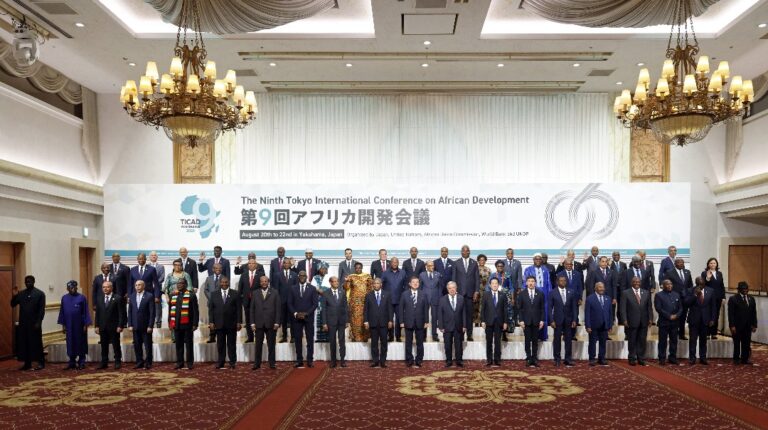
Japan welcomed heads of state from Africa on Wednesday to Yokohama for the 9th Tokyo International Conference on African Development (TICAD), positioning itself as an alternative development partner amid Africa’s growing debt challenges and reduced foreign aid inflows.
The conference featured high-level participation, including Nigerian President Bola Tinubu, South Africa’s Cyril Ramaphosa, Kenyan President William Ruto, and UN Secretary-General Antonio Guterres.
Ramaphosa’s office highlighted the difficulties confronting Africa’s economies, noting: “The debt and liquidity crisis on the African continent is worsening the challenging socio-economic environment and constraining the fiscal space for governments to cast a safety net over its citizens.”
For much of the last decade, China spearheaded major projects across Africa, from railways to seaports. But as loan disbursements slow, many African governments are saddled with substantial repayments to Beijing and private creditors.
Western contributions have also dwindled, particularly after the Trump administration dismantled the U.S. Agency for International Development.
Japan hopes to fill part of this void. According to Japanese media, TICAD discussions will explore investment guarantees, possible free-trade agreements, and support mechanisms for Japanese businesses expanding into Africa.
Keidanren, Japan’s largest business federation, has urged Tokyo to deepen trust-building efforts with African nations. “By actively contributing to solving the social issues faced by countries in the Global South, Japan must be chosen as a trustworthy partner,” the group stated.
Prime Minister Shigeru Ishiba told reporters that Africa’s youthful population and rich natural resources are key to global prosperity. “Rather than focusing on our own needs, we want to carefully identify the needs of our partners and earn their trust, thereby fulfilling our role as a nation,” he said.
Among the key pledges, Japan is set to develop 30,000 artificial intelligence experts within three years to foster digitalisation, alongside a proposal to establish an “economic zone” linking Africa and the Indian Ocean region.