



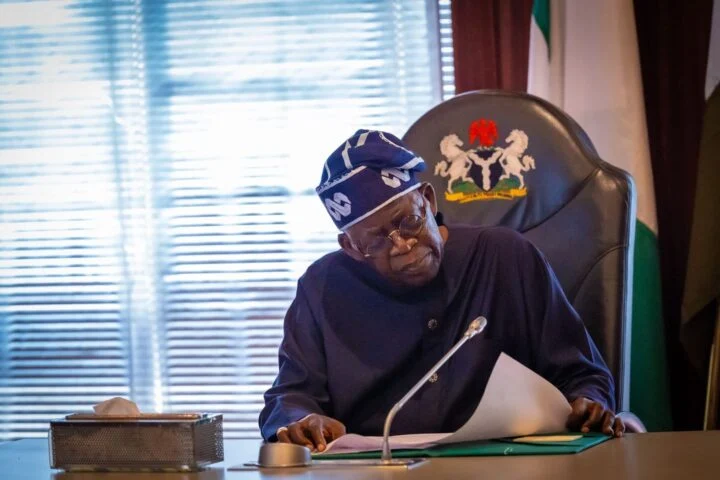
President Bola Tinubu’s economic blueprint received a major boost on Tuesday as the Federal Government unveiled a robust package of agricultural reforms aimed at revolutionising food security and creating over 21 million jobs.
Vice President Kashim Shettima made the announcement at the Food and Agriculture Organisation’s (FAO) Hand-in-Hand Investment Forum in Abuja. He described hunger as a unifying challenge that demands urgent action. “Nothing unifies humanity as much as hunger. It is the great equaliser that reveals our vulnerabilities and the shared fragility of our existence,” he said.
The initiative is anchored on Tinubu’s Renewed Hope Agenda, which prioritises poverty reduction, rural job creation, and self-sufficiency in food production. Shettima explained that Nigeria has the natural capacity to irrigate more than three million hectares of farmland but currently utilises less than 10 per cent of this potential.
“Strategic investment in irrigation alone could triple yields, free us from seasonal dependency, and fortify our resilience against climate shocks,” the Vice President explained, noting that the government is committed to modernisation and digital innovation in agriculture.
The plan will also introduce single-window platforms for land registration, expand credit access, and boost mechanisation. Shettima assured investors of regulatory reforms, saying, “Nigeria is open for business, and we are ready to partner with you to build a prosperous agricultural economy.”
Minister of Agriculture and Food Security, Abubakar Kyari, emphasised that Nigeria’s large domestic market, arable land, and digital ecosystem provide unmatched opportunities for agribusiness. Budget and Planning Minister Senator Atiku Bagudu added that agriculture remains central to national development in the medium and long term.
The European Union (EU) reinforced this optimism with a pledge of €80 million to expand agricultural value chains across seven Nigerian states.
International stakeholders, including The Gambia’s Minister of Agriculture, Dr Demba Sabally, and the FAO’s representative, Dr Hussein Gadain, applauded Tinubu’s administration for its leadership in food security. Gadain said the government’s agricultural blueprint could “catalyse transformative and sustainable growth within Africa’s agri-food systems.”
Still, local farmers urged the government to translate promises into action. Kabir Kebram of the All Farmers Association of Nigeria cautioned that only consistent implementation would bring results.
Despite scepticism from groups like the Small-Scale Women Farmers Organisation in Nigeria, which criticised low budgetary allocation to agriculture, the Renewed Hope Agenda is now seen as a framework that can address rising food prices and unemployment if fully executed.