



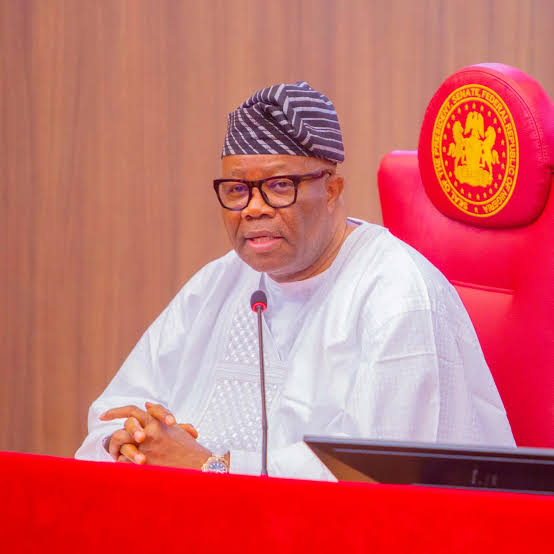
Nigeria’s Senate will meet in Abuja, Nigeria’s capital, on Tuesday, February 10, 2026, for an emergency plenary session as public anger grows over amendments to a bill that would update the country’s election law.
The session comes after the Senate passed the Electoral Act 2022 (Repeal and Re-enactment) Amendment Bill, 2026, and removed the words “real-time” from provisions on the electronic transmission of election results. Critics say the change could allow delays during collation and increase the risk of post-poll interference ahead of Nigeria’s 2027 general elections, while Senate leaders have argued that electronic transmission remains permitted under the bill.
The Clerk of the Senate, Emmanuel Odo, announced the emergency sitting and said Nigeria’s Senate President, Godswill Akpabio, directed the reconvening of plenary. Proceedings are scheduled to start at 12:00 noon West African Time (WAT, GMT+1).
The report said the chamber is operating with fewer than its usual 109 members after the deaths of Senator Okechukwu Ezea and Senator Godiya Akwashiki, and after Senator Jimoh Ibrahim left following his appointment as an ambassador-designate by Nigeria’s President, Bola Ahmed Tinubu.
The controversy has also spilled into lawmakers’ personal lives. The report said some senators faced hostile calls and threats after their phone numbers appeared online, particularly members linked to the harmonisation process between the Senate and the House of Representatives, the lower chamber of Nigeria’s National Assembly.
On Monday, February 9, 2026, protesters staged a demonstration outside the National Assembly Complex under the banner of the Movement for Credible Elections, with organisers using the slogan “Occupy NASS.” Peter Obi, a former governor of Anambra State in south-eastern Nigeria and the Labour Party’s presidential candidate in Nigeria’s 2023 election, joined the crowd. Obi told journalists: “We must dismantle this criminality and prove that we are now a nation that shows light in Africa.”
Labour unions have threatened further action. The Nigeria Labour Congress, the country’s largest labour federation, warned of nationwide protests and possible election boycotts if lawmakers do not clarify their position on mandatory electronic transmission of results.
Civil society organisations, including the Kukah Centre and Yiaga Africa, gave the National Assembly two weeks to conclude the amendments and retain mandatory real-time transmission. They also urged the Independent National Electoral Commission (INEC) to publish an early timetable for the 2027 polls, while the Nigerian Guild of Editors said the dispute was already creating room for doubt in the electoral process.
Regional leaders in the Southern and Middle Belt Leadership Forum also demanded that the real-time requirement be kept, warning against alleged tampering with what lawmakers approved. Human rights lawyer Ebun-Olu Adegboruwa said: “In 21st-century Nigeria, it is surprising that the National Assembly is unable to summon the courage to do what Nigerians yearn for.”
The dispute is tied to Section 60 of the amendment bill and proposed uploads to the INEC Result Viewing Portal (IReV), a platform for publishing polling-unit result records. With the House retaining a real-time requirement and a joint conference committee expected to meet this week, Tuesday’s emergency plenary will shape what the final law says about how, and when, results are transmitted.