



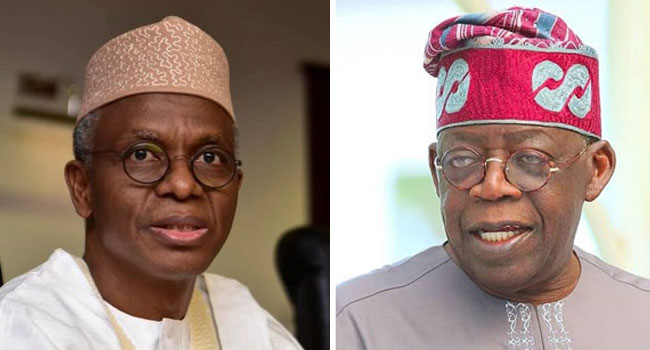
Nasir Ahmad El-Rufai, a former Governor of Kaduna State in north-west Nigeria and a former Minister of the Federal Capital Territory, has tried to shut down talk of a personal feud with President Bola Ahmed Tinubu, Nigeria’s president. Still, his latest comments have revived arguments inside Nigeria’s ruling party about whether he is resentful over not being part of Tinubu’s government.
Reports has it that El-Rufai spoke during an interview aired on Trust Television on Monday, February 9, 2026, where he insisted his relationship with Tinubu was never personal. “I was never Tinubu’s friend. We never had a personal relationship like the one I had with General Buhari of blessed memory,” he said.
El-Rufai argued that his support for Tinubu in the 2023 election came from political bargaining within the All Progressives Congress, the party that controls Nigeria’s federal government. He said he was drawn into early discussions after outreach from “Islamic stakeholders” in south-western Nigeria who wanted a Muslim candidate from that region.
He also pointed to the party’s informal power-rotation expectation, often called zoning, which seeks to balance the presidency between northern and southern Nigeria over time. El-Rufai said that after former President Muhammadu Buhari’s eight-year tenure, a southern presidency was expected, and that Tinubu benefited from that shift.
However, the former governor went beyond party history and criticised the current administration’s approach to governance, presenting it as incompatible with his own beliefs about public service. He said differences became clear after the election, not because of a single dispute, but because they “didn’t find areas of agreement.”
El-Rufai also addressed the sensitive issue of joining the cabinet. He said a ministerial role had been publicly offered, but he did not take it because he believed the value gap would have led to an early resignation.
The statements are likely to keep pressure on El-Rufai within the All Progressives Congress, where some members see the tone of his criticism as political positioning, while others view it as a sign of frustration over not having a role in Tinubu’s administration.