



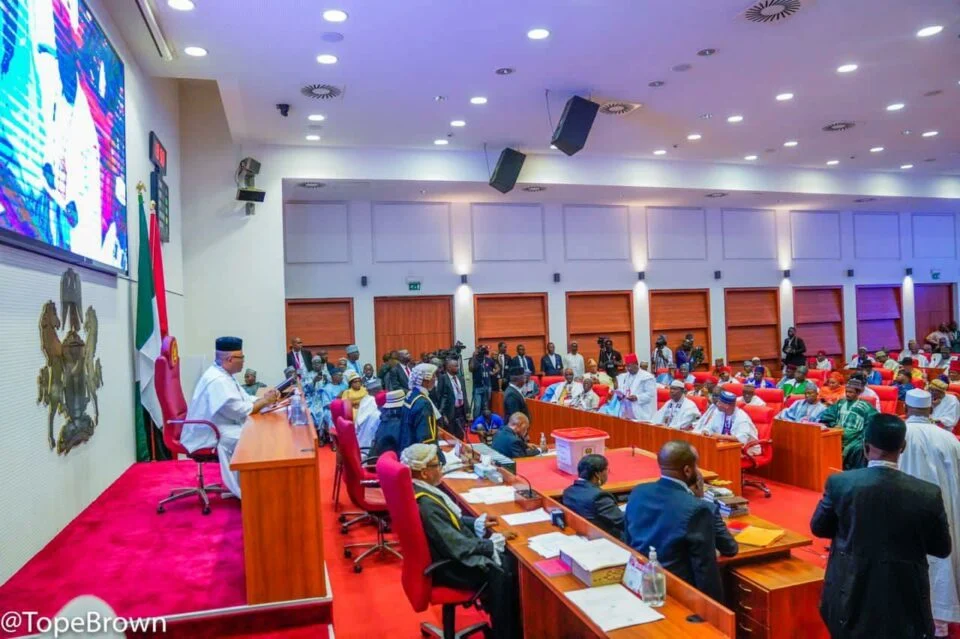
The Nigerian Senate erupted in heated exchanges on Tuesday, February 17, 2026, before eventually passing the Electoral Act, 2022 (Repeal and Re-Enactment) Bill 2026, a crucial law that will shape how the country conducts its 2027 general elections.
The drama centred on Clause 60 of the bill, which deals with the transmission of election results. Senator Enyinnaya Abaribe, representing Abia South in Abia State, demanded a formal division on the clause, triggering tension in the chamber.
Senate President Godswill Akpabio initially said he believed the request had already been withdrawn, but opposition lawmakers objected loudly. Deputy Senate President Barau Jibrin argued that revisiting a matter already ruled upon would violate Order 52(6) of the Senate Standing Orders.
The disagreement escalated, and at one point Senator Sunday Karimi briefly confronted Abaribe before order was restored. Senate Leader Opeyemi Bamidele reminded colleagues that he had moved a motion for rescission, meaning earlier decisions were no longer binding.
Abaribe, rising under Order 72(1), pushed for a vote on Clause 60(3), especially the provision stating that if electronic transmission fails, Form EC8A should not be the only basis for determining results. He proposed deleting the part that allows manual transmission when network services fail.
When the division was conducted, 55 senators voted to retain the proviso allowing manual backup, while 15 voted against it. The manual transmission safeguard therefore remained in the bill.
Earlier, the Senate had suspended proceedings to reconsider the legislation after concerns emerged over the timing of the 2027 elections and technical inconsistencies in several clauses.
Bamidele explained that the Independent National Electoral Commission had fixed the next general elections for February 2027 after consultations with National Assembly leaders. However, some stakeholders argued that the proposed date might conflict with the requirement that elections be held at least 360 days before the end of tenure, as stated in Clause 28 of the law.
He also warned that elections during Ramadan could affect turnout, logistics, and participation. Lawmakers further identified drafting errors and cross referencing problems across multiple clauses.
Despite the fierce exchanges, the Senate ultimately passed the amended bill, marking a significant step in Nigeria’s preparations for the 2027 polls.