



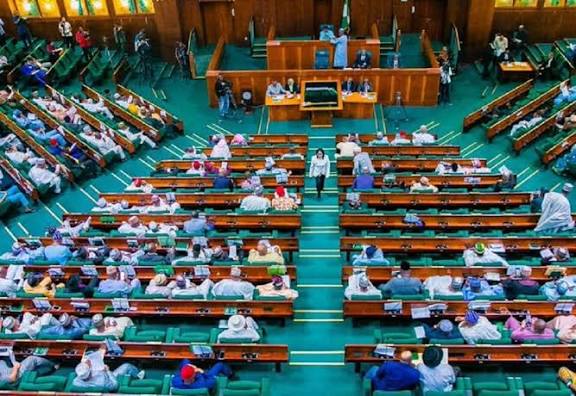
Nigeria’s House of Representatives was thrown into disorder on Tuesday, February 17, 2026, after a controversial vote on the Electoral Act Amendment Bill, 2025 sparked heated protests among lawmakers.
The plenary session, held in Abuja and presided over by Speaker Dr Tajudeen Abbas, had only one item on the agenda. It concerned a motion to rescind the earlier decision on the proposed amendment to Nigeria’s Electoral Act, the law that regulates elections in the country.
The motion was introduced by Mr Francis Waive, Chairman of the House Committee on Rules and Business, and supported by Mr Adebayo Balogun, Chairman of the House Committee on Electoral Matters.
Waive told lawmakers that a Technical Committee made up of leaders from both chambers of the National Assembly, members of a Conference Committee, senior parliamentary clerks, and legal drafting experts had met to correct what he described as anomalies in the bill.
He said, “The House is aware that a Technical Committee comprising the leadership of both chambers, members of the Conference Committee, the Clerks of the Senate and the House of Representatives, and legal drafting experts from the Directorate of Legal Services of the National Assembly met to harmonise and address the identified anomalies.”
He added that the goal was to protect electoral timelines and public confidence in Nigeria’s voting system.
Trouble began when Speaker Abbas called for a voice vote. Many lawmakers responded with “nay,” indicating opposition. Despite this, the Speaker moved forward by counting the fewer “aye” voices that supported the motion.
This decision angered members of the minority caucus, who believed the majority had rejected the proposal. Shouting followed, and the session became chaotic.
During the commotion, Mr Abubakar Yalleman, a lawmaker from Jigawa State, was seen pointing at Mr Bamidele Salam from Osun State. The exact nature of their exchange was not confirmed.
The House later moved into a closed executive session as tensions rose. Lawmakers had not resumed open proceedings at the time of reporting.
A lawmaker who requested anonymity alleged that there were attempts to alter the version of the Electoral Act Amendment Bill already approved by the House.
“They have doctored the Electoral Act, but whatever they brought here will not be considered. Members are angry,” the lawmaker said.
The controversy comes as Nigeria’s National Assembly works to reconcile differences between the House and the Senate versions of the amendment bill. While the House supports real-time electronic transmission of election results, the Senate has allowed manual transmission if electronic systems fail.
The dispute highlights ongoing disagreements over how Nigeria’s future elections should be conducted, especially as the country prepares for its next general polls.