



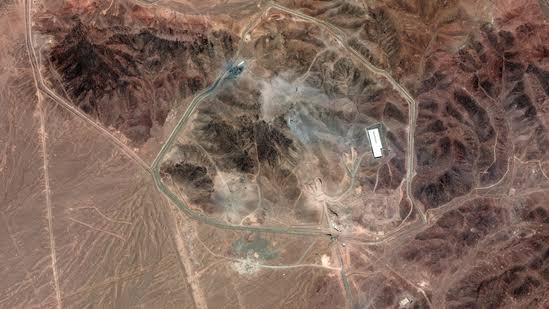
A recent US Department of Defense intelligence assessment reveals that the airstrikes conducted on Iran’s nuclear sites did not destroy the country’s nuclear program but delayed its progress by a few months. The strikes targeted the Fordo, Natanz, and Isfahan facilities with bunker-buster bombs designed to penetrate underground. Despite the use of powerful munitions, the damage was largely confined to surface-level structures, and Iran’s enriched uranium reserves and centrifuges remained mostly intact.
The White House strongly rejected the assessment, calling it inaccurate and accusing intelligence sources of undermining the successful operation. President Donald Trump claimed the nuclear sites were “completely destroyed” and criticized media coverage that questioned the effectiveness of the strikes. Defense Secretary Pete Hegseth echoed the President’s remarks, asserting the bombing campaign destroyed Iran’s nuclear weapons capability.
Nevertheless, some US lawmakers expressed doubts. Democratic Congressman Brad Sherman highlighted the absence of clear evidence that Iran’s uranium stockpile or centrifuge infrastructure was neutralized. He pointed to satellite images showing activity near the sites before the strikes and questioned whether the program was truly “obliterated.”
Iran dismissed the impact of the attacks, with officials stating the sites had been evacuated and materials moved prior to the strikes, thus avoiding significant damage. An Israeli source claimed much of Iran’s enriched uranium was buried under rubble, but satellite imagery has not confirmed extensive underground destruction.
Experts like David Albright from the Institute for Science and International Security noted that while the strikes disrupted Iran’s nuclear activities, the program could be rebuilt over time with adequate resources. He emphasized ongoing surveillance and the possibility of future strikes if Iran resumes nuclear development.
In response to the US strikes, Iran launched missile attacks on the Al-Udeid Air Base in Qatar, which hosts American forces. The missiles were intercepted, causing no casualties. Both the US and Israel maintain that the strikes were a strategic success. Israeli Prime Minister Benjamin Netanyahu described the operation as eliminating two major threats: Iran’s nuclear program and ballistic missile capabilities. The strikes have heightened tensions in the Middle East and complicated diplomatic relations between Iran and the US.