



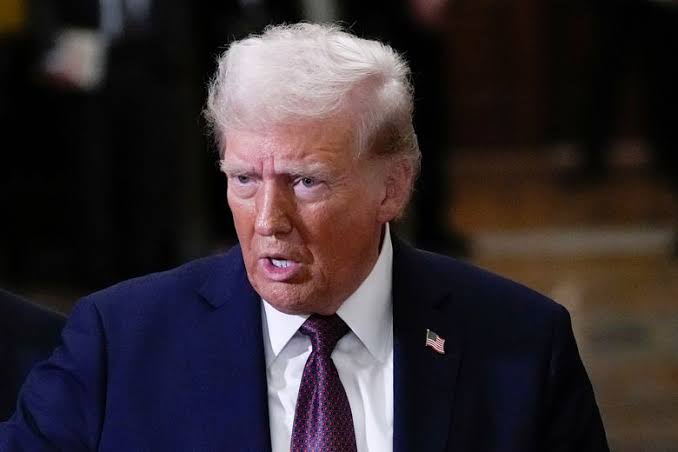
United States President Donald Trump has raised the country’s global import tariff rate to 15 per cent, intensifying a trade confrontation just a day after the Supreme Court of the United States ruled that much of his tariff programme was unlawful.
On Friday, February 20, 2026, the Supreme Court delivered a 6–3 judgment rejecting the president’s use of a 1977 economic emergency law to impose sweeping global tariffs. The ruling marked a major legal setback for Mr Trump, who returned to office 13 months ago and has made aggressive trade policy a central part of his economic agenda.
Responding on Saturday, February 21, 2026, Mr Trump announced on his Truth Social platform that his administration would increase global import duties “to the fully allowed, and legally tested, 15% level” following what he called an “extraordinarily anti-American decision.”
Earlier on Friday, shortly after the court decision, the president had introduced a new 10 per cent global levy using a different legal pathway. The latest move replaces that measure with a higher rate.
The new 15 per cent tariff will apply broadly to goods entering the United States, although it is temporary under federal law and can remain in place for up to 150 days. A White House fact sheet stated that exemptions will continue for certain sectors under separate investigations, including pharmaceutical products, as well as goods covered by the United States–Mexico–Canada Agreement.
The court ruling did not affect separate tariffs on steel, aluminium and other specific goods. Ongoing government investigations may still lead to additional sector-based duties.
Following the judgment, Mr Trump praised the three conservative justices who sided with him — Clarence Thomas, Samuel Alito and Brett Kavanaugh — thanking them “for their strength and wisdom, and love of our country.” He also criticised members of the majority, including two justices he appointed during his first term, claiming they had been “swayed by foreign interests.”
“I think that foreign interests are represented by people that I believe have undue influence,” he said.
The Supreme Court has often ruled in favour of the president since his return to office, making this decision one of his most significant defeats before the bench. Business groups welcomed the ruling. The National Retail Federation said it “provides much-needed certainty” for companies navigating changing tariff rules.
Financial markets reacted calmly. Shares on Wall Street rose modestly on Friday, as investors had largely anticipated limits on the administration’s legal authority.
During earlier court arguments, government lawyers said companies would receive refunds if the tariffs were declared unlawful. However, the Supreme Court’s decision did not settle the issue of refunds. Justice Brett Kavanaugh observed that any repayment process could become a “mess.”
International leaders are now weighing their response. German Chancellor Friedrich Merz said he would consult European partners to develop “a very clear European position” before visiting Washington in early March.
Within the United States, Pennsylvania Governor Josh Shapiro urged the president to change course. Posting on X, he said it was time for Mr Trump to “listen to the Supreme Court, end chaotic tariffs, and stop wreaking havoc on our farmers, small business owners, and families.”
The developments add fresh uncertainty to global trade relations, as countries and companies assess how long the new tariffs may remain in force and whether further legal battles lie ahead.