



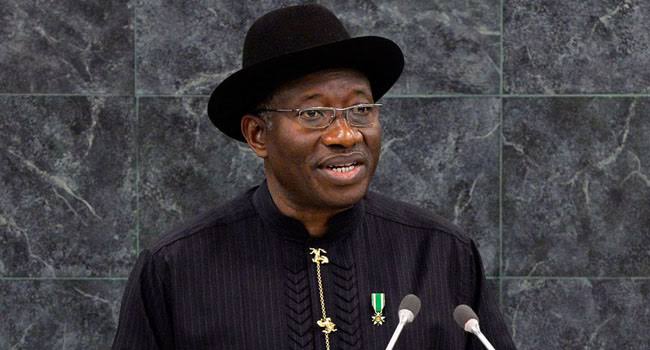
In what is emerging as a quietly orchestrated yet powerful political wave, influential figures within and outside Nigeria’s Peoples Democratic Party (PDP) are rallying behind former President Goodluck Jonathan, urging him to contest the 2027 presidential election.
The momentum, insiders say, has been building over the last few months, driven by a cross-regional coalition of political leaders and elder statesmen who believe Jonathan offers a steady, experienced hand at a time when the country is grappling with economic turbulence, rising poverty, and social disillusionment.
A trusted associate of the former president, who remains actively engaged within the PDP, disclosed that Jonathan has “accepted in principle” to contest under the party’s platform. According to the source, Jonathan’s comeback is envisioned as a short-term corrective intervention — a single-term presidency aimed at reversing what many consider a steep national decline under the current administration.
“Jonathan is not desperate. But he cannot ignore the loud call from across the country for him to return and reposition the country,” the source explained.
The political groundwork is already being laid. Last weekend, Jonathan held a private consultation with former military president, General Ibrahim Babangida (retd.), at the latter’s Minna residence in Niger State. Sources familiar with the meeting say it was part of a broader northern outreach, aimed at securing elite backing and reducing regional resistance to his comeback bid.
In tandem, Jonathan has embarked on consultations with stakeholders across the South-South region. Though details of recent meetings in Port Harcourt remain undisclosed, insiders maintain that the former president retains a solid support base in the Niger Delta and will likely face no resistance from his political home turf.
Within the PDP, the push for Jonathan’s return is intensifying. Party insiders reveal that some governors and high-level operatives are lobbying for him to lead the party’s challenge against President Bola Tinubu and the APC in 2027.
Confirming the growing sentiment, Deputy National Publicity Secretary of the PDP, Mallam Ibrahim Abdullahi, said:
“Many Nigerians have come to realise the mistake they made in not re-electing Dr. Jonathan. They now acknowledge his achievements and are even apologising, pleading with him to return and rescue the country.”
However, Abdullahi noted that Jonathan is not jumping into the race blindly. He is demanding clarity on the party’s nomination process — whether through primaries or a consensus ticket — and assurances of loyalty from key stakeholders before committing formally.
Daniel Woyengikuro, the PDP’s National Financial Secretary, made a bold declaration on the matter.
“Is he not the best candidate for us at this moment? He is not just a former president; he is the leader of the party now. Aside from Obasanjo, the next person in line is him,” he said, underscoring Jonathan’s continued influence within the party.
“You can quote me anywhere: I want him to come. An automatic ticket for him, as it stands now. Because we must salvage both this party and the nation.”
Jonathan’s eligibility, however, continues to be debated within legal circles.
At the heart of the controversy is Section 137(3) of the Constitution, introduced in a 2018 amendment, which bars anyone sworn in twice as president from contesting again. Jonathan took the presidential oath in 2010, following the death of President Umaru Yar’Adua, and again in 2011 after winning a general election.
But legal experts point out that the amendment took effect after Jonathan had left office and cannot be applied retroactively.
A landmark 2022 ruling by the Federal High Court in Yenagoa affirmed this interpretation. Justice Isa Hamma Dashen ruled that Jonathan remained eligible, as the oath he took in 2010 was constitutionally mandated and not based on an electoral win. The judge emphasized that the 2018 law could not retroactively disqualify him unless explicitly stated.
Still, the controversy persists.
Lawyer Johnmary Jideobi has warned that should Jonathan contest and win, his tenure could exceed the constitutionally permitted eight-year limit — raising potential grounds for legal challenge.
“If President Jonathan contests again and eventually wins in 2027, he will have exceeded the maximum number of eight years contemplated by the Constitution,” Jideobi argued.
But not everyone agrees. Senior Advocate of Nigeria, Dayo Akinlaja, countered:
“The relevant provisions on this vexed issue are both clear and unambiguous… However, the provision of Section 137(3) cannot be applied to President Jonathan, who was sworn in and did a term under the old constitutional dispensation.”
Political elders are also weighing in. Former PDP Deputy National Chairman, Chief Olabode George, described Jonathan as not only eligible but also the most marketable candidate ahead of 2027.
“He is very qualified because he did not leave the party. The more the merrier. He is the easiest to sell because he has a track record, especially the economic indices Nigeria witnessed during his tenure,” George said.
As political calculations intensify, Jonathan’s potential re-emergence could dramatically shift alliances, reset zoning expectations, and trigger a new round of power realignments across Nigeria’s volatile political terrain.