



By Tobi Matthew
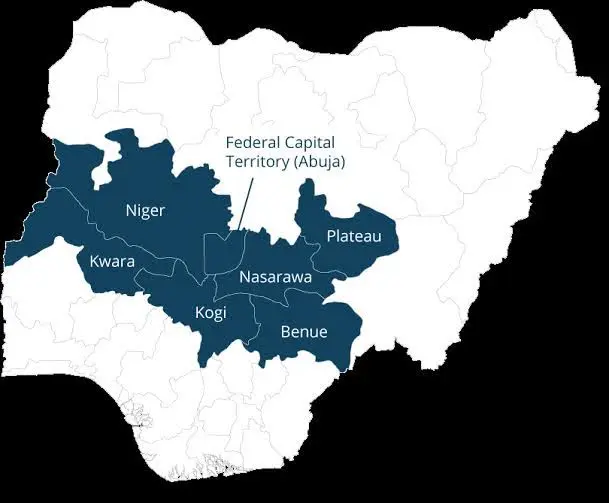
As the 2027 electoral horizon begins to shimmer with intent, Nigeria’s political theater is witnessing a profound transformation. The whispers of the “next cycle” have matured into a calculated roar, and nowhere is this more evident than in the North Central zone. Once regarded as a fragmented “swing” region, the Middle Belt is rapidly evolving into a singular, monolithic engine of political mobilization, one that may well deliver the most decisive mandate for President Tinubu’s second-term bid.
The story currently unfolding is a masterclass in elite alignment and the quiet art of consolidation. Across the region, the old walls of partisan friction are crumbling, replaced by a “big tent” strategy that has seen a massive influx of heavyweights into the All Progressives Congress (APC). This isn’t merely a wave of defections; it is a strategic repositioning of the region’s most influential architects.
In Kwara, the narrative is one of unprecedented synergy. Governor AbdulRahman AbdulRazaq has successfully blended governance delivery with high-level diplomacy, creating a political climate so stable that even the formidable influence of former Senate President Bukola Saraki’s network appears to be converging toward a unified national objective. It is a rare moment where local success and elite cooperation have neutralized the traditional fractures of the state.
Moving eastward into Kogi and Niger, the plot thickens with structural dominance. While the opposition in Kogi led by figures like Dino Melaye finds itself confined to shrinking pockets of influence, the ruling machinery under Governor Ahmed Usman Ododo and former Governor Yahaya Bello remains anchored and immovable. This is mirrored in Niger, where a powerhouse coalition involving Governor Abubakar Sani Bello and Senator Mohammed Sani Musa is drafting a blueprint for grassroots mobilization. They have realized a fundamental truth of Nigerian power: local structures, when perfectly synchronized, transform popularity into an unstoppable electoral arithmetic.
Perhaps the most compelling chapter of this story is written in Benue, a state historically defined by its fierce political independence. Today, Benue is witnessing a remarkable convergence of its “Titans.” The alignment of Governor Hyacinth Alia, Senator George Akume, and former Governor Samuel Ortom represents a seismic shift. This bridge between the old guard and the new order suggests that the state’s diverse ethnic and political constituencies are being funneled into a single, commanding stream of support.
This momentum flows naturally into Nasarawa and Plateau, where strategic triangulation is the order of the day. In Nasarawa, the collaboration between Governor Abdullahi Sule and former APC Chairman Abdullahi Adamu has turned the state into a strategic fortress. Meanwhile, on the Plateau, the delicate art of reconciliation is at work. While Governor Caleb Mutfwang holds the executive reins, the steadying hand of former Governor Simon Lalong is mending internal rifts, signaling that even in states with fluctuating loyalties, the APC is building a house designed to last.
Even the Federal Capital Territory (FCT) has been woven into this regional tapestry. Once considered a wildcard, the FCT’s mobilization efforts now mirror the structured discipline of its neighbors, serving as both a symbolic and strategic anchor for the President’s national agenda.
The conclusion of this narrative is becoming increasingly clear. Through the fragmentation of the opposition and a rare, disciplined alignment of regional elites, the North Central is no longer a peripheral player. It is positioning itself to be the heartbeat of the 2027 contest, a decisive bloc that understands that in the game of power, unity is the ultimate currency.
The North Central Gambit: 2027 and the Making of a Political Fortress
Related Posts
Add A Comment