



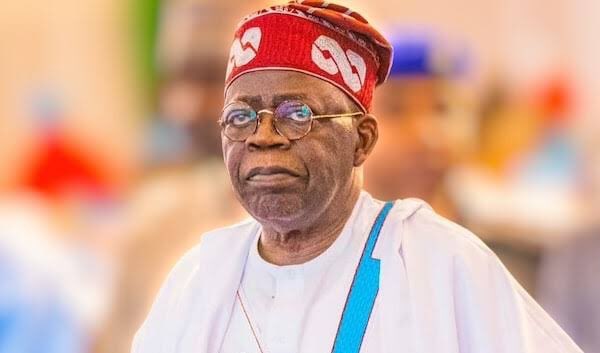
Telecom professionals, tax consultants, and academics have lauded President Bola Tinubu for his decision to suspend the implementation of contentious sections of the Finance Act 2023.
The suspended sections included a five per cent tax on telecom services, which had faced significant opposition.
Gbenga Adebayo, Chairman of the Association of Licensed Telecoms Companies of Nigeria (ALTON), Taiwo Oyedele, a tax expert and Fiscal Policy Partner with PwC, and Uche Uwaleke, a professor at the Department of Banking and Finance, Nasarawa State University Keffi, spoke highly of President Tinubu’s decision.
Adebayo relayed his approval during a phone conversation, commending President Tinubu’s consideration that prevented the tax burden from falling on subscribers.
He also praised the decision as a proof of the government’s commitment to hearing the people’s outcry – an attribute he hoped would continue after the implementation window shuts.
Adebayo stated that Tinubu’s decision indicated a level of policy consistency that reassured investors, and countered the concern about the telecom sector being excessively taxed.
Oyedele, in his response, expressed excitement regarding the decision.
He observed that the President’s choice positively impacted manufacturers, who had previously felt overwhelmed by economic challenges and the scarcity of naira, which had significantly decreased their turnover.
“So, what the President has done now is, first to defer the commencement of the tax to give enough notice to people to even prepare themselves.
“Some of them need to change their Enterprise Resource Planning (ERP) for accounting system; you need time to do all of that and that is why the National Tax Policy says if you introduce any changes, give at least 90 days’ notice.
“Mr President now is trying to do that, and number two is that some of the changes are not even necessary, or they are coming at the wrong time. They are being suspended indefinitely for further deliberation and review. I think it is good.
“I am not a lawyer but I know 100 per cent exactly what people are talking about. Normally the President’s Executive Order should not be able to amend a law enacted by the National Assembly. That is correct.
“But this is different because if you look at the Finance Act 2023, which is the order, the president is deferring the commencement date.
“That same Finance Act has a provision that says the commencement date of this Finance Act shall be the date it was signed into law, or any other date as may be prescribed by the president by an order.
“The National Assembly has delegated that power to the President to determine the commencement date.
“The President is only just exercising the legal power that has been conferred on him. I think this is 100 per cent in order,” Oyedele said during an interview monitored by our correspondent.
Uwaleke described the Executive Orders as a boon for the business environment. He predicted that such mindful policies would improve Nigeria’s ranking on the Ease of Doing Business Index.
He forecasted that the tax suspension would help moderate the rising inflation.
“The suspension of the proposed import tax adjustment levy on certain vehicles and the excise tax on telecommunications and other locally manufactured products will help to moderate the rising inflation and increase productivity,” he said.
Uwaleke also advocated for the institution of post-subsidy withdrawal palliatives.