



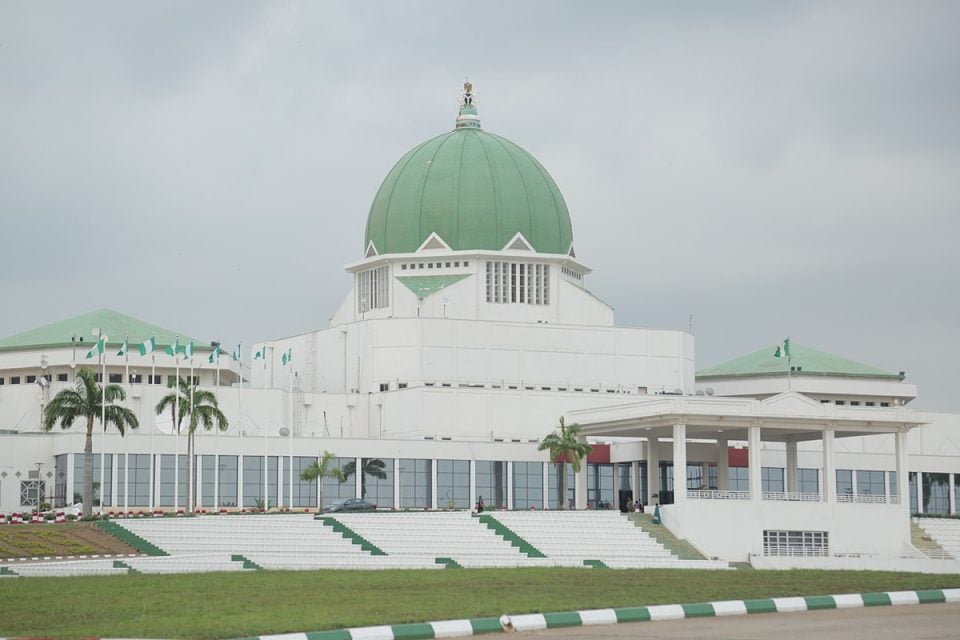
Nigeria’s National Assembly, the federal parliament of Africa’s most populous country, is preparing for a key meeting expected on Monday, February 16, 2026, as lawmakers work to reconcile two different versions of an Electoral Amendment Bill passed by the Senate and the House of Representatives.
Under Nigeria’s legislative process, when the two chambers approve varying texts of the same bill, a joint conference committee is set up to produce a single harmonised version that can be voted on again and transmitted to the president for assent. In this case, the committee has been given a one-week window to resolve disputed clauses, with particular focus on provisions dealing with the electronic collation and transmission of election results.
A National Assembly source confirmed that the harmonisation work would begin on Monday, saying, “It is taking place on Monday,” in a message. Senator Seriake Dickson, who represents Bayelsa West in Bayelsa State in southern Nigeria, also pointed to Monday as the likely date, while noting he is not on the committee. “I don’t know the actual date since I am not a member of the Conference Committee. But we are hoping it may take place next Monday,” he said.
The debate over electronic transmission has drawn heightened public interest because it touches the credibility of Nigeria’s elections, especially after controversies during the 2023 general election. Nigeria’s Independent National Electoral Commission (INEC), the agency responsible for conducting elections, introduced the INEC Result Viewing Portal (IReV) to publish results uploaded from polling units. Critics cited the failure to upload presidential election results to IReV in real time during the 2023 vote as a major point of concern, and civil society organisations and opposition parties have since pushed for clearer legal backing for electronic transmission before the 2027 general election.
The current disagreement reflects broader tensions over how much reliance the law should place on technology, and what should happen when connectivity or other technical issues disrupt transmission. Senate President Godswill Akpabio has suggested the harmonised bill could reach President Bola Tinubu before the end of February 2026.
Another source familiar with the process said Senator Simon Lalong, representing Plateau South in north-central Nigeria, had earlier identified Monday, February 16, 2026, for the committee meeting. The source added that lawmakers may be excused from parts of the budget defence process to concentrate on the bill, given its implications for the 2027 election season.
In the House of Representatives, spokesperson Akin Rotimi said lawmakers from both chambers had already begun consultations. Committee members Sada Soli of the governing All Progressives Congress (APC) from Katsina State in northern Nigeria and Iduma Igariwey of the opposition Peoples Democratic Party (PDP) from Ebonyi State in south-eastern Nigeria said the meeting was likely, although they stopped short of confirming it as final.
Beyond electronic transmission, the House also proposed changes to other parts of the Electoral Act, including requiring a sworn affidavit when a candidate withdraws from an election, and shortening the period for a specific election appeal tribunal to deliver judgment from 180 days to 150 days after a petition is filed.
The Senate has also sought to address public misunderstanding around election technology. Senator Adeniyi Adegbonmire, who represents Ondo Central in south-western Nigeria, argued in a televised interview that IReV is not an electronic voting platform, and that results are still manually counted at polling units before being uploaded for public viewing. He also said the goal of reforms should include preventing disputes that could arise from delays caused by poor connectivity or difficult logistics in remote areas.
Outside parliament, lawyer and former Nigerian Bar Association president Olisa Agbakoba has called for a law that makes real-time electronic transmission mandatory, saying it would strengthen transparency and reduce disputes. The conference committee’s decision is expected to determine the final shape of electoral reforms and influence preparations for Nigeria’s 2027 general election.