



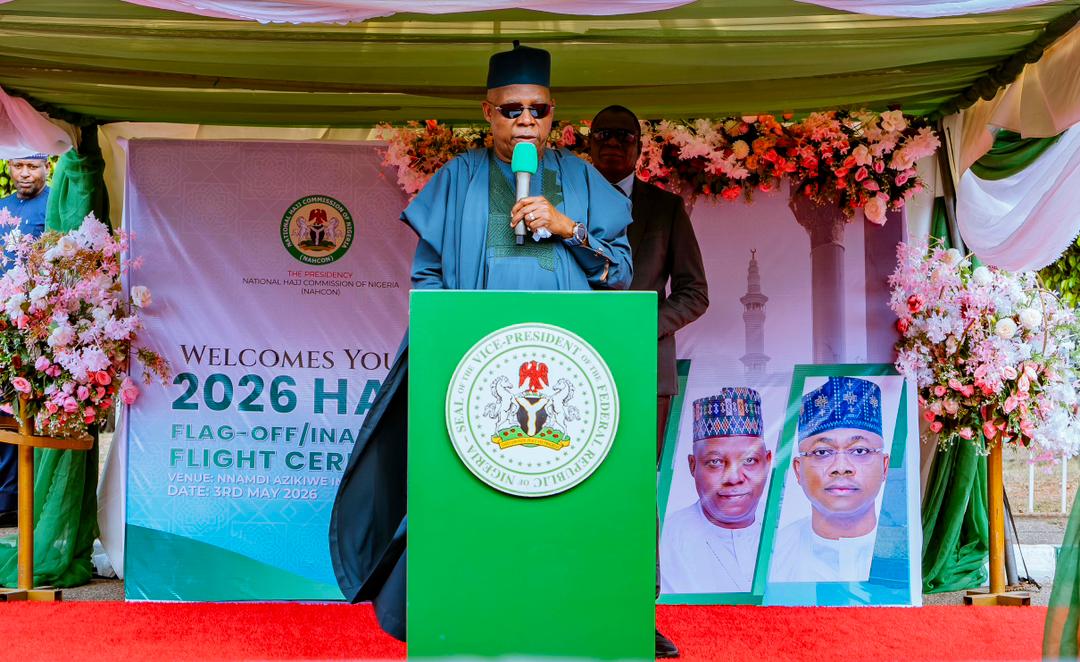
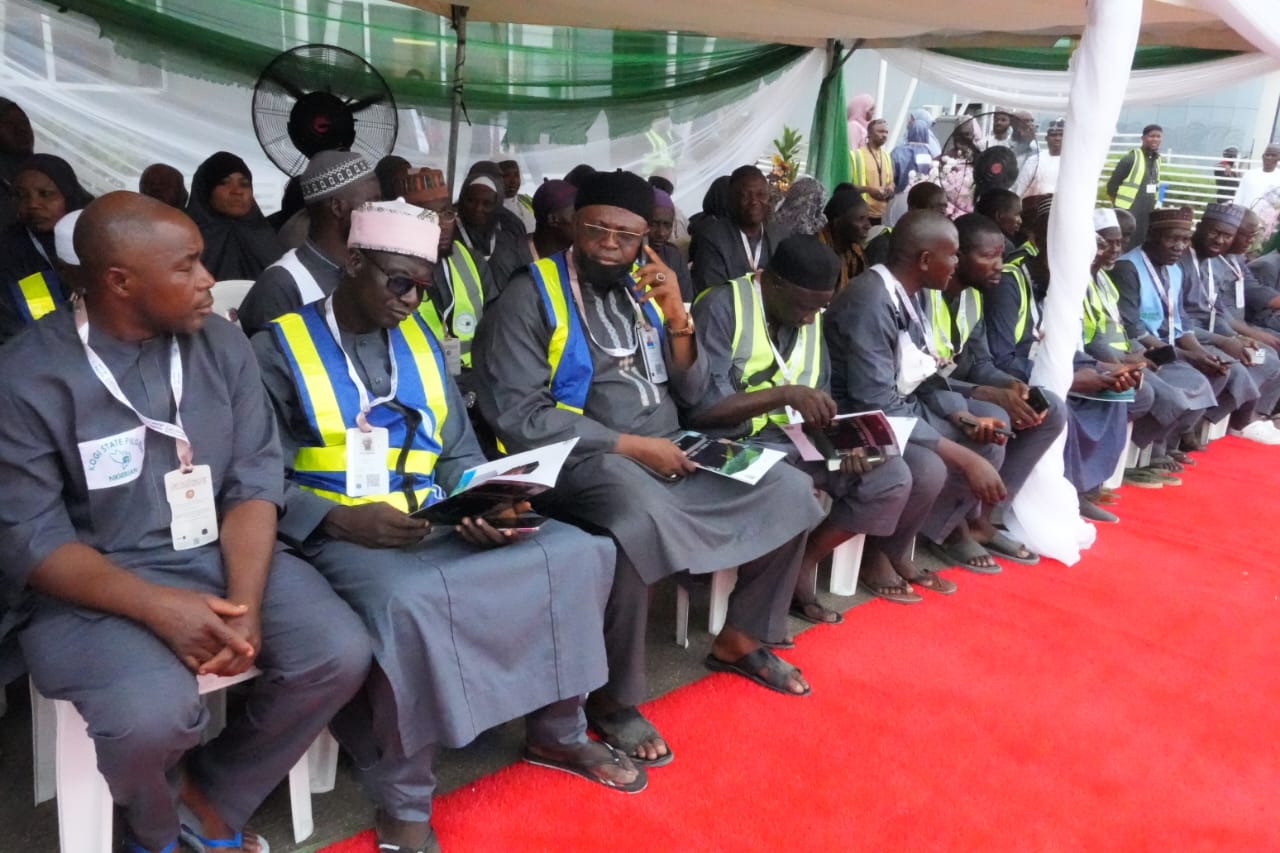
Vice President Kashim Shettima delivered a solemn and reflective address on Sunday at the inaugural flight ceremony for the 2026 Hajj operation, held at Nnamdi Azikiwe International Airport.
His speech blended spiritual reverence with a firm call for administrative discipline, underscoring both the sacred and logistical dimensions of the annual Islamic pilgrimage.
Speaking before pilgrims, officials, and aviation stakeholders, Shettima described the Hajj as “a noble movement of the human spirit,” emphasizing its role in transcending social, geographic, and cultural boundaries.
He portrayed the pilgrimage as a unifying act that strips away worldly distinctions, leaving only faith, humility, and devotion before Allah.
The Vice President framed the commencement of flights as “the opening of a sacred passage,” while stressing that the government bears a critical responsibility to ensure that pilgrims complete their journey without avoidable hardship or disruption.
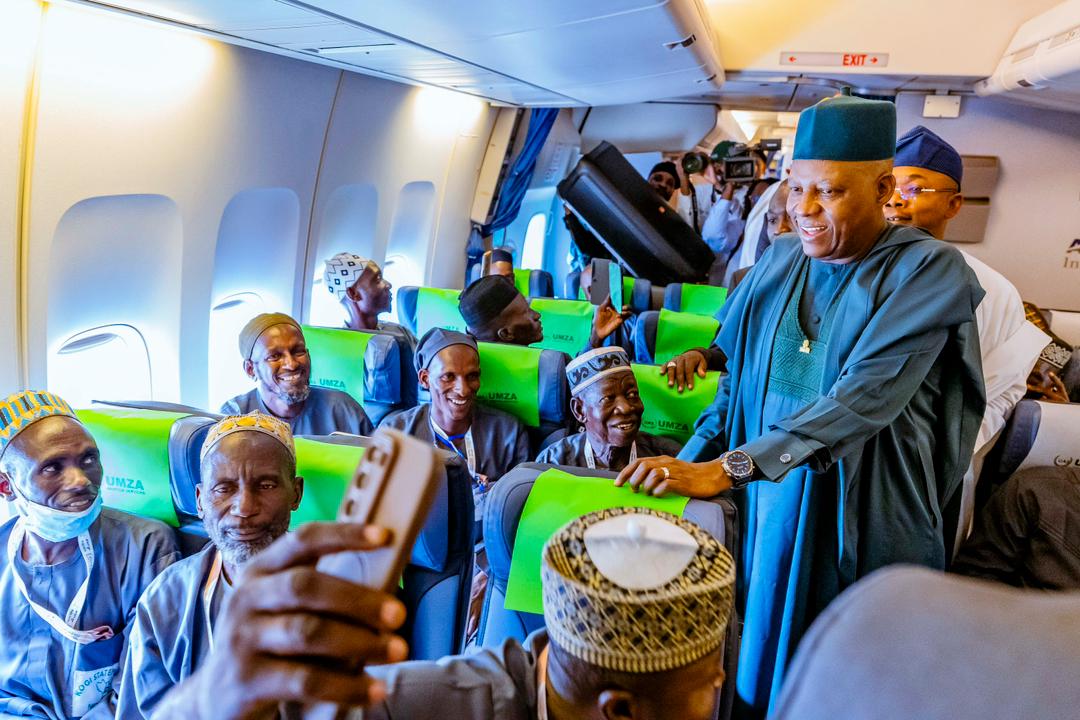
“We owe every Nigerian pilgrim dignity, safety, order, compassion, and honor,” he said, highlighting the state’s duty in facilitating a seamless operation. Addressing agencies involved in Hajj logistics, including aviation operators, medical teams, and security services, Shettima called for diligence and coordination.
He noted that success should not be measured merely by the number of flights executed but by the overall welfare of pilgrims, the efficiency of processes, and the absence of preventable setbacks. “There is no room for negligence,” he warned.
The Vice President also emphasized that while Hajj is a deeply personal act of worship, it carries national significance.
Pilgrims, he said, travel as representatives of Nigeria and must embody discipline, humility, and integrity. He urged them to reflect the country’s values throughout their journey, particularly at key holy sites in Saudi Arabia.
Referencing past Hajj operations, Shettima called for improved planning and higher standards, describing excellence in service delivery as both a civic obligation and “an act of worship.”
He linked the success of the pilgrimage to Nigeria’s international reputation, noting that the conduct of pilgrims and officials alike contributes to the country’s global image.
The ceremony at the Abuja airport, he added, symbolizes national unity, bringing together citizens from diverse backgrounds in a shared act of faith.
He concluded by conveying the commitment of President Bola Ahmed Tinubu’s administration to ensuring a successful Hajj operation.
The inaugural flight marks the beginning of Nigeria’s participation in the 2026 Hajj, one of the largest annual religious gatherings in the world, with thousands of Nigerian pilgrims expected to travel to Saudi Arabia in the coming weeks.