



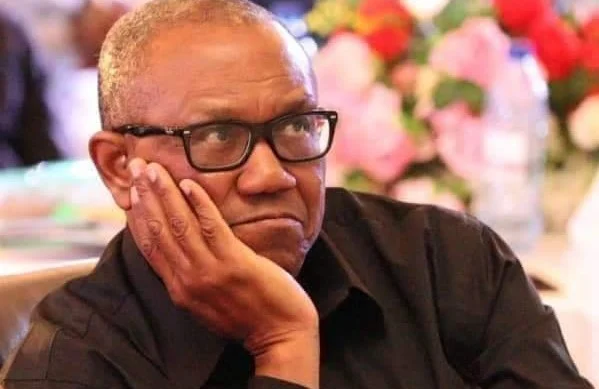
A political storm has erupted online following claims that more than 300,000 users unfollowed former Anambra State governor and presidential candidate Peter Obi on X, formerly Twitter, amid growing criticisms of what opponents describe as misleading narratives about Nigeria’s economic and governance realities.
The claim circulated widely across social media, with some users alleging that the unfollowing reflected declining confidence in Obi’s messaging. One viral post referenced reports that “over 300,000 persons have unfollowed him,” sparking heated debate among supporters and critics.
While independent verification of the exact figure remains unclear, the controversy has reopened discussions about the accuracy of several statements made by the former governor over the years.
Claims Versus Fact-Checks On National Issues
Multiple fact-checking organisations have previously examined statements made by Obi regarding Nigeria’s economy and governance.
For instance, a fact-check reviewing his remarks on national debt growth found that while Obi claimed Nigeria’s debt had increased “five times” since 2015, available official figures suggested the growth did not align precisely with that description, indicating the claim was contested or partly exaggerated.
Similarly, another fact-checking exercise concluded that several statistics provided by Obi during policy presentations were either “false, grossly exaggerated or only partly true,” particularly during a vice-presidential debate.
These recurring corrections have been cited by critics as evidence that his messaging sometimes relies on selective data interpretation.
Economic Claims About Nigeria Questioned
At various public forums, Obi has argued that Nigeria’s manufacturing sector contributes less than 10 percent to GDP, a statement that analysts reviewed for accuracy. Fact-checkers noted that some of his economic figures required contextual clarification and were not fully supported by available data.
Opponents argue that such claims, when amplified online, can shape public perception without full statistical backing.
Scrutiny Of His Record As Anambra Governor
Criticism has also focused on Obi’s tenure as governor of Anambra State between 2006 and 2014.
One widely debated issue involves Internally Generated Revenue (IGR). A fact-check found that Anambra’s IGR rose from about ₦7 billion to approximately ₦8.7 billion during his eight-year tenure — a modest increase critics describe as limited economic expansion.
The same review noted that revenue growth was gradual and relatively small compared with other states, a point often used by critics to challenge Obi’s reputation as a strong economic manager.
Political Controversies During Tenure
Obi’s administration also experienced political instability. He was impeached in 2006 by the state legislature over allegations of misconduct before later being reinstated by court rulings.
Opponents continue to cite the impeachment episode as evidence of governance challenges during his administration, though courts ultimately overturned the removal.
Mixed Record And Ongoing Debate
Despite criticisms, Obi’s tenure also included policy initiatives such as long-term urban development plans for major cities in Anambra State, highlighting the mixed assessments of his governance record.
Political analysts say the current online backlash reflects a broader struggle over narrative control ahead of future political contests, with supporters defending Obi’s data-driven approach and critics accusing him of exaggeration.
Social Media Fallout
The alleged mass unfollowing has intensified political polarization online, with rival camps interpreting the development differently — critics calling it “loss of trust,” while supporters argue it is part of coordinated political messaging.
Regardless of the exact figures, the debate underscores how digital platforms have become central battlegrounds for Nigerian political influence, where public perception can shift rapidly based on contested claims and counter-claims.