



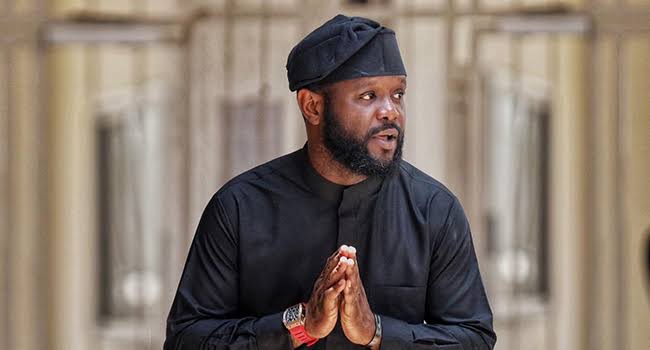
Being the first son of a sitting President is a position that comes with privilege, visibility and an extraordinary level of public scrutiny.
For Seyi Tinubu, the weight of that identity is unavoidable because his father, Bola Ahmed Tinubu, is Nigeria’s President. Yet, to understand Seyi only through the prism of his father would be to overlook the young man, entrepreneur, philanthropist and youth advocate who has been building his own relationships and pursuing his own interests long before his father occupied Aso Rock. His story deserves a broader examination, one that recognises both his background and the work he has chosen to undertake.
Seyi’s connection with young Nigerians is perhaps one of the most distinctive features of his public life. He has consistently positioned himself around young people, entrepreneurs, creatives and emerging leaders, creating relationships that extend beyond the traditional political space.
His approach appears to be rooted in the belief that young Nigerians should not simply be spoken about but should have a voice in the affairs of their country. In one of the most revealing statements attributed to him, he said: “I won’t stop speaking out.” He explained that people regularly ask him to “talk to Baba” and speak to his father about the challenges facing young Nigerians.
That statement is important because it offers a glimpse into how Seyi himself describes his role. He is not an elected official, nor does he hold a constitutional office, but his proximity to the President gives him a unique channel through which he can communicate concerns from the streets, particularly those of young Nigerians.
Seyi’s question captures the philosophy behind his intervention: “Imagine a world where no influential person spoke up or helped those less fortunate.” For a country with a huge youthful population and deep economic pressures, having influential young Nigerians willing to listen, speak and connect people to opportunities can be valuable.
Beyond words, there is a record of philanthropic activity associated with Seyi and the Noella Foundation, which he co-founded with his wife, Layal. Reports have highlighted interventions ranging from food distribution during the COVID-19 lockdown to assistance for victims of disasters, medical outreaches and support for vulnerable Nigerians.
One account reported that the foundation and partners distributed 30,000 food packs during the 2020 lockdown and later provided relief to victims of the Akwanga fire disaster in Nasarawa. These efforts do not make him beyond criticism, but they demonstrate that his public profile includes a dimension of service that deserves to be considered alongside the controversies that naturally surround a President’s son.
His relationship with young people also extends into the world of enterprise. Seyi has built a career in business, including his association with Loatsad Promomedia, while creating employment and professional opportunities for young Nigerians.
A 2024 profile in The Guardian reported that more than 100 people worked at his company, with a majority described as young people, while representatives of the Noella Foundation across the country were also predominantly young. In a nation where youth unemployment and limited access to opportunity remain major concerns, the ability to create jobs, mentor young people and connect them to networks is itself a form of contribution.
But perhaps the most significant question is what Seyi chooses to do with the access that comes with his family name. There is no pretending that being the President’s son does not provide an extraordinary advantage. It does. However, privilege can either become a private inheritance or be converted into public value.
Seyi’s supporters would argue that he has increasingly chosen the latter by using his relationships to engage young Nigerians, support charitable interventions and draw attention to issues affecting ordinary people. His critics, equally, have every right to demand transparency and accountability. Both perspectives can exist without denying the reality of his contributions.
What makes Seyi particularly interesting is that he represents a generation that is itself trying to redefine what influence means. His generation is less interested in titles alone and more interested in networks, entrepreneurship, technology, social impact and direct engagement.
His connection with young Nigerians therefore goes beyond politics. It reflects an understanding that influence today is also built through relationships and the ability to mobilise people around ideas and causes. If that influence continues to be directed toward opportunity creation, philanthropy and constructive engagement, it can become a meaningful part of his personal legacy.
There is also something important in Seyi’s insistence that he will continue to speak despite criticism. “I’m fine with personal attacks,” he was reported to have said, while objecting to the use of Nigerians’ hardship and emotions for political purposes.
Whether one agrees with every position he takes is a different matter. What is difficult to dispute is that public life in Nigeria is intensely polarised, and anyone closely associated with the President will inevitably attract both admiration and hostility.
The more important test, therefore, is whether Seyi can continue to demonstrate through tangible actions that his influence is about more than his surname.
The phrase “The First Son Like No Other” should consequently not be understood merely as praise for being the President’s first son. It should be an invitation to look at the person beyond the parent: his business journey, his relationships with young Nigerians, his philanthropic interventions, his willingness to speak and the responsibility that comes with extraordinary access.
Seyi Tinubu will always be Bola Tinubu’s son, and history will record that connection. But the more enduring question is what Seyi himself does with the opportunities that history has placed in his hands. If he continues to use his influence to connect with young people, support vulnerable Nigerians, and contribute meaningfully to national development, then his identity can become more than an inheritance; it can become a record of service in its own right.