



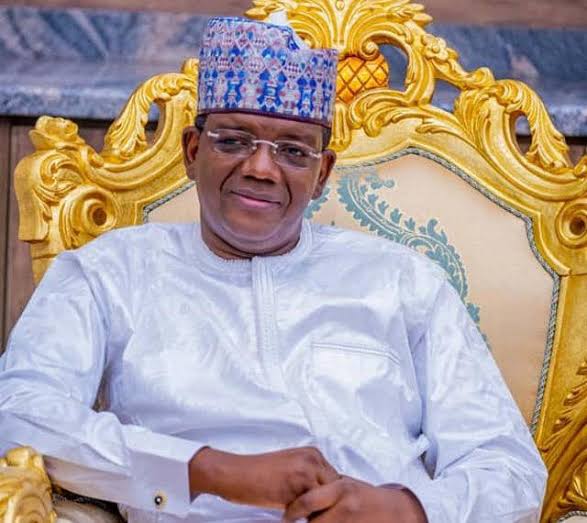
Since assuming office, President Bola Ahmed Tinubu has made security the bedrock of his Renewed Hope Agenda, recognizing that no nation can achieve sustainable economic growth, attract investment, or guarantee prosperity without peace and stability. At the center of this ambitious national security drive stands the Minister of State for Defence, Dr. Bello Mohammed Matawalle, whose unwavering commitment, strategic leadership, and relentless advocacy have made him one of the administration’s most influential figures in the fight against insecurity.
As one of President Tinubu’s most trusted allies on defence and national security, Matawalle has become the public face of the administration’s renewed offensive against terrorism, banditry, kidnapping, and other criminal threats confronting Nigeria. Through active engagement with military formations, security agencies, local communities, and international partners, he has demonstrated an uncommon level of dedication to restoring peace across the country.
Under President Tinubu’s leadership, Nigeria’s security architecture has undergone major transformation. The administration has invested in strengthening intelligence gathering, improving inter-agency collaboration, enhancing operational capacity, and equipping the Armed Forces with the support needed to confront increasingly sophisticated security threats. Matawalle has been at the forefront of communicating and implementing these reforms, consistently emphasizing that national security is a shared responsibility requiring the cooperation of government, security agencies, and patriotic citizens.
The results have been encouraging. Official figures released by the Ministry of Defence indicate that security operations in 2024 led to the neutralization of over 8,000 terrorists and bandits, the arrest of more than 11,600 criminal suspects, and the recovery of over 10,000 weapons. These achievements reflect the growing effectiveness of President Tinubu’s security strategy and the determination of the Armed Forces to reclaim communities previously threatened by criminal elements.
One of the administration’s landmark reforms has been the establishment of the Multi-Agency Anti-Kidnap Fusion Cell (MAAKFC), designed to improve intelligence sharing and strengthen coordinated responses against kidnapping syndicates nationwide. The initiative showcased President Tinubu’s commitment to building lasting institutions capable of addressing modern security challenges rather than relying solely on short-term measures. Matawalle has consistently championed this coordinated approach, describing intelligence-led operations as the future of effective national security.
Rather than making empty promises, Matawalle has remained focused on practical engagement. He has regularly visited military formations across the country, interacted directly with frontline personnel, assessed operational needs, and reassured troops of the Federal Government’s unwavering support. His visible presence has reinforced confidence among security personnel while demonstrating that the Tinubu administration stands firmly behind those risking their lives to protect Nigeria.
Beyond military operations, Matawalle has become one of the administration’s strongest voices for national unity and collective responsibility. He has repeatedly urged Nigerians to reject divisive politics and instead support ongoing reforms aimed at strengthening security, rebuilding the economy, and promoting national cohesion. His message remains clear: insecurity affects every Nigerian regardless of ethnicity, religion, or political affiliation, and defeating criminality requires unity of purpose.
As one of Northern Nigeria’s most influential political leaders serving in the Federal Executive Council, Matawalle has also played a critical role in mobilizing support for President Tinubu’s broader development agenda. He has consistently encouraged northern communities to embrace the administration’s reforms, arguing that difficult but necessary policy decisions are laying the foundation for long-term prosperity and stability.
The Tinubu administration has equally recognized that military success alone cannot permanently eliminate insecurity. This understanding has informed broader reforms aimed at addressing the socioeconomic drivers of conflict. The establishment of the Ministry of Livestock Development is one such strategic initiative, designed to modernize livestock production, reduce farmer-herder conflicts, expand agricultural opportunities, and create jobs across Northern Nigeria. Together with ongoing infrastructure investments and economic reforms, these policies reflect a comprehensive approach that tackles both the symptoms and root causes of insecurity.
Matawalle has also strengthened Nigeria’s international defence engagements by advocating deeper security partnerships with friendly nations, including the United States and other strategic allies. His efforts to expand intelligence cooperation, military training, technical assistance, and logistical support demonstrate an appreciation of the evolving nature of global security threats and Nigeria’s commitment to meeting them through collaboration and innovation.
Politically, Matawalle has emerged as one of President Tinubu’s most dependable defenders. At a time when opposition figures continue to criticize virtually every government policy, he has consistently reminded Nigerians that many of the country’s security and economic challenges were inherited after decades of structural deficiencies. Rather than engaging in political sensationalism, he has argued that genuine progress should be measured by institutional reforms, operational successes, improved intelligence capabilities, and the gradual restoration of public confidence in state institutions.
His interventions have resonated with many Nigerians who recognize that rebuilding national security is not an overnight task but a sustained process requiring consistency, courage, and strategic leadership. Matawalle has repeatedly maintained that President Tinubu demonstrated uncommon political courage by implementing reforms that previous administrations avoided, believing that lasting national transformation often requires difficult but necessary decisions.
Supporters of the administration argue that while critics focus almost exclusively on Nigeria’s remaining challenges, the Tinubu government deserves recognition for its deliberate efforts to strengthen the country’s security institutions, empower the Armed Forces, modernize intelligence operations, and pursue long-term solutions capable of delivering sustainable peace. They contend that constructive national discourse should acknowledge both the challenges that remain and the measurable progress already recorded.
As Nigeria continues its journey toward greater security and national development, the Tinubu administration remains firmly committed to sustaining the momentum of its reforms. The ultimate objective is clear: safer communities, reduced criminality, stronger institutions, renewed investor confidence, and improved quality of life for all Nigerians.
For many supporters, Dr. Bello Mohammed Matawalle has come to embody the resilience, loyalty, and determination driving President Tinubu’s security agenda. His proactive leadership, consistent engagement with security stakeholders, and steadfast defence of government policies have established him as one of the administration’s most effective ambassadors.
Under President Bola Ahmed Tinubu’s Renewed Hope Agenda, the mission to restore peace and secure Nigeria’s future continues with renewed resolve. With leaders like Matawalle providing steadfast support and strategic direction, many Nigerians remain optimistic that the country’s security challenges can be overcome and that a safer, stronger, and more prosperous Nigeria is steadily becoming a reality.