



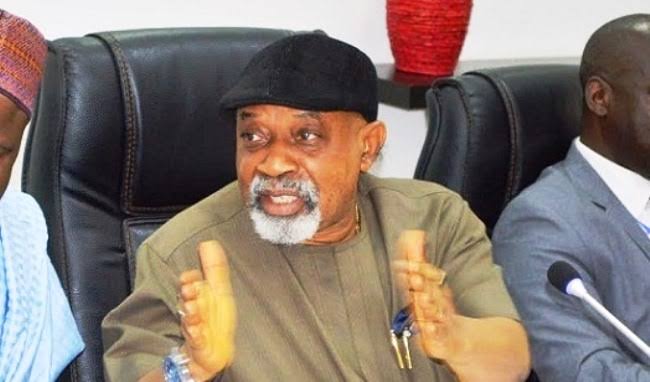
Federal Government has allayed fears of health workers, lecturers and other federal workers following a 40 per cent pay rise for core civil servants in the country.
The Minister of Labour and Employment Chris Ngige said pay rise for doctors, health workers, lecturers and others who are not on the Consolidated Public Service Salary Structure (CONPSS), have been captured in the 2023 budget.
Ngige spoke during this year’s International Workers Day in Abuja with the theme: ‘Workers Rights and Socio-Economic Justice.’
The implementation of a 40 per cent pay rise for civil servants on CONPSS and payment of a “peculiar allowance” to cushion the effect of inflation on civil servants have generated unrest within the labour circle.
For example, the National Association of Resident Doctors has demanded a 200 per cent pay rise as a result of the action of the Federal Government while the Academic Staff Union of Universities (ASUU) and the Senior Staff Association of Nigerian Universities (SSANU) have also decried the disparity
But speaking during the May Day rally in Eagle Square, Abuja, Ngige assured that workers under different wage structures were already bargaining with their employers on a pay rise.
He added that some of those Collective Bargain Agreements (CBAs) were on the verge of being concluded with the National Salaries, Incomes and Wages Commission transmit same for final treatment.
Ngige said: “It will also be recalled that since the emergence of the Consolidated Public Service Salary Structure (CONPSS) on the first of January, 2007, it has not been reviewed by any of the past Administrations. But for the consequential minimum wage adjustment of 2019 for all wage structures under this government in 2019. However , in line with the yearnings and aspirations of Nigerian workers, the Federal Government recently worked out the introduction of a 40% Peculiar Allowance into the remuneration and emoluments of core Federal Civil Servants and other public servants on the CONPSS to help cushion the effects of inflation and other costs of doing their work as they are not on any special allowances.
“This demonstrates the government’s and leadership commitment to improving workers’ welfare and conditions of service even without any Industrial action but a fallout of social dialogue.