



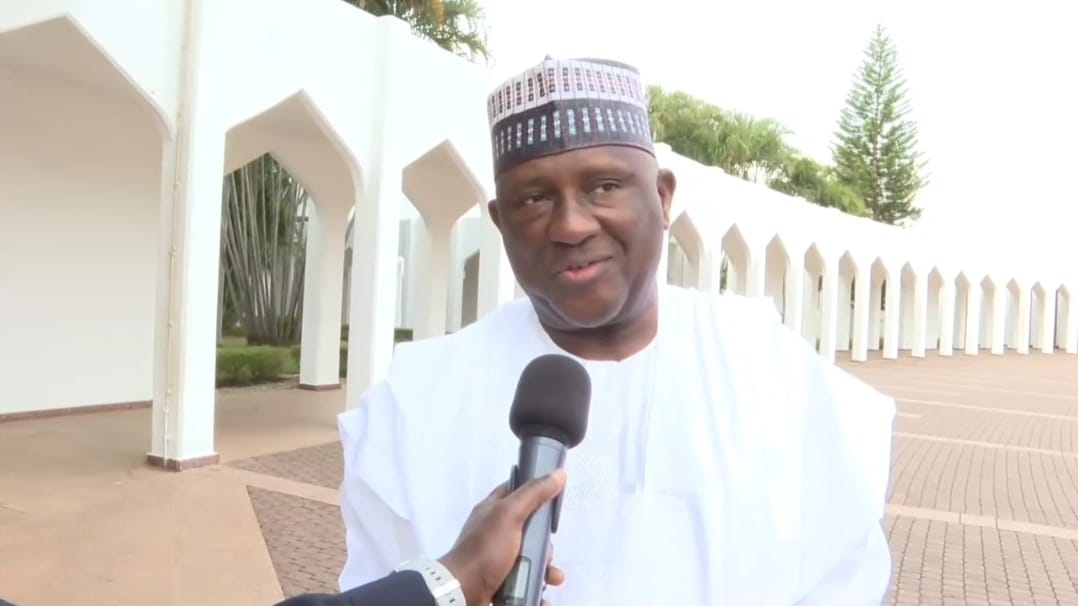
The Chairman of BUA Group, Abdul Samad Rabiu, has reaffirmed the company’s commitment to investing in Nigeria, creating jobs, and supporting the nation’s economy following a courtesy visit to President Bola Ahmed Tinubu.
Speaking after his meeting, Rabiu described the visit as an opportunity to pay his respects to the President and express appreciation for the Federal Government’s continued support for Nigeria’s business environment.
“It was simply a courtesy call and an opportunity to pay my respects to His Excellency, Mr. President. I also expressed my appreciation for his support of the business environment in Nigeria,” he said.
Rabiu noted that the meeting was warm and cordial, adding that he used the opportunity to reassure the President of BUA Group’s commitment to expanding its investments across key sectors of the economy.
“I reaffirmed BUA’s commitment to investing in Nigeria, creating jobs, and supporting the economy across our various business sectors. I remain grateful for the leadership shown by His Excellency and appreciate the privilege of the audience and the warm reception,” he stated.
On food security, Rabiu disclosed that BUA Group is undertaking major expansion projects aimed at boosting local food production and increasing capacity across its operations. According to him, the company is expanding its flour milling, sugar refining, and sugar production businesses, while also investing in new facilities, including an oil milling plant, a feed mill, and a noodles manufacturing plant in Port Harcourt.
He expressed confidence that upon completion of the projects next year, BUA Foods will become the largest food processing company in Nigeria.
Rabiu added that the increased production capacity is expected to improve food availability and help reduce the prices of essential food commodities.
“Once we complete all these expansion projects next year, BUA Foods is going to be the largest food business in Nigeria. With that huge capacity, we hope to bring down prices because increased production will enable us to serve the market more efficiently,” he said.