



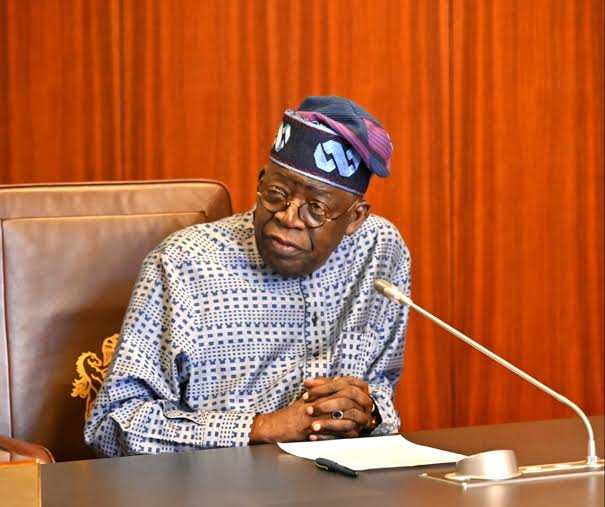
President Bola Ahmed Tinubu has signed the Presidential Executive Order on Virtual Assets Coordination, 2026, marking a major policy shift aimed at creating a coordinated regulatory framework for Nigeria’s virtual assets ecosystem.
The Order seeks to eliminate fragmented oversight, strengthen inter-agency collaboration, protect consumers, enhance national security, and support responsible innovation without creating a new regulator or altering the statutory mandates of existing institutions.
Nigeria’s virtual assets sector has evolved rapidly, with digital assets increasingly spanning the traditional boundaries of currencies, commodities, securities, and payment systems. This growth has exposed regulatory gaps resulting from overlapping and disconnected responsibilities among government agencies.
The fragmented framework has created vulnerabilities including money laundering, terrorism financing, cybersecurity risks, data privacy concerns, fraud, and revenue leakage. Unregistered operators have also exploited these gaps, leading to significant financial losses for many Nigerians.
To address these challenges, President Tinubu exercised his constitutional powers under Section 5 of the Constitution of the Federal Republic of Nigeria, 1999 (as amended), by issuing the Executive Order, which takes immediate effect.
The Order introduces a coordinated governance structure designed to improve regulatory efficiency while preserving institutional independence.
Establishment of the Virtual Asset Council
The Executive Order establishes a Virtual Asset Council to provide strategic oversight and policy coordination.
The Council will be chaired by the Central Bank of Nigeria (CBN), with the Nigeria Revenue Service (NRS) and the Securities and Exchange Commission (SEC) serving as vice-chairs. Membership also includes the Nigerian Financial Intelligence Unit (NFIU) and the Office of the National Security Adviser (ONSA).
Its responsibilities include:
– Harmonising regulatory policies across participating agencies.
– Coordinating supervisory activities.
– Developing a unified legal and institutional framework in collaboration with the Attorney-General of the Federation.
– Aligning regulation with Nigeria’s economic, financial and national security priorities.
The Order also creates a Virtual Asset Office, which will serve as the Council’s operational arm.
The Office, headquartered within the CBN, will coordinate information sharing, licensing applications, supervisory reporting, and inter-agency collaboration through an integrated technology platform that enables shared oversight while preserving each agency’s control over its own data.
A key feature of the Executive Order is that it does not establish a new regulator or transfer statutory powers from existing agencies.
Instead, regulatory responsibility will continue to depend on the nature of the asset or activity:
– The SEC will regulate and register virtual assets classified as securities.
– The CBN will oversee payment, settlement, custody, and other non-security virtual asset services.
– The Virtual Asset Council will resolve jurisdictional issues where regulatory responsibility is unclear.
This coordinated approach is intended to eliminate loopholes previously exploited by unregistered operators.
To encourage innovation while maintaining regulatory safeguards, the CBN will launch a Virtual Assets Regulatory Sandbox.
The sandbox will allow eligible firms to test blockchain-based products and virtual asset services under regulatory supervision. Authorities will evaluate their implications for monetary policy, financial stability, consumer protection, market integrity, financial inclusion, and revenue administration before broader market deployment.
Further operational guidelines are expected from the CBN.
Tax Administration
The Nigeria Revenue Service will issue a dedicated Virtual Assets Tax Policy to clarify the application of Nigeria’s tax laws to digital assets.
The policy aims to improve tax certainty, strengthen voluntary compliance, and ensure that the growing virtual assets industry contributes appropriately to government revenue.
The Federal Government is also preparing a comprehensive Virtual Assets White Paper, which will outline Nigeria’s long-term policy vision, implementation priorities, and strategic roadmap for the sector.
The newly established Virtual Asset Council has been directed to produce a Harmonised Implementation Framework within 30 days to guide participating agencies and ensure the swift implementation of the Executive Order.
The Executive Order represents one of Nigeria’s most comprehensive efforts to modernise oversight of the digital assets sector. By strengthening coordination among financial, regulatory, tax, intelligence, and national security institutions while maintaining existing statutory mandates, the framework aims to enhance investor confidence, improve consumer protection, reduce financial crime, increase government revenue, and position Nigeria for sustainable growth within the global digital economy.