



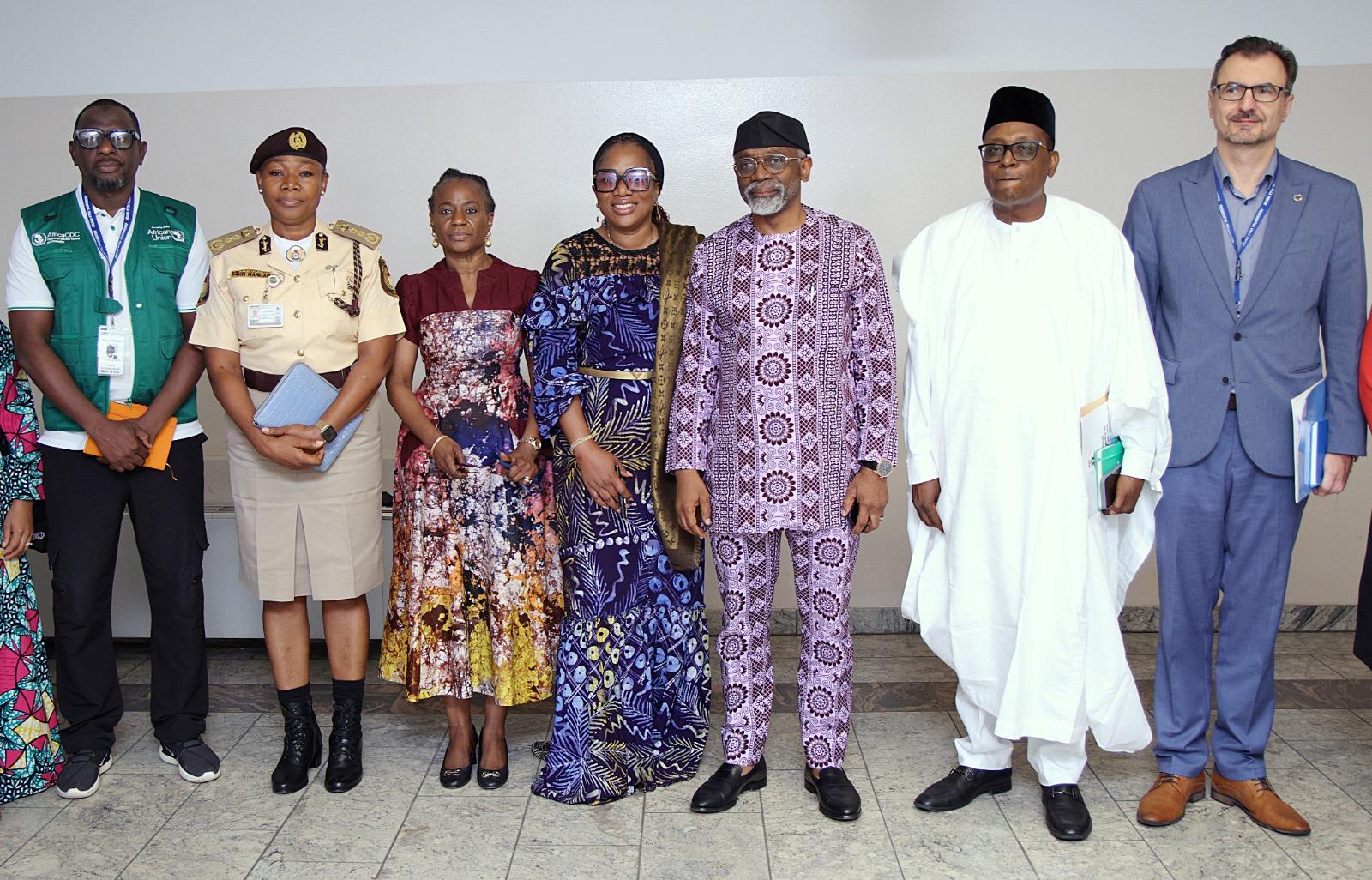
The Federal Government has assured Nigerians that measures are in place to contain the Ebola virus disease following the detection of an imported case, saying surveillance systems and emergency response protocols have enabled the identification of the case.
The Chairman of the Presidential Task Force on Ebola Preparedness, Virus Disease Preparedness and Emerging Public Health Threats, and Chief of Staff to the President, Rt. Hon. Femi Gbajabiamila, gave the assurance on Wednesday after an emergency meeting of the task force at the State House, Abuja.
Gbajabiamila said the task force had been working behind the scenes since its inauguration in June, alongside relevant health and security agencies, to strengthen the country’s preparedness against Ebola and other emerging public health threats.
He noted that about 44,000 flights had arrived in and departed from Nigeria since concerns about Ebola emerged in June, stressing that the country’s surveillance measures had played a significant role in identifying the imported case.
“It’s very important to note this. Since the issue of Ebola came up in June, there have been about 44,000 flights in and out of Nigeria. So, it’s because of what the Ministry of Health, the task force and all the agencies have been doing. All hands have been on deck,” he said.
The Chief of Staff explained that the passenger initially showed no symptoms, which reportedly developed four days after the woman arrived in Abuja.
He said established identification procedures and protocols facilitated the prompt detection of the case.
He assured Nigerians that the task force would strengthen existing protocols and ensure stricter enforcement of preventive measures, while urging citizens to cooperate with public health authorities.
“The Task Force is on top of it. NCDC is on top of it; everyone is on deck. We must build community trust and avoid panic, but it’s also important to state clearly that this is a collaborative effort between the government and the people,” Gbajabiamila said.
The Coordinating Minister of Health and Social Welfare, Prof. Muhammad Ali Pate, also assured Nigerians that the country had the technical expertise, institutional capacity and surveillance systems required to respond to the outbreak.
Pate said federal health authorities were working with state governments, private healthcare providers, immigration and aviation agencies, as well as international partners, to strengthen surveillance and coordinate the response.
He disclosed that contact tracing was ongoing and that contacts of the imported case were being isolated as part of efforts to prevent further transmission.
“We have been conducting contact tracing diligently and isolating those contacts of the index imported case in this country. We will continue to do that, and we want to reassure Nigerians that the federal government, alongside its technical partners, the World Health Organisation, the Africa Centre for Disease Control, and our own Nigeria Centre for Disease Control, have activated the incident management system across the various pillars,” the minister said.
According to him, incident management teams are working round the clock, while hospital response capabilities have also been activated to support containment efforts.
Pate added that most states had developed response plans and that the government was mobilising available resources to strengthen preparedness and limit the spread of the virus.
He urged Nigerians to comply with public health directives and avoid spreading unverified information that could trigger unnecessary panic.
“The key also for the population is to avoid spreading misinformation or baseless rumours, which can cause unnecessary panic. The Task Force leadership has met. WHO and AfricaCDC are working closely with the team,” he said.
The minister expressed confidence in Nigeria’s public health professionals, recalling the country’s experience in containing Ebola in 2014 and the contributions of Nigerian experts to responses in other countries.
He said the government would continue working with its partners and relevant agencies to contain the case and prevent further trtransmission.
Those who attended the meeting included the Comptroller-General of the Nigeria Immigration Service, Kemi Nandap; Managing Director of the Federal Airports Authority of Nigeria, Bunmi Kuku; FAAN General Manager, Adamu Adamu; World Health Organisation Representative, Pavel Ursu; and the Special Regional Representative to the Director-General of the Africa Centres for Disease Control and Prevention, Dr. Aliko Ahmed.
Others were the Senior Special Assistant to the President on Administration and Operations and Secretary of the Task Force, Oyinade Nathan-Marsh; Public Health Executive, Niniola Williams; FCT Mandate Secretary for Health and Environment, Dr. Dolapo Fasawe; and Chairman of the State House Medical Centre’s Medical Advisory Committee, Dr. Victoria Ogala.
The Minister of Industry, Trade and Investment, Olajumoke Oduwole; Lagos State Commissioner for Health, Prof. Akin Abayomi; and Director of Operations, Licensing and Training Standards at the Nigeria Civil Aviation Authority, Capt. Donald Spiff, participated in the meeting virtually.
The task force reiterated the importance of coordinated action between the government and the public, with compliance with health guidance and responsible sharing of information identified as key elements of the containment effort.