



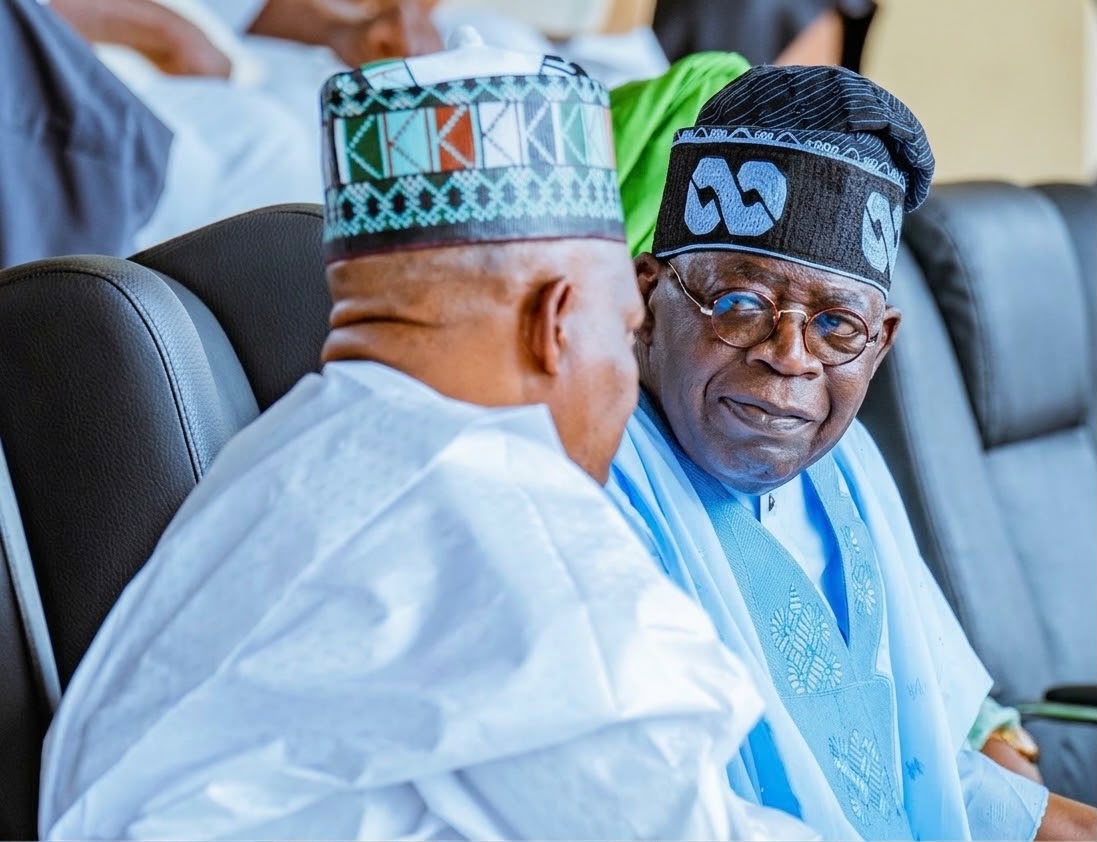
Vice President Kashim Shettima has used a series of high-level diplomatic engagements in Luanda, New Delhi and New York to advance President Bola Ahmed Tinubu’s foreign policy priorities, focusing on African dignity, economic cooperation, technology, education and reform of the global governance system.
Shettima’s diplomatic engagements took him from the 21st Extraordinary Session of the Assembly of Heads of State and Government of the African Union in Luanda, Angola, to the 18th BRICS Summit in New Delhi, India, before representing President Tinubu at the 81st United Nations General Assembly in New York.
The engagements provided Nigeria with platforms to raise concerns about the treatment of Africans abroad, advocate greater African representation in global institutions, promote investment and technology cooperation, and advance Nigeria’s economic interests.
At the AU meeting in Luanda, Nigeria raised concerns over recurring xenophobic and Afrophobic attacks against Nigerians and other Africans in South Africa.
While acknowledging South Africa’s sovereign right to enforce its immigration laws and its contributions to the continent, Nigeria stressed that attacks against Africans undermine the principle of African solidarity.
Nigeria subsequently requested that the matter be placed on the agenda of the 40th Ordinary Session of the African Union in January 2027 for consideration.
The position followed renewed concerns over attacks and anti-foreigner sentiments in South Africa. In May 2026, President Tinubu also directed Nigerian missions in South Africa to establish a crisis notification unit for Nigerians affected by xenophobic attacks.
Shettima also cautioned against fragmented security initiatives on the continent and excessive dependence on foreign military forces, mercenaries and private contractors, stressing the importance of African ownership of peace and security efforts.
In remarks to journalists, the Vice President recalled Nigeria’s historical contribution to the liberation of Southern Africa, saying the country would not accept the dehumanisation of its citizens while maintaining dialogue with South Africa.
He quoted Chinua Achebe, saying, “those whose palm kernels were cracked by a benevolent spirit should learn to be humble.”
In New Delhi, Shettima used Nigeria’s participation in the BRICS Summit to advocate greater economic and technological cooperation between developing countries.
He positioned Nigeria’s engagement with BRICS around the need for developing countries to move beyond dependence on imported technology by building domestic capacity, creating intellectual property and strengthening local industries.
The Vice President highlighted programmes including the 3 Million Technical Talent initiative and broadband expansion projects as part of Nigeria’s efforts to develop a stronger digital economy.
The Federal Government has similarly identified digital talent, broadband infrastructure and technology-enabled businesses as central components of its economic transformation strategy.
Shettima also encouraged investors to view Nigeria as a strategic gateway to the African Continental Free Trade Area, while presenting the country’s reform programme as an effort to build an economy capable of withstanding external shocks.
At the 81st United Nations General Assembly in New York, the Vice President brought Nigeria’s call for reform of the global governance system to the centre of his diplomatic engagements.
Representing President Tinubu, Shettima called for permanent African representation on the UN Security Council, including veto powers, in line with the Ezulwini Consensus and Sirte Declaration.
Nigeria has consistently argued that the existing structure of the Security Council does not adequately reflect contemporary geopolitical, demographic and economic realities. The Tinubu administration has reiterated that Africa should have permanent seats with the attendant privileges, including veto rights.
Shettima also linked global insecurity, climate change, debt and weaknesses in multilateral institutions, arguing that developing countries require a greater voice in decisions affecting international peace, security and development.
At the Africa Minerals Strategy Group High-Level Roundtable on Critical Minerals Development in Africa, Shettima conveyed Nigeria’s position that African countries must obtain greater economic value from their mineral resources.
The administration has made local processing and value addition a central component of its mining policy, with the Vice President previously describing local value addition as a non-negotiable principle in the sector. He said Nigeria was no longer content to remain a warehouse for raw materials.
Nigeria has also cited increased investment in mining and the development of mineral-processing facilities as evidence of its strategy to move from raw-material exports towards domestic beneficiation and industrialisation.
During an engagement with Nigerians in the diaspora at Nigeria House in New York, Shettima called for stronger diaspora participation in Nigeria’s economic development.
He described the skills, knowledge and networks of Nigerians abroad as an important national resource and encouraged Nigerians in the diaspora to contribute through investment, partnerships and knowledge transfer.
The engagement formed part of the Federal Government’s broader effort to attract capital and expertise into Nigeria while strengthening confidence in the country’s economic reforms.
Shettima also participated in the Global Partnership for Education fundraising campaign alongside world leaders, including Italian Prime Minister Giorgia Meloni.
President Tinubu, in a video message, said the GPE agenda was consistent with Nigeria’s priorities on expanding access to education and improving teacher capacity.
Shettima disclosed that the Federal Government was exploring lawful domestic sources of funding for the National Education Loan Fund, including liquidated recoveries by the Economic and Financial Crimes Commission, unclaimed dividends and dormant funds, subject to applicable legal and regulatory processes.
On the margins of the UNGA, Shettima also met Queen Máxima of the Netherlands, with both sides discussing deeper cooperation on financial inclusion in Nigeria.
The Vice President subsequently met representatives of the ECOWAS Commission led by its new President, General Birame Diop (rtd), where he urged the new leadership to prioritise regional unity and integration.
He called for stronger cooperation and greater synergy among West African countries as the region seeks to advance economic development and stability.
Across the three diplomatic stops, Shettima’s engagements covered issues ranging from African solidarity and security to technology, critical minerals, education, diaspora investment and reform of the international system.
The Vice President’s representation of President Tinubu at major international forums is consistent with his role as the President’s deputy and representative at key diplomatic engagements. The State House has previously documented Shettima’s representation of the President at major continental and international meetings, including engagements on UN reform and Africa’s role in global governance.
The sequence of engagements also placed Nigeria’s domestic economic reforms alongside its wider diplomatic agenda, with the administration seeking to attract investment, expand technology cooperation, strengthen regional integration and secure a greater African voice in international decision-making.
As Nigeria continues to press for reforms in global institutions, the Tinubu administration has maintained that Africa’s growing population, economic potential and strategic resources should translate into greater representation and influence in the institutions shaping the international order.