



By Micheal Akanji
“You cannot escape the responsibility of tomorrow by evading it today.” — Abraham Lincoln
There are moments in the life of a nation when difficult decisions become unavoidable. At such moments, leadership is often judged not by the popularity of its choices but by its willingness to confront problems that previous generations may have postponed.
That was one of the defining features of Abraham Lincoln’s presidency during the American Civil War. Faced with a divided nation and a profound moral and political crisis, Lincoln pursued reforms that fundamentally altered the trajectory of the United States. His Emancipation Proclamation of 1863 declared enslaved people in the rebellious states free and helped redefine the purpose of the war, ultimately contributing to the abolition of slavery through the 13th Amendment.
Lincoln’s broader legacy also demonstrates a familiar lesson in governance: meaningful reforms rarely come without political cost. They require courage, consistency and a willingness to make difficult decisions with the future in mind.
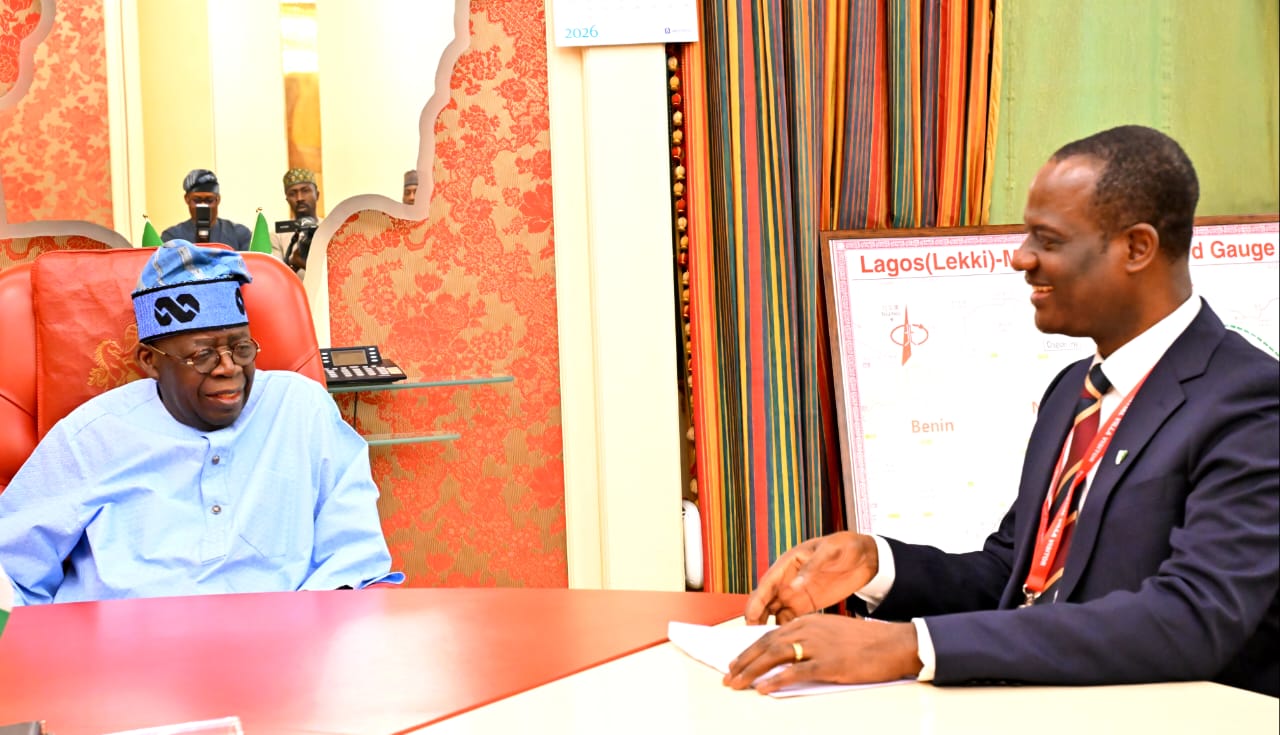
That principle provides an interesting lens through which to examine President Bola Ahmed Tinubu’s economic reform agenda, which has entered another major phase with the emergence of Taiwo Oyedele as Minister of Finance and Coordinating Minister of the Economy.
Oyedele’s elevation reflects the administration’s determination to consolidate the fiscal and economic reforms it has pursued since 2023 while strengthening coordination at the centre of economic management.
His appointment on April 21, 2026, after serving briefly as Minister of State for Finance, was widely seen as a vote of confidence in an official who has been closely associated with the administration’s tax and fiscal-policy reform agenda.
Before joining the Federal Executive Council, Oyedele chaired the Presidential Committee on Fiscal Policy and Tax Reforms. From that position, he was deeply involved in the government’s efforts to modernise Nigeria’s revenue system, simplify taxation, improve compliance and broaden the country’s fiscal base.
Rather than taking over the Finance Ministry as an outsider to the reform process, Oyedele assumed the coordinating role with considerable knowledge of the policies, institutional challenges and objectives driving the administration’s economic programme.
His elevation, therefore, represents more than a change of office. It points to continuity.
At a time when investors and businesses are increasingly concerned about policy certainty, continuity in economic management can be critical. Businesses need to know that policies will not change abruptly, while investors require confidence that reforms announced today will remain in place tomorrow.
One of Oyedele’s early responsibilities as Coordinating Minister was his participation in the Federation Account Allocation Committee process.
At his first FAAC meeting in the new role on April 23, 2026, a total of N2.036 trillion in Federation Account revenue was distributed among the Federal Government, states and local governments.
The Federal Government received N789.159 billion, states received N657.596 billion, while local governments received N468.826 billion. The allocation also included N120.759 billion in 13 per cent derivation revenue for oil-producing states.
Beyond the figures, the process showcased one of the most important features of Nigeria’s federal fiscal structure: how effectively the country mobilises and distributes public revenue has direct consequences for governance at every level.
For Oyedele, however, fiscal management goes beyond sharing revenue. It also involves creating an environment in which the private sector can invest, expand and create jobs.
His repeated emphasis on policy consistency, lower business costs and improved access to capital reflects the administration’s broader objective of making Nigeria a more attractive destination for investment.
Nigeria’s tax system remains at the heart of the reform programme.
For years, the country has struggled with a narrow tax base, weak compliance and heavy dependence on volatile oil revenues. The challenge has been how to increase government revenue without placing an excessive burden on citizens and businesses that already comply with their tax obligations.
Oyedele has consistently argued that the answer should not simply be higher tax rates but a broader and more efficient tax base.
The objective is to bring more economic activity into the formal tax system, improve administration and ensure that taxation becomes more transparent and predictable.
The implementation of the 2025 Tax Acts has consequently emerged as one of the most important tests of the administration’s reform agenda.
The new framework, which took effect on January 1, 2026, followed extensive work by the Presidential Committee on Fiscal Policy and Tax Reforms.
Four major pieces of legislation underpin the reform: the Nigeria Tax Act, the Nigeria Tax Administration Act, the Nigeria Revenue Service (Establishment) Act and the Joint Revenue Board (Establishment) Act.
President Tinubu’s assent to the legislation in 2025 effectively moved years of policy discussions from the drawing board into the implementation stage.
The success of the new tax regime, however, will ultimately depend on implementation. Nigerians will expect a system that is easier to understand, more transparent, less burdensome and more efficient.
Fiscal reform also has implications for government’s relationship with the domestic private sector.
Oyedele’s engagement with contractors over outstanding government claims in May demonstrated an awareness that unpaid government obligations can have consequences beyond the balance sheets of individual companies.
When contractors are owed for completed projects, the impact can spread through the economy. Companies may struggle to pay workers, suppliers and lenders, while delayed payments can discourage businesses from participating in future government projects.
Addressing such obligations can therefore help improve liquidity, business confidence and trust between government and the private sector.
The administration has also intensified efforts to attract international capital.
During President Bola Ahmed Tinubu’s investor engagements in France in May 2026, Oyedele participated in discussions with major global financial institutions, stating Nigeria’s economic performance and investment opportunities.
To the world the message is straightforward: Nigeria needs capital to finance infrastructure, expand productive capacity and generate employment.
But attracting investment requires more than international roadshows. Investors ultimately look at the quality of institutions, fiscal discipline, taxation, foreign-exchange policy, regulatory certainty and the ability of businesses to repatriate returns.
This is where the credibility and consistency of economic management become important.
Perhaps one of the most important elements of Oyedele’s approach is his argument that economic performance should ultimately be judged by its impact on ordinary Nigerians.
Headline indicators such as GDP growth, foreign reserves or government revenue may be important, but they do not automatically tell the full story of economic wellbeing.
His proposed reform scorecard, which places emphasis on indicators such as multidimensional poverty, real income per capita and inequality, represents an attempt to connect macroeconomic policy with household realities.
For the average Nigerian, the real question is not simply whether the economy is growing. It is whether wages are purchasing more, whether jobs are becoming available, whether businesses can survive, whether electricity and infrastructure are improving and whether families can afford basic necessities.
There is little doubt that the PBAT administration’s economic reforms have imposed significant short-term pressures.
The removal of the petrol subsidy and changes to the foreign-exchange regime triggered substantial adjustments across the economy, contributing to higher living costs and placing pressure on households and businesses.
The government has, however, maintained that these measures were necessary to address structural weaknesses, strengthen public finances, improve the country’s external position and create the foundation for more sustainable growth.
Whether Nigerians ultimately judge those reforms as successful will depend largely on what follows.
Reforms cannot be sustained indefinitely on promises of future benefits. Citizens will expect tangible improvements in living standards, employment, infrastructure, purchasing power and access to economic opportunities.
That is perhaps the biggest challenge facing the PBAT-Oyedele economic partnership.
As of August 2026, Oyedele has argued that the administration’s reforms helped Nigeria avoid a deeper economic crisis.
The claim will naturally remain subject to debate, particularly among Nigerians who have experienced the immediate effects of inflation and rising living costs.
But there is a broader point that should not be lost in the political argument.
For decades, Nigeria has struggled with structural fiscal weaknesses, dependence on oil revenue, a narrow tax base, inefficient public spending and policy inconsistencies. These challenges did not emerge overnight, and they cannot be resolved overnight.
The PBAT-Oyedele partnership is consequently more than a change of personnel at the Finance Ministry. It represents an attempt to consolidate a reform agenda built around stronger public finances, improved tax administration, investment mobilisation, institutional coordination and, ultimately, better economic outcomes for Nigerians.
But if the administration succeeds in translating fiscal reforms into broader economic opportunities and improved living standards, history may remember this period not merely as one of painful adjustment, but as a critical stage in Nigeria’s attempt to reset its economic foundations.
As Lincoln’s famous observation suggests, tomorrow cannot be secured by continually avoiding the difficult decisions of today.
For Nigeria, the real test now is whether the difficult choices being made today will produce the better tomorrow that citizens have long been promised.