



President Bola Ahmed Tinubu has ruled out a return to the petrol subsidy regime, declaring that Nigeria cannot afford to reverse the economic reforms introduced by his administration, as he rallied young supporters behind his re-election bid ahead of the January 16, 2027 presidential election.
Tinubu, who removed the petrol subsidy on his first day in office in May 2023, said his administration would not return the country to what he described as failed economic policies, dismissing opposition promises to restore the subsidy as a call to take Nigeria backwards.
Using the biblical account of Moses leading the Israelites out of Egypt, the President insisted that the country must remain on the path of reform despite the difficulties Nigerians have faced.
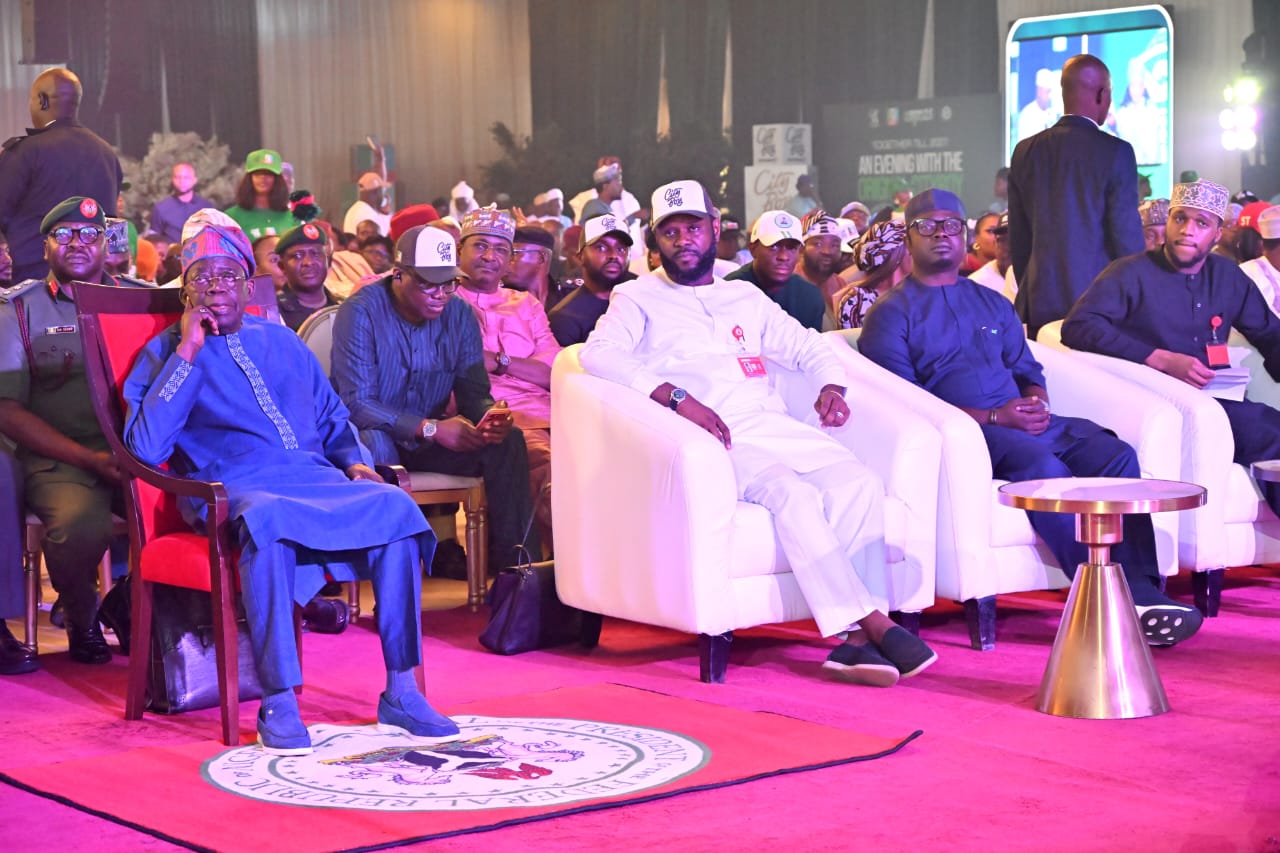
“We cannot return to the past,” Tinubu declared on Monday night at the State House Conference Centre, Presidential Villa, Abuja, during An Evening with the Original City Boy, where he addressed members of the City Boy Movement, APC youth leaders and other support groups mobilising for his re-election.
“I hear some of my political opponents promising to return Nigeria to the subsidy regime. But we cannot return to the past,” the President said, defending the decision to end the subsidy as necessary to confront the country’s financial difficulties.
PBAT argued that the subsidy regime had become unsustainable, insisting that the government had to make difficult choices to prevent further economic deterioration.
“When I came into office, I removed the petrol subsidy on my first day. The country was approaching bankruptcy, and there was no longer sufficient money to sustain the subsidy payments,” he said.
The President then drew a parallel with the biblical story of Moses and the Israelites to make a political case against reversing his administration’s reforms.
“When Moses led his people out of Egypt, they encountered great challenges, but the Red Sea eventually parted and gave way. You cannot ask Moses to go back to Egypt,” Tinubu said.
“In the same way, Nigeria cannot return to the economic policies and practices that brought us to the difficulties we inherited.”
The remarks put the economic reforms at the centre of Tinubu’s emerging 2027 campaign message, with the President presenting the election as a choice between continuing his administration’s policies and returning to the economic arrangements he says contributed to the country’s financial problems.
Although acknowledging that the reform journey had not been easy, Tinubu said he had no regrets about the decisions taken since assuming office, including currency reforms and efforts to rebuild the country’s tax system.
He recalled that his administration inherited substantial financial pressures, including debts owed to airlines, weak foreign reserves and excessive reliance on currency printing.
“Rather than dwell on the shortcomings of the past, I accepted the responsibility and liabilities that came with the office,” he said.
The President also urged young Nigerians to defend the administration’s policies with facts and ideas, telling them that the coming election was about more than his personal political ambition.
“You are not campaigning for me. You are campaigning for your own future. And that future is Renewed Hope,” he declared.
PBAT used the gathering to commend the City Boy Movement, led by his son, Seyi Tinubu, for building a grassroots political organisation with a presence across states, local government areas, wards and polling units.
He also praised the Relax Tinubu Is Fixing Nigeria Movement, APC National Youth Leader Dayo Israel and other youth support groups for mobilising support for his administration across the country and among Nigerians in the diaspora.
Describing the young people at the event as a representation of Nigeria’s future, the President said their continued support had strengthened his determination to pursue his agenda.
“When I walked into this hall, I did not see a crowd. I saw Nigeria. I saw why I ran for the presidency of this country. I saw why I wake up every morning to work,” he said.
He further promised that young Nigerians would remain part of his administration’s political and governance agenda, declaring: “You will not be left behind. Not in this campaign, not in this government and not in the Nigeria we are building together.”
To support his argument that the administration was creating opportunities for younger citizens, Tinubu cited the Nigerian Education Loan Fund (NELFUND), the Nigerian Consumer Credit Corporation (CREDICORP) and the Three Million Technical Talent programme (3MTT).
He said more than one million students had received support through NELFUND, while CREDICORP was designed to improve access to credit for young workers seeking to acquire essential assets. The 3MTT initiative, he added, was intended to equip young Nigerians with skills to compete in the global digital economy.
The President also recalled his commitment to addressing recurring strikes in public universities, particularly disputes involving the Academic Staff Union of Universities (ASUU), saying he wanted students admitted for four-year programmes to complete their studies within the expected period.
On the political front, Tinubu urged supporters to intensify grassroots mobilisation ahead of the January 16, 2027 presidential election, encouraging eligible voters to obtain their Permanent Voter Cards and participate in the electoral process.
He described the support groups’ organisational structures as important to the ruling All Progressives Congress’ electoral strategy, while insisting that the party’s campaign should focus on communicating its policies and plans to Nigerians.
Addressing his son, Seyi, the President praised his involvement in youth mobilisation but challenged him to do more, stressing that public service required sustained commitment rather than the pursuit of political titles.
Tinubu concluded by expressing confidence in the direction of his administration and urging supporters to resist calls for a reversal of its policies.
“There is nothing that will push us backwards,” he said, reiterating his position that Nigeria must continue with the reforms rather than return to the economic arrangements his administration inherited.
The President’s message was clear: as the 2027 election approaches, his administration intends to make continuity of its economic reforms a central argument for another term, while challenging opposition parties to explain how their proposed alternatives would avoid a return to the difficulties he says necessitated the subsidy removal.