



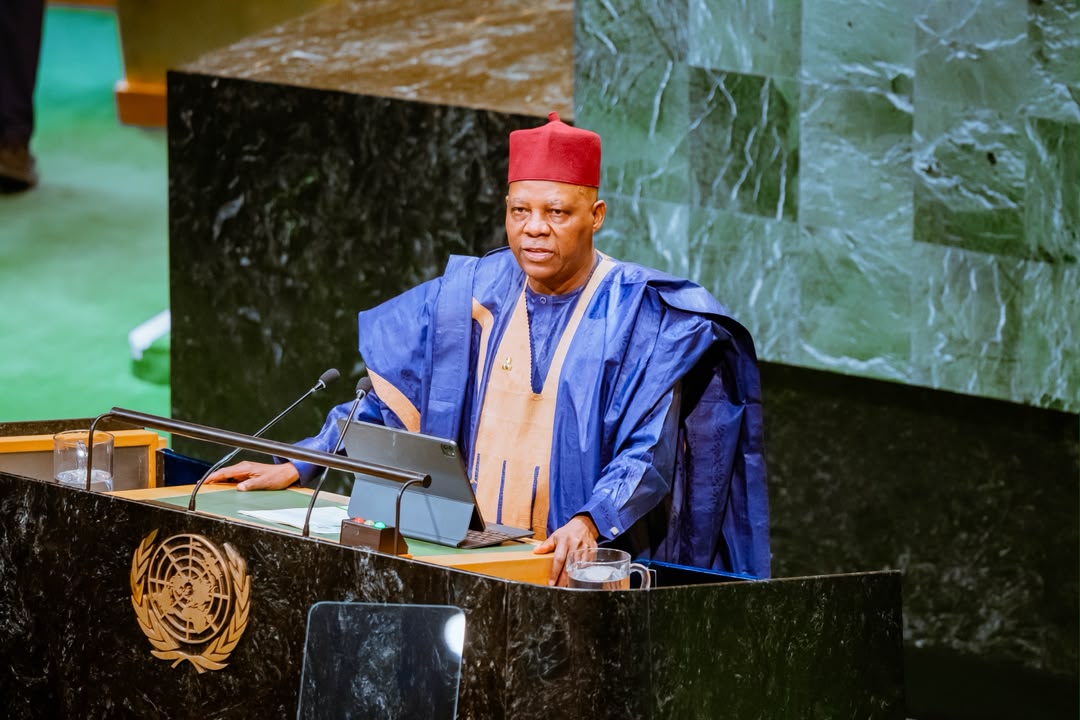
President Bola Ahmed Tinubu has called for a radical reform of the United Nations, demanding the restructuring of the Security Council to give Africa permanent representation and a greater voice in global decision-making.
The President made the demand in his address delivered by Vice President Kashim Shettima at the General Debate of the 81st Session of the United Nations General Assembly in New York. He argued that the existing global power structure no longer reflects contemporary geopolitical realities, stressing that Africa should no longer remain on the margins of decisions that affect the continent and the wider world.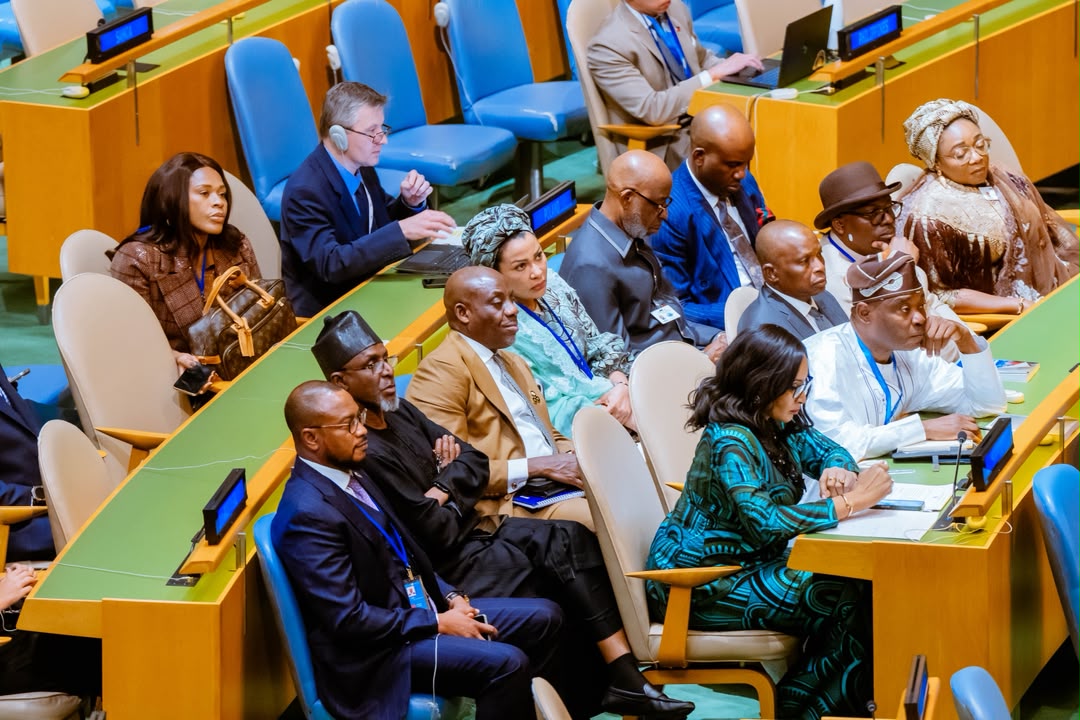
“The reform of this institution must begin with the reconstitution of the Security Council, for the world of 2026 cannot remain captive to the distribution of power in 1945. Africa cannot continue to fill the Council’s agenda while remaining absent from its permanent membership.”
PBAT specifically called for at least two permanent seats for Africa, with full rights and responsibilities, including veto power for as long as the veto remains part of the Council’s structure. He also demanded five non-permanent seats for the continent, in line with the Ezulwini Consensus and Sirte Declaration.
The President also urged world leaders to bring an immediate end to armed conflicts and recommit to the principles of the UN Charter, warning against unilateral aggression, rising nationalism and the erosion of multilateralism. He said conflicts, regardless of where they occur, have consequences beyond national borders.
“Nigeria stands by the Charter and its promise of a world in which diplomacy prevails over coercion, cooperation over isolation and international law over the arbitrary exercise of power,” he said.
Highlighting Nigeria’s contribution to peace and security in Africa, PBAT cited the country’s role in Liberia, Sierra Leone, Darfur, Mali and The Gambia, noting that Nigeria remains committed to regional stability through ECOWAS, the African Union and partnerships in the Gulf of Guinea.
On climate change, the President reaffirmed Nigeria’s commitment to the Paris Agreement and a fair energy transition, arguing that developing countries must be allowed to industrialise, reduce poverty and expand energy access while pursuing lower-carbon development. He noted that Africa contributes less than four per cent of global emissions but faces significant climate-related challenges.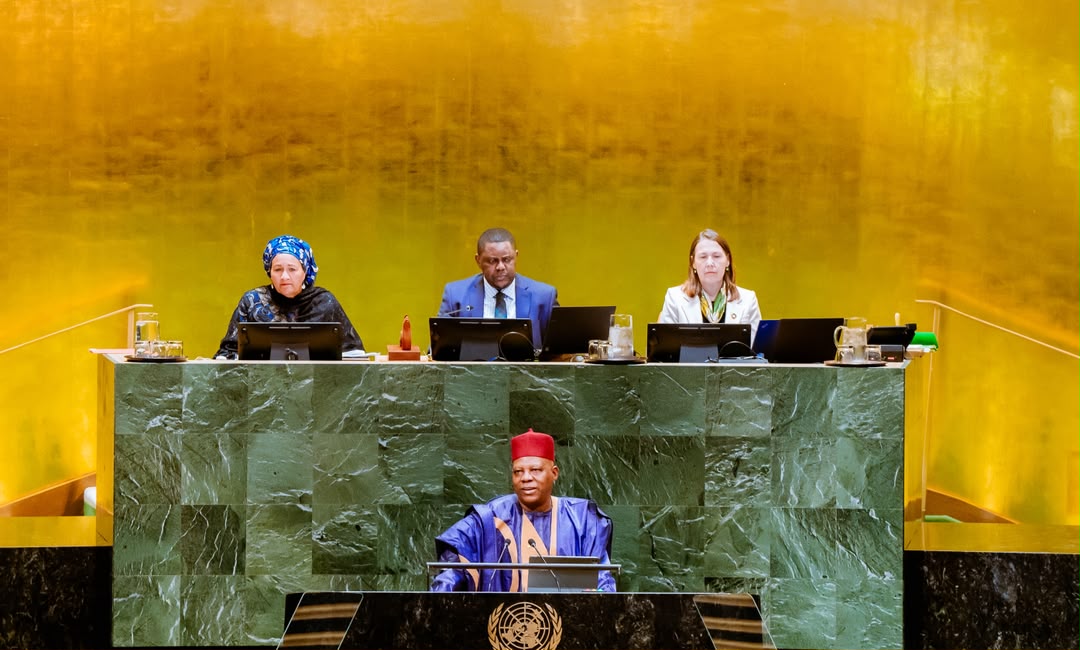
PBAT also called for reforms to the international financial architecture, wider access to concessional financing and debt arrangements that take the developmental needs of poorer countries into account. He identified inadequate financing as a major obstacle to sustainable development, noting that debt-servicing obligations can divert resources from critical sectors such as education, healthcare and infrastructure.
“One of the greatest obstacles to sustainable development is inadequate financing,” the President stated.
On security, PBAT warned that terrorism, cyberattacks and other transnational threats cannot be addressed by individual countries acting alone. Drawing from Nigeria’s experience confronting Boko Haram, ISWAP and other armed groups, he said lasting security requires military capability alongside education, economic opportunity, accountable governance and respect for human rights.
He further called for urgent diplomatic action to address conflicts in Sudan and other war-torn countries, maintaining that Nigeria remains committed to the peaceful settlement of disputes under the UN Charter.
“We should all be afraid of a world in which we can no longer tell the victim from the aggressor. When our investment in propaganda shields perpetrators from justice to the point that telling the truth becomes a crime, the promise of this institution stands betrayed,” PBAT said.
The President also highlighted Nigeria’s efforts to expand digital public infrastructure, broadband connectivity and technology entrepreneurship, describing artificial intelligence as a tool that should be harnessed for human advancement. He stressed that Nigeria’s domestic development agenda is linked to Africa’s progress and the broader global pursuit of peace, equity and prosperity.
Concluding his address, PBAT said the international community must build a United Nations that is more representative, effective and inclusive, arguing that such reforms are necessary to secure a peaceful and sustainable future.
“A reformed, inclusive and effective United Nations is indispensable to the peaceful, just and sustainable world that future generations deserve. Whatever our differences, we must remember that humanity is our oldest citizenship, and peace is the inheritance we owe every child.”