



The National Credit Guarantee Company (NCGC) has facilitated access to finance for businesses and individuals through credit guarantees, with its Managing Director and Chief Executive Officer, Sabo Nanono Okaimu, disclosing that the company had issued guarantees worth N80.1 billion, supporting N64.13 billion in loans as of October 21, 2026.
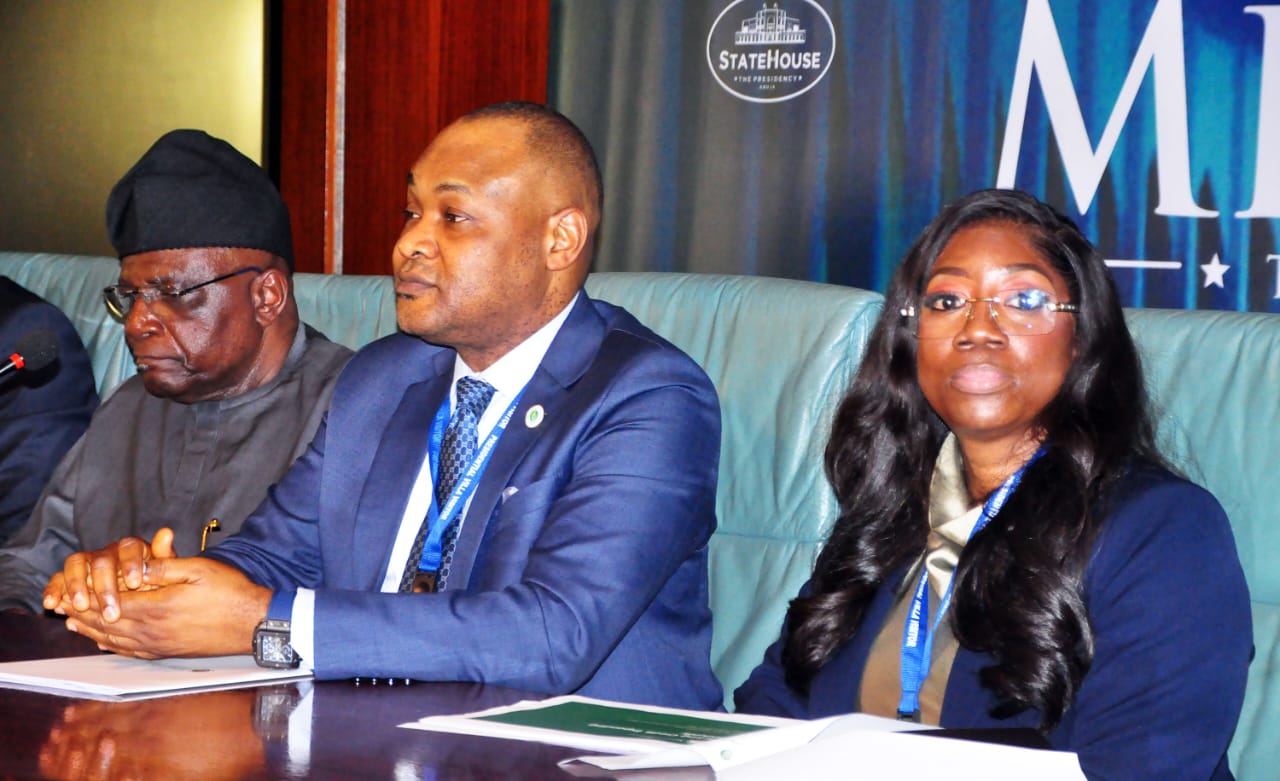
Speaking during a media briefing with the Special Adviser to the President on Information and Strategy, Bayo Onanuga, Okaimu said the company had engaged 19 participating financial institutions to expand access to credit for Micro, Small, and Medium Enterprises (MSMEs) across Nigeria.
Established by President Bola Tinubu on May 29, 2025, as part of the Renewed Hope Agenda, the NCGC commenced operations with N100 billion in capital contributed equally by the Bank of Industry, Ministry of Finance Incorporated, Nigeria Sovereign Investment Authority and Nigerian Consumer Credit Corporation.
Licensed by the Central Bank of Nigeria (CBN) on August 9, 2025, the company operates under the regulatory oversight of the apex bank and the Federal Ministry of Finance.
Okaimu explained that the NCGC does not lend directly but shares credit risks with financial institutions, enabling them to finance viable businesses that lack conventional collateral. Under its standard framework, the company covers up to 60 per cent of qualifying loan risks, encouraging banks to lend to borrowers they might otherwise reject.
“Our value proposition is very simple. We provide partial credit guarantees that de-risk lending, expand the supply of credit and catalyse economic growth,” he said.
The company reported reaching approximately 1.7 million beneficiaries across the 36 states and the Federal Capital Territory, with women accounting for 42.7 per cent of those reached.
Okaimu also disclosed that 22,616 MSMEs had obtained formal bank loans for the first time, while more than 7,700 young Nigerians had benefited from improved access to finance. The guarantees were also linked to an estimated 914,791 jobs, comprising 175,481 direct jobs and indirect employment calculated using economic multipliers.
To expand financing for women entrepreneurs, the NCGC introduced its Guarantee Her initiative, launched on July 29, 2026, and unveiled to stakeholders in Lagos on September 3. The programme aims to facilitate more than N100 billion in lending to women-owned businesses over five years, support over 20,000 enterprises and generate more than 150,000 jobs.
It provides guarantee coverage of up to 70 per cent of qualifying loans, with a maximum exposure of N50 million per borrower. The company has also supported the Bank of Industry’s Project GLOW with guarantees covering a N10 billion financing programme for women-owned MSMEs.
Addressing concerns about interest rates, Okaimu acknowledged that the NCGC does not determine lending rates but said its guarantees could reduce the risk premiums charged by banks.
“What NCGC is doing now is to attack that risk premium,” he said, adding that the company was engaging with the CBN on measures that could provide capital relief to lenders and potentially reduce borrowing costs.
On loan defaults, the Executive Director responsible for Risk Management said no participating financial institution had filed a claim under the guarantee programme as of the briefing.
He assured lenders that eligible claims would be paid within 30 days of submission, stressing that banks remained responsible for due diligence, loan monitoring and recovery.
The company also confirmed that its guarantees cover agriculture, with some early interventions supporting smallholder farmers in North-Central Nigeria.
The NCGC said it was strengthening MSME capacity through its Credit Advantage Series, which provides guidance on credit management, business development and financial compliance. A virtual session organised in collaboration with the Nigeria Revenue Service was scheduled for October 28, 2026.
In his remarks, Onanuga described the NCGC as one of the significant economic reforms introduced by the Tinubu administration, arguing that access to credit was essential for business growth and economic development.
“No society can ever go without credit,” he said, expressing hope that the company would secure the capital needed to expand its guarantee capacity and support more businesses nationwide.