



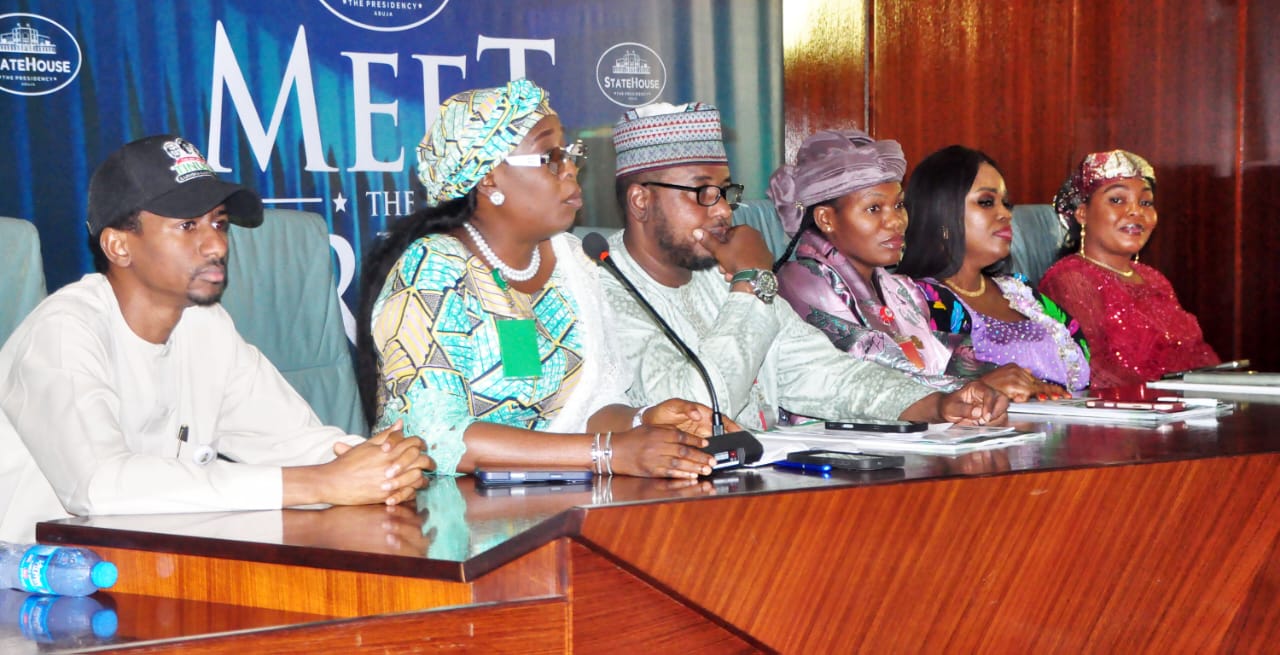
Presidential aides coordinating community engagement across Nigeria’s six geopolitical zones have highlighted major infrastructure projects being executed by President Bola Ahmed Tinubu’s administration, saying the investments are improving connectivity, opening up communities and creating new economic opportunities across the country.
The aides, who also serve as zonal directors under the Infrastructure Mobilisation and Sensitisation Directorate of the Presidential Campaign Council, spoke on Tuesday while addressing State House correspondents at the Presidential Villa, Abuja. They also called for continued support for the President ahead of the 2027 general election.
Speaking for the South-South region, the Senior Special Assistant to the President on Community Engagement, Gift Johnbull, identified the Lagos–Calabar Coastal Highway, East–West Road reconstruction, Benin–Agbor Road interventions and Kaa–Ataba Bridge in Rivers State as major projects expected to transform transportation and economic activities in the region.
Johnbull said the South-South, despite its enormous oil and gas resources, required stronger infrastructure to unlock its potential in agriculture, commerce and other productive sectors.
“No nation, no zone, no economy will thrive without infrastructure and development,” she said, stressing that improved connectivity would help geopolitical zones become more economically self-sufficient.
She described the Lagos–Calabar Coastal Highway as a major opportunity to connect coastal communities and expand economic activities beyond oil and gas, while commending the administration for addressing longstanding road infrastructure challenges in the region.
According to her, the reconstruction of the East–West Road and other critical routes would improve access to markets, ease transportation and strengthen commercial activities across communities.
Johnbull also highlighted renewable energy interventions in some educational institutions, arguing that the administration’s infrastructure investments were creating opportunities for broader regional development.
“The South-South is 100 per cent with Tinubu. We support President Bola Ahmed Tinubu come 2027 because of the infrastructure development in our region. We want to vote for continuity,” she said.
In the North-East, the Senior Special Assistant to the President on Community Engagement, Abdulhameed Abba, commended President Tinubu for interventions in road construction, education, healthcare and other critical sectors.
Abba also praised the Minister of Works, David Umahi, for infrastructure projects across the region, noting that improved road networks would strengthen connections between communities and support economic activities.
He expressed confidence that the people of the North-East would continue to support the President because of the administration’s ongoing interventions.
“We assure him the people of the North-East are committed. We are going to come out massively and vote for him to continue with his wonderful job in the North-East region,” Abba said.
In the South-West, the Senior Special Assistant to the President on Community Engagement, Moremi Ojudu, identified local government autonomy, road infrastructure and the establishment of the South-West Development Commission as important measures for accelerating development.
Ojudu said local government autonomy had given councils greater capacity to execute projects, support businesses and generate revenue to meet the needs of their communities.
She described the reform as a significant step towards strengthening grassroots development, adding that development commissions across the geopolitical zones would help identify regional challenges and develop targeted solutions through research and data.
The presidential aide also cited the Third Mainland Bridge and Apapa–Oshodi Expressway among infrastructure projects contributing to improved transportation and connectivity in the South-West.
She said investments in road infrastructure were expected to improve durability, strengthen security and open up communities to new economic opportunities.
Ojudu further highlighted security measures along major highways, including CCTV installations and collaboration among security agencies, noting that safer roads were essential for economic activities and public confidence.
She urged residents and political stakeholders in the South-West to support the administration’s development agenda, stressing that cooperation between the federal and local governments would help improve living standards and expand opportunities.
The presidential aides maintained that infrastructure development remained central to the Tinubu administration’s efforts to promote economic growth, improve access to essential services and address longstanding regional challenges.
They expressed optimism that the continuation of ongoing projects and reforms would further strengthen connectivity, encourage investment and support development across Nigeria.