



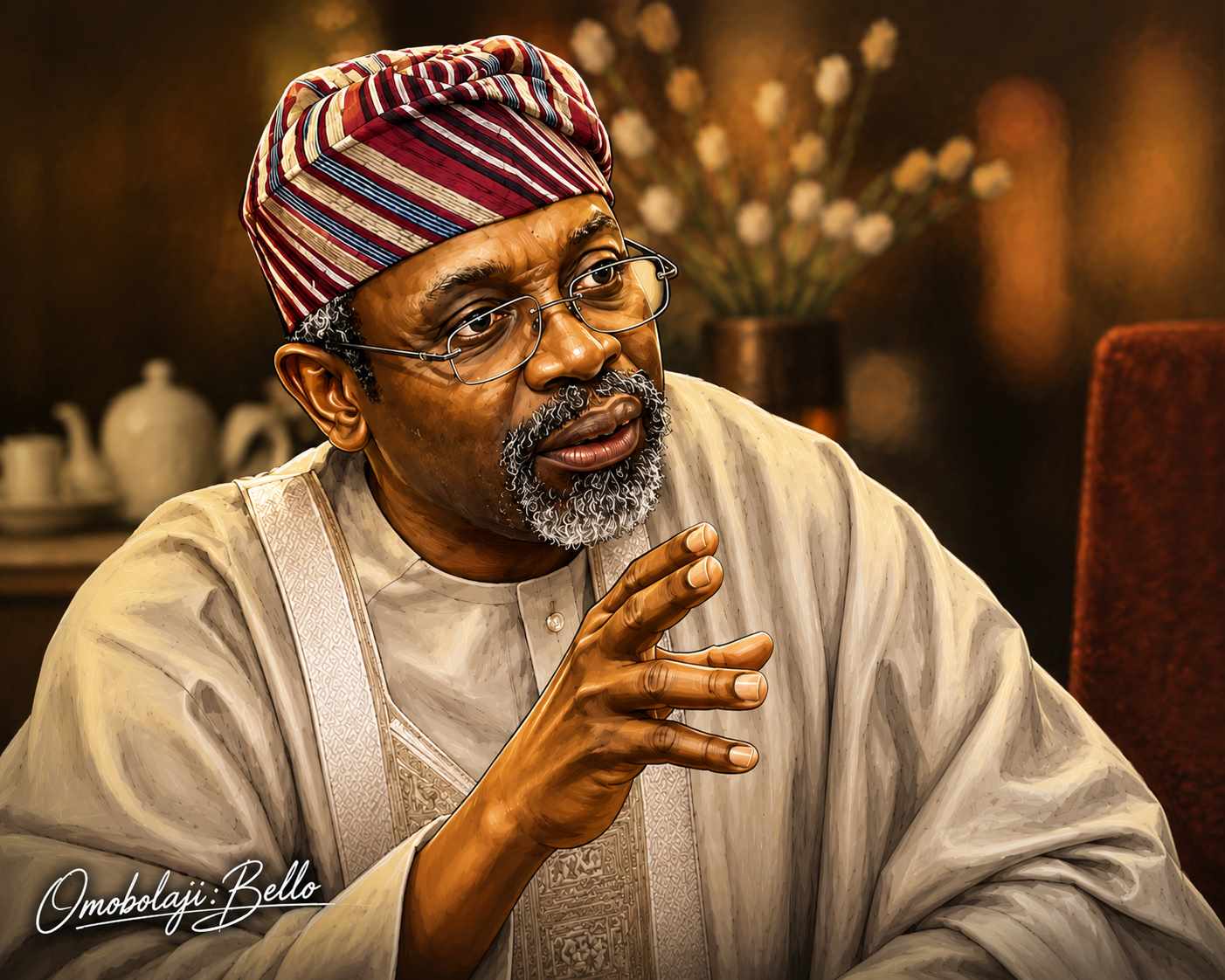
Chief of Staff to President Bola Ahmed Tinubu, Femi Gbajabiamila, has described the President’s economic reforms as necessary interventions to reposition Nigeria, insisting that the administration prioritised long-term national development over short-term political considerations.
Gbajabiamila made this known during the unveiling of the Federal Government’s 2027–2031 manifesto, titled “From Reforms to Prosperity Agenda,” where he said the decision to remove the petrol subsidy and restructure the foreign exchange system reflected President Tinubu’s determination to address longstanding economic challenges.
He explained that the President deliberately chose policies capable of placing the country on a sustainable development path, despite the economic difficulties associated with their implementation.
According to him, genuine leadership requires taking decisions that secure the future of the country rather than avoiding difficult choices for electoral convenience.
“President Tinubu understood that the challenges confronting our economy required decisive action. Rather than postpone difficult decisions for political comfort, he chose to confront them and begin the process of rebuilding the nation’s economic foundation,” Gbajabiamila said.
The Chief of Staff acknowledged that the reforms had created economic pressures for households, noting that the government recognised the concerns of Nigerians.
He, however, maintained that the ultimate objective was to translate the gains from the reforms into improved living conditions, expanded opportunities and sustainable prosperity.
He described the new manifesto as a commitment between the Tinubu administration and Nigerians, stressing that the government must be judged by its ability to fulfil the promises contained in the document.
Gbajabiamila said the administration envisioned a country where citizens could enjoy the rewards of hard work, young people could pursue their aspirations and businesses could operate in an environment that encourages growth and investment.
Highlighting some of the administration’s interventions, he identified the N-Power programme, student loan scheme, tax reforms and the Electricity Act as important policy measures aimed at expanding economic opportunities and improving the quality of life.
He explained that the student loan initiative was widening access to higher education by supporting students with their institutional fees and living expenses, while the tax reforms were designed to ease the burden on low-income earners and eligible small businesses.
On the power sector, he noted that the Electricity Act had opened up opportunities for states to develop and regulate their electricity markets, thereby encouraging private investment and expanding electricity access.
Gbajabiamila further disclosed that the 2027–2031 manifesto was organised around four strategic pillars, including security, with clearly defined objectives, measurable targets and accountability mechanisms to enable Nigerians to monitor implementation.
He urged members of the All Progressives Congress (APC) to actively communicate the administration’s policies to Nigerians, engage communities and provide answers to questions surrounding the government’s performance.
He stressed that the ruling party must demonstrate its commitment to public service through its achievements and willingness to be held accountable by the electorate.
“The responsibility before us is to demonstrate that our promises are matched by action. We must engage Nigerians with honesty, present our achievements clearly and show that the next phase of this administration will deliver meaningful results,” he said.
The Chief of Staff called on Nigerians, including those who remained sceptical about the government’s policies, to examine the manifesto and assess the administration based on its achievements and future commitments.
He described the document as an ambitious roadmap that reflected President Tinubu’s determination to pursue far-reaching reforms and build a stronger economy.
Gbajabiamila expressed confidence that the administration’s next phase would create better prospects for Nigerian families, stimulate business expansion and provide young people with greater opportunities to contribute to national development.
He said the 2027 general election would provide Nigerians with an opportunity to determine whether the ongoing reform agenda should continue into another administration.