



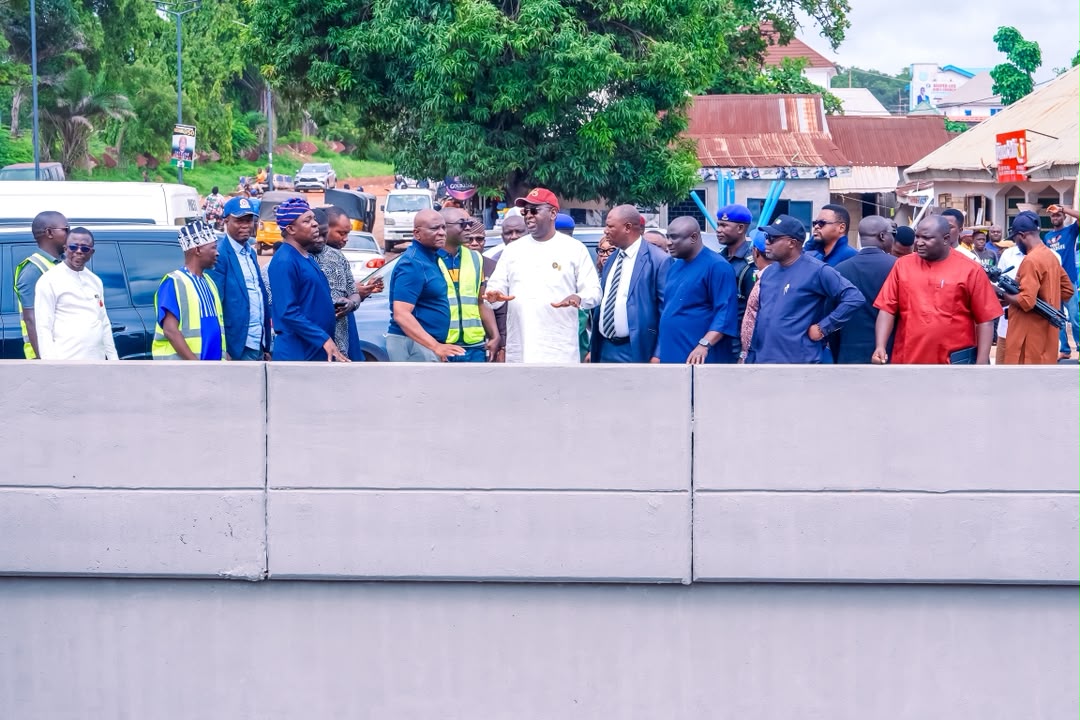
The Renewed Hope Ambassadors, led by the Senior Special Assistant to the President on Media and Publicity, Bayo Onanuga; the Senior Special Assistant on Media and Special Duties, Tunde Rahman; the Special Assistant on Social Media, Dada Olusegun; the Senior Special Assistant on Media and Publicity, Temitope Ajayi; and other members, commenced an inspection tour of Benue State this morning. Accompanied by a pool of journalists representing various media platforms, the delegation is assessing ongoing Federal Government and Benue State Government projects across the state.
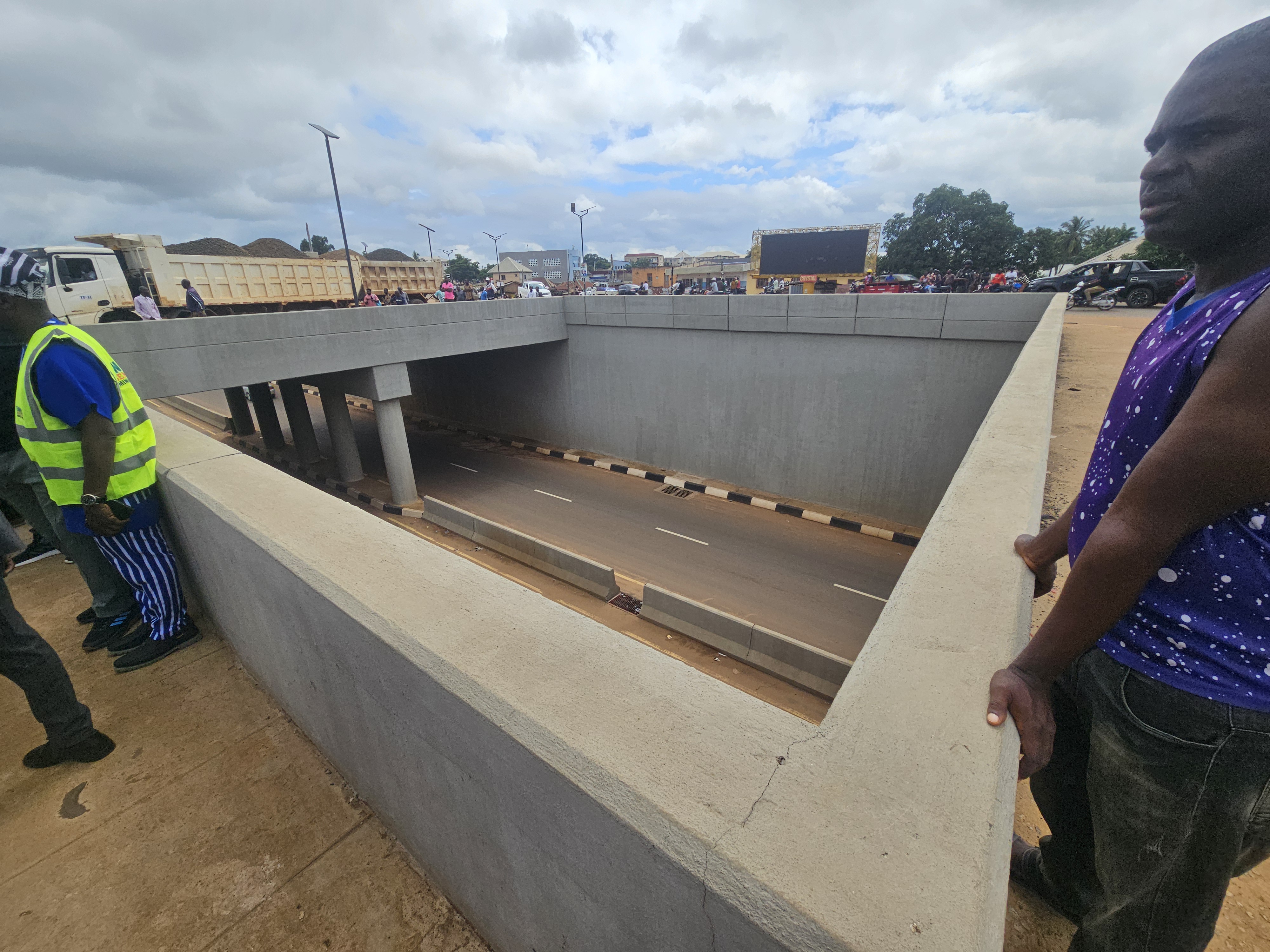
Among the key projects inspected is the newly constructed High-Level Interchange in Makurdi. The Benue State Government describes the landmark infrastructure as a transformative development aimed at improving traffic flow, reducing travel time, enhancing road safety, and stimulating economic activities within the state capital.
The Deputy Governor of Benue State, Dr. Samuel Ode, said the High-Level Interchange is a wholly state-funded initiative executed under the administration of Governor Hyacinth Alia, contrary to assumptions that it is a federal project.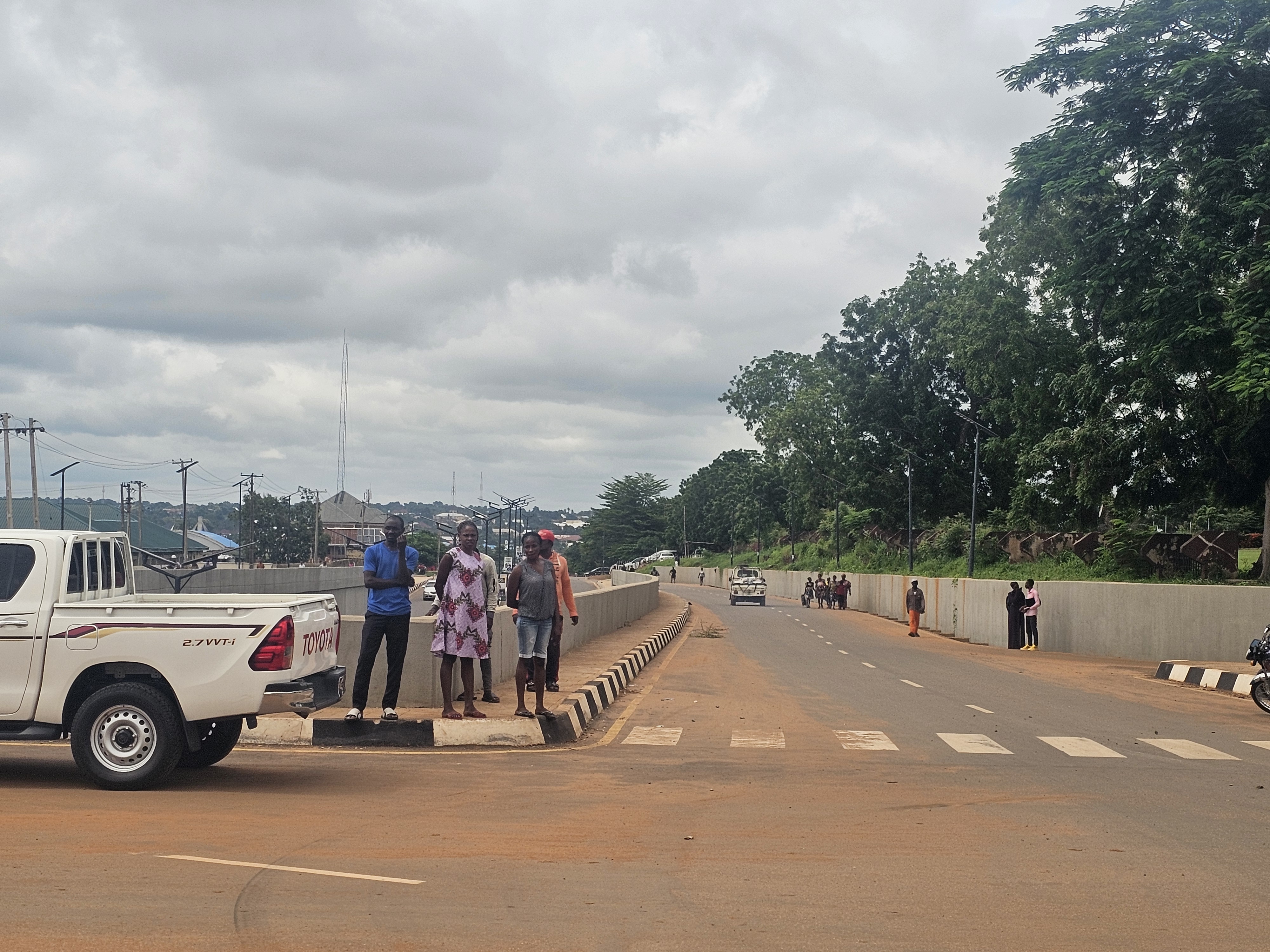
According to him, the High-Level Interchange serves as a strategic junction connecting four major arterial roads within Makurdi, making it one of the city’s most important transportation hubs.
“This is a Benue State Government project, not a federal project,” the Deputy Governor emphasized. “It connects major roads leading to the Remi Tinubu Road corridor, the Benue Printing and Publishing Company, Government House, the Police and DSS headquarters, the Central Business District, and the Wurukum axis, which also links to the Federal Government’s ongoing overhead bridge.”
Dr. Ode explained that the interchange incorporates an underpass that allows uninterrupted traffic movement between key parts of the city, significantly easing congestion.
He noted that the area also hosts major public and recreational facilities, including the JS Tarka Foundation, IBB Square, and the ongoing International Conference Centre project, making the infrastructure critical to both transportation and social activities in the state capital.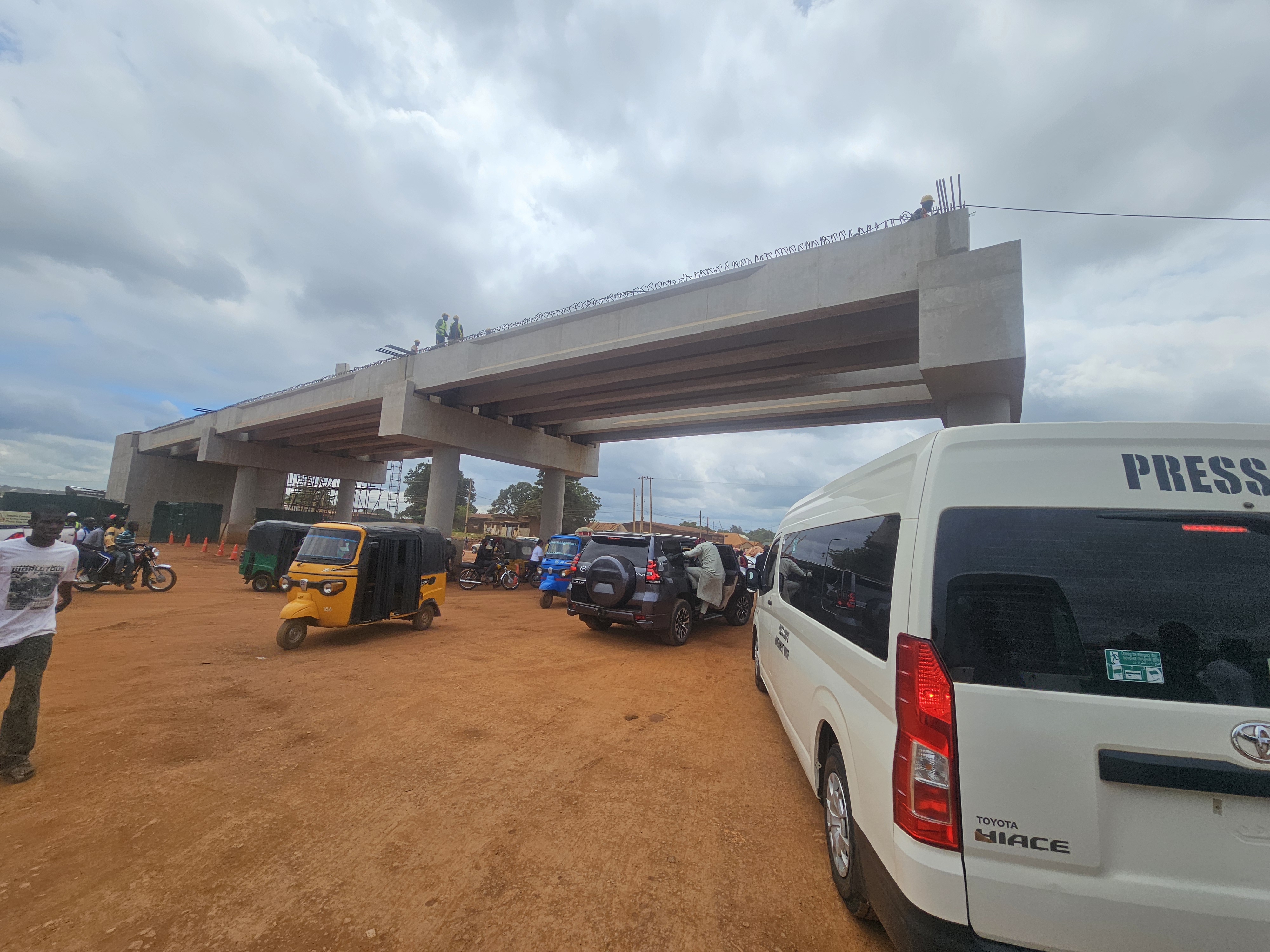
Responding to questions on funding, the Deputy Governor acknowledged that increased allocations to states under the administration of President Bola Ahmed Tinubu had strengthened Benue’s capacity to execute major infrastructure projects.
“The increased allocation is being utilised for the benefit of the people of Benue State. What you see here is a manifestation of prudent management and frugal application of resources from the Federation Account,” he said.
On the cost of the project, Dr. Ode declined to provide a final figure, explaining that construction is still ongoing and additional components have been incorporated into the original design.
“We want to be careful with figures until the project is fully completed because additional works have been introduced along the way,” he stated.
Providing technical details, the Director of Civil Engineering in the Benue State Ministry of Works, Housing and Urban Development, Engr. Abraham Tifa Wombo, said the High-Level Interchange replaced a conventional roundabout that had become notorious for frequent accidents, traffic congestion, and damage to vehicles.
According to him, the upgrade has already yielded significant improvements.
“Before this intervention, accident cases, including fatalities and injuries, were recorded regularly at this location. Since the interchange became operational, accidents have reduced considerably, with the few recorded largely attributable to reckless driving by road users,” Wombo said.
He added that the project has also drastically reduced traffic gridlock within the city.
Engr. Wombo disclosed that the first phase of the project was executed at a cost of ₦6.9 billion, while a second phase involving a major drainage channel and other complementary works is still underway.
The project is being handled by Bauhaus Power House Nigeria Limited. Construction commenced in February 2024 with an initial completion period of 12 months, but was later extended by six months following implementation challenges.
The Benue State Government says the interchange is part of its broader commitment to modernising infrastructure, improving urban mobility, and supporting economic growth through strategic investments in road development.